Travel to Croatia
Croatia follows the Adriatic in a long arc, from the Roman arena in Pula down to the walled old town of Dubrovnik, with hundreds of islands offshore and the lakes of Plitvice and the capital, Zagreb, inland. Most first trips follow the coast by bus, ferry or boat, and many travelers spend at least a few nights on an island.
Our Croatia travel tips are sorted by region and by topic: Dubrovnik and South Dalmatia, Split and the Dalmatian Coast, Istria, Sailing in Croatia, Things to Do and See, Outdoor and Nature, Food and Drinks, Where to Stay and General Travel Tips.
Visa and Entry Requirements for Croatia
Croatia joined the Schengen Area and switched to the euro on 1 January 2023. Citizens of the EU, the EEA and Switzerland can enter with a passport or national ID card. Travelers from many other countries, including the US, the UK, Canada and Australia, can stay without a visa for up to 90 days in any 180-day period, counted across the whole Schengen Area. Everyone else needs a Schengen visa before the trip. Check the rules for your nationality on the EU’s official travel portal.
Your passport must have been issued less than ten years before you arrive and stay valid for at least three months after the day you plan to leave the Schengen Area. Border officers can ask to see a return or onward ticket, where you are staying and proof that you have enough money for your trip. Every guest has to be registered with the police within 48 hours of arrival. Hotels and most apartment hosts do this for you, so hand over your passport when you check in.
If you arrive from outside the Schengen Area, the EU’s Entry/Exit System (EES) registers your fingerprints and a facial photo at the first border crossing instead of stamping your passport. Registration is free, children aged 11 and under are not fingerprinted, and the record stays valid for three years. Allow extra time at passport control on arrival and before your flight home, and on day trips from Dubrovnik to Bosnia and Herzegovina or Montenegro, which are outside the Schengen Area. Slovenia runs checks on its border with Croatia, so keep your passport at hand when you drive in from the north.
ETIAS, the travel authorization for visitors who don’t need a visa, has not started yet. The EU says it will announce the start date several months before launch. Once it runs, it will cost €20 and stay valid for three years or until your passport expires. Apply only on the official EU website, never through agencies that charge extra.
Important Cultural Information
Croatian is the official language. Younger people in the cities and on the coast usually speak good English, and many people who work in tourism also speak German or Italian. A few words of Croatian are always welcome: dobar dan (good day), hvala (thank you) and molim (please, and also “you’re welcome”).
Most Croatians are Roman Catholic. Every town and village has a patron saint, and the saint’s feast day brings a procession, Mass and often a party in the main square. Cover your shoulders and knees when you visit a church, and keep your voice down at shrines. Greet people with a handshake, and wait for your hosts to offer first names and cheek kisses.
Coffee is a social ritual. Locals can spend an hour over one cup on a cafe terrace, and nobody will bring the bill before you ask for it. In Dalmatia, listen out for klapa, unaccompanied harmony singing by small groups, which you’ll often hear in old town squares and churches on summer evenings.
Money in Croatia
Croatia has used the euro since 1 January 2023, when it replaced the kuna, so older guidebooks and posts that quote prices in kuna are out of date. If you still have kuna banknotes at home, the Croatian National Bank exchanges them with no deadline.
Cards and contactless payments work in most hotels, restaurants, supermarkets and shops. Carry some cash for markets, bakeries, family taverns (konobas), beach bars and kiosks on the smaller islands. Use the ATMs at banks rather than the standalone machines in tourist areas, which often charge high fees. When an ATM or card terminal offers to charge you in your home currency, choose euros.
Tipping is not compulsory. Rounding up in cafes and leaving about 10 percent in restaurants for good service is common, and tour guides and skippers appreciate a tip at the end of a trip.
Banks, ATMs and Cards
The largest banks are Zagrebačka banka, Privredna banka Zagreb, Erste, OTP, Raiffeisen and Addiko, and their ATMs are easy to find in the towns and on the bigger islands. Small islands may have only one machine, or none, so take out cash before you board the ferry. Visa and Mastercard work almost everywhere that takes cards, while American Express and Diners Club are accepted less often. Your own bank may charge for foreign withdrawals, so check the fee on the screen before you confirm. With the euro in use, you only need an exchange office (mjenjačnica) if you arrive with another currency.
Health, Insurance and Emergencies
Call 112 for the police, an ambulance, the fire service or mountain rescue anywhere in Croatia. Pharmacies (ljekarna) are marked with a green cross, and the larger towns have one that stays open at night.
Visitors from the EU should bring their European Health Insurance Card (EHIC), and UK visitors their GHIC, which cover medically necessary treatment in the state system. Even with the card you pay a fee for treatment, which the UK government says can reach €530. Neither card replaces travel insurance, as they don’t pay for private clinics, changed bookings or a flight home.
Summers on the coast are hot and dry, and wildfires spread fast. Outdoor fires and barbecues are banned from 1 June to 31 October except in designated areas, so take your litter and glass bottles with you, put cigarettes out properly and call 112 if you see a fire. Use insect repellent in summer and check for ticks after walks in forests and meadows.
If you’re looking for travel insurance, we are an affiliate of SafetyWing, a travel medical insurance provider.
Wi-Fi and Internet in Croatia
Croatia has three mobile networks, Hrvatski Telekom, A1 and Telemach, and coverage is good in the towns, along the coast and on the larger islands. You can buy a prepaid SIM card in the networks’ shops and at kiosks, or set up an eSIM before you fly. This guide to staying connected in Croatia with a SimLocal eSIM walks you through the setup. With a SIM card from another EU country you roam at home prices.
Hotels, apartments and most cafes have free Wi-Fi, and the bigger cities have coworking spaces if you need a desk for a few days. Use a VPN on public Wi-Fi, like ExpressVPN.
Arrival in Croatia
Croatia has five international airports that matter for most visitors. Zagreb Franjo Tuđman Airport (ZAG) is the main hub of Croatia Airlines and lies about 10 km southeast of the city center. City bus 290 and airport coaches run into town. Split Airport (SPU) sits on Kaštela Bay about 19 km west of Split, close to Trogir. Bus 37 links it with Trogir and Split every 20 to 30 minutes, and in summer a catamaran runs from the airport to Split harbor.
Dubrovnik Airport (DBV) at Čilipi is about 15.5 km southeast of the city, and the airport shuttle bus stops at the Old Town and the main bus station in Gruž. Zadar Airport (ZAD) is about 8 km from the old town, and Pula Airport (PUY) about 6 km from Pula, with a bus into the center. Both are busiest in summer, when many airlines add seasonal routes, and much quieter in winter.
Croatia borders Slovenia, Hungary, Serbia, Bosnia and Herzegovina and Montenegro, and many travelers combine it with its neighbors on a longer trip through the Balkans. Jadrolinija ferries cross the Adriatic from Ancona and Bari in Italy. If you arrive by car or want one for the trip, consider Europcar for car hire in Croatia.
General travel tips for Croatia
Areas of Croatia
Most first trips combine Dubrovnik and Split with an island or two. Add Zadar, Šibenik and the Krka waterfalls if you have a week, and Istria, Plitvice and Zagreb if you have two. Before you go, these Croatia travel tips and our take on why Croatia works so well for a vacation help you plan.
Dubrovnik and South Dalmatia
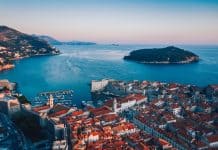
Dubrovnik’s Old City has been a UNESCO World Heritage Site since 1979. Walk the full circuit of the city walls early in the morning or late in the afternoon, when the stone has cooled and the cruise crowds have thinned, then wander the Stradun and the steep lanes on either side. Our guide to visiting Dubrovnik covers the basics, and you can save money by refilling your water bottle in the Old Town. Traveling with children? Here are the free things to do in Dubrovnik with kids, and here is how one traveler spent a week in Dubrovnik on a tight budget.
South Dalmatia rewards a few days beyond the city. The walled town of Ston on the Pelješac peninsula has oyster beds in the bay of Mali Ston, so read about eating seafood in Ston. The island of Korčula has a walled old town on a small peninsula that people often compare to Dubrovnik, as our post on exploring Korčula shows. For more ideas, see our day trips from Dubrovnik and try a buggy safari in the hills above Dubrovnik.
Travel tips for Dubrovnik and South Dalmatia
Split and Central Dalmatia
Split grew inside and around Diocletian’s Palace, the retirement residence of a Roman emperor and a UNESCO World Heritage Site since 1979. People still live, shop and drink coffee inside its walls. Plan your days with our things to do in Split and Split guide for solo travelers. Here is where to stay in Split if you want a good night’s sleep, and where to eat in Split away from the waterfront menus. Trogir, a small walled town on an island near the airport, has been a UNESCO site since 1997.
Split is the main ferry port for the central Dalmatian islands. Hvar has a lively harbor town with bars that stay open late in summer and the Stari Grad Plain, farmland that Greek settlers divided into plots and a UNESCO site since 2008. Brač is known for the long pebble spit of Zlatni Rat beach near Bol. To see the islands at a slower pace, read about a week on a catamaran from Split to Hvar, and for a quieter base on the coast, see where to stay along the Dalmatian coast.
Zadar, Šibenik and Krka
Zadar’s old town fills a small peninsula ringed by Venetian walls. On the waterfront, the Sea Organ plays notes as the waves push air through pipes under the stone steps, and the Greeting to the Sun light installation glows next to it after dark. Here are our things to do in Zadar. Zadar is also a good starting point for a sailing trip, like this two-day sailing trip from Zadar.
Šibenik has two UNESCO sites: the stone Cathedral of St. James, listed in 2000, and the St. Nicholas Fortress at the mouth of the channel, part of the Venetian Works of Defence listed in 2017 along with Zadar’s walls. See our things to do in Šibenik. Krka National Park lies just inland, where the Krka River drops over a series of travertine waterfalls. Swimming at the largest falls, Skradinski buk, has been banned since 2021, so bring your swimsuit for the coast instead.
Travel tips for Split and the Dalmatian Coast
Istria
Istria is the heart-shaped peninsula in the northwest, close to Slovenia and Italy, and it feels different from Dalmatia. Pula has a Roman amphitheater that still hosts concerts and film screenings, and the cliffs at Verudela are a popular place to jump into the sea, as this cliff jumping in Pula post shows. For a personal take, read one traveler’s diary from Pula and Rovinj.
On the west coast, Rovinj stacks pastel houses on a hill crowned by a church tower, so read about spending a day in Rovinj. Poreč has the Euphrasian Basilica with its gold mosaics, a UNESCO site since 1997. Inland, hill towns such as Motovun and Grožnjan look out over oak forests where truffles grow. Here are some day trips in Istria and tips on Istrian food and where to eat it.
Kvarner Bay and Its Islands
Kvarner Bay lies between Istria and Dalmatia. Rijeka, Croatia’s third-largest city and its biggest port, is known for its carnival, and next door the seaside resort of Opatija has a long promenade and grand hotels from the days when Austro-Hungarian society came here for the winter. A bridge links the mainland with Krk, the largest island, where Rijeka Airport is located. Cres is wild and thinly populated, Lošinj has a mild climate and a population of bottlenose dolphins in the surrounding sea, and Rab has sandy beaches, which are rare on this coast. On a boat trip, watch the dolphins from a distance and let them choose how close they come.
Plitvice Lakes and the Interior
Plitvice Lakes National Park, a UNESCO World Heritage Site since 1979, is a chain of lakes joined by waterfalls, with wooden boardwalks running over the water. Every ticket has a time window and is tied to Entrance 1 or Entrance 2, so buy it online before a summer visit, when slots sell out. Swimming in the lakes is strictly prohibited, and you have to stay on the marked paths and leave the animals alone. Read our guide to visiting Plitvice Lakes National Park and our tips on accommodation near Plitvice, as staying overnight lets you start before the day-trip buses arrive.
The mountains behind the coast are where Croatians go hiking. Paklenica and Northern Velebit national parks protect old beech forests that were added to a UNESCO listing of European beech forests in 2017. In the hills, use local guides or well-marked trails, as the weather can turn fast and nights get cold even in summer. In remote areas, including parts of Plitvice, unexploded landmines from the 1990s are still a risk, so never leave marked paths or walk across uncultivated land.
Dinara and the Dalmatian Hinterland
Behind Split and Šibenik, the karst hills of the Dalmatian Hinterland rise to Dinara, at 1,831 m the highest peak in Croatia. Dinara Nature Park was founded in 2021 near Knin and protects high grasslands with rare plants and the endemic mountain viper. The summit hike is long and exposed, with no shade or water on the ridge, so go with a local guide or a mountaineering club, stay on marked trails, start early and avoid the hottest days. Down in the valleys, the Cetina River rises from a deep blue spring near Vrlika, Sinj holds its horseback tournament every August, and near Imotski the Red Lake and the Blue Lake sit at the bottom of collapsed sinkholes.
Outdoor and nature in Croatia
Zagreb
Zagreb, the capital and largest city, has a hilltop Upper Town with St. Mark’s Church and its tiled roof, and a Lower Town of Austro-Hungarian squares, parks and cafes around Ban Jelačić Square. Its museums are small and easy to fit into a day. The best known is the Museum of Broken Relationships, which displays objects donated by people after a breakup, so read about visiting the Museum of Broken Relationships.
Slavonia
Slavonia, the flat farming region in the east between the Drava, the Sava and the Danube, sees few foreign visitors. Osijek, its main city, has an 18th-century Habsburg fortress quarter, Tvrđa, with cafes on its squares. North of the city, Kopački Rit Nature Park protects one of the largest wetlands on the Danube, and boat trips and boardwalks take you out to watch herons, white-tailed eagles and deer. Ilok, on a hill above the Danube, has old wine cellars, and the twin-towered cathedral in Đakovo dominates the plain. Slavonian food is hearty and spiced with paprika. Try kulen, a cured sausage, and fiš paprikaš, a river fish stew.
Transportation in Croatia
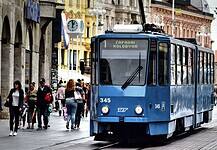
Buses are the main way to travel between towns. Intercity coaches link Zagreb with the whole coast, and regional buses reach most villages, though services on the islands and in rural areas drop off outside summer. Buy tickets at the bus station or online. Croatia’s railway network is limited and slower than the bus on most routes, and there is no railway to Dubrovnik. In Zagreb, trams are the easiest way to get around the city.
Jadrolinija, the state-owned ferry company, runs car ferries and fast passenger catamarans to the islands, and other companies run catamaran lines in summer. Car ferries on the busiest routes, such as Split to Hvar or Brač, fill up in July and August, so arrive early or book ahead. Catamarans carry foot passengers only and are faster, but they run less often in winter.
A car makes sense for Istria, the Plitvice area and the inland hills. Since the Pelješac Bridge opened on 26 July 2022, you can drive from Split to Dubrovnik without crossing the short Bosnian coastline at Neum, so there are no border checks on the way. The main motorways charge tolls. Dipped headlights are required from 1 November to 31 March, winter tires from 15 November to 15 April, and the drink-driving limit is 0.05 percent, or zero for drivers under 24. For a rental car, consider renting a car with Europcar. Some travelers try their luck with their thumb, as in this hitchhiking story from Croatia.
Sailing in Croatia
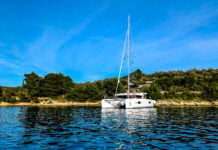
The Croatian coast with its many islands and sheltered harbors is one of the most popular sailing areas in the Mediterranean. You can join a crewed yacht or catamaran week, charter a boat with a skipper, or sail one yourself. Our post on sailing in Croatia explains the options, from yacht tours to using the local ferries on your own. Families can read about catamaran charters for family sailing holidays.
If you skipper the boat yourself, you need an International Certificate of Competence or an equivalent license. Croatia has zero tolerance for alcohol when you are in charge of a boat. If you sail in from abroad, go straight to a designated port of entry, and make sure your stay is registered with the police, which charter companies usually handle. If dolphins appear near the boat, slow down, keep your distance and let them decide how close they come.
Where to Stay in Croatia
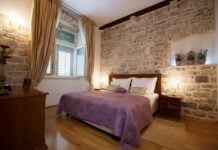
Private apartments and rooms (apartmani and sobe) are the classic Croatian stay. They are often cheaper than hotels, come with a kitchen and are run by families who can tell you where to swim and eat. The coast also has resort hotels, small boutique hotels in old towns, hostels in the cities and campsites by the sea. Our tips on where to stay in Split, where to stay along the Dalmatian coast and Plitvice Lakes National Park accommodation help you choose.
July and August are the high season on the coast, so book well in advance for those months. Your host registers you with the police and collects the local tourist tax, which is charged per person per night. We recommend booking accommodation on either Booking.com or Agoda.
What to Eat and Drink in Croatia
Croatian food changes with the region. The coast cooks with fish, olive oil and Mediterranean herbs, Istria with truffles and pasta, and the inland regions with meat, paprika and dumplings. Dishes to try:
- Peka – meat or octopus slow-cooked with potatoes under an iron bell covered in embers. Many konobas ask you to order it a few hours ahead.
- Pašticada – beef marinated and braised in wine with dried fruit, served with gnocchi, Dalmatia’s dish for special occasions.
- Crni rižot – black risotto colored with cuttlefish ink.
- Ston oysters – from the beds in the bay of Mali Ston on the Pelješac peninsula.
- Paški sir – a hard sheep’s cheese from the island of Pag.
- Truffles – shaved over fresh pasta in Istria, especially in the fall.
- Ćevapi – small grilled rolls of minced meat with flatbread and chopped onion.
- Burek – flaky pastry filled with cheese or meat, a bakery breakfast all over the country.
Croatia makes good wine. Look for Plavac Mali reds from Pelješac and the Dalmatian islands and Malvazija whites in Istria, and try a small glass of rakija, the local fruit brandy, when a host offers one. For Istria, read about Istrian food and places to eat. On the coast, see the seafood of Ston and where to eat in Split.
Food and drinks in Croatia
Things to Do and See in Croatia
Croatia has ten UNESCO World Heritage Sites:
- Old City of Dubrovnik – listed in 1979.
- Diocletian’s Palace in Split – the historical complex of Split, listed in 1979.
- Plitvice Lakes National Park – listed in 1979.
- Euphrasian Basilica in Poreč – the episcopal complex, listed in 1997.
- Historic City of Trogir – listed in 1997.
- Cathedral of St. James in Šibenik – listed in 2000.
- Stari Grad Plain on Hvar – listed in 2008.
- Stećci – medieval tombstone graveyards shared with neighboring countries, listed in 2016.
- Venetian Works of Defence – Zadar’s walls and the St. Nicholas Fortress in Šibenik, listed in 2017.
- Beech forests – in Paklenica and Northern Velebit, part of the European beech forests listing since 2017.
Beyond the heritage sites, the coast is made for time on the water. Take a ferry to an island for a few nights, kayak along the shore, or swim from the rocks, as most Croatian beaches are pebble or stone. Near Omiš, south of Split, you can go rafting and zip lining in the canyon of the Cetina River. Krka’s waterfalls make an easy day trip from Šibenik or Split. Many scenes of King’s Landing in Game of Thrones were filmed in Dubrovnik, and walking tours take you to the locations.
Things to do and see in Croatia
Shopping in Croatia
Croatian souvenirs tend to be things you can eat, drink or wear. Look for olive oil from Istria and the islands, truffles and truffle products from Istria, lavender from Hvar, Pag cheese, wine and rakija, and Maraschino, the cherry liqueur of Zadar. Croatia claims the necktie as its own, the kravata, named after the Croatian soldiers who wore knotted scarves in 17th-century France, and you’ll find tie shops in Zagreb and the coastal cities. Lacemaking from Pag, Hvar and Lepoglava and the painted gingerbread hearts (licitar) of northern Croatia are both on UNESCO’s list of intangible cultural heritage.
For food, go to the morning markets. Zagreb’s Dolac market, just above Ban Jelačić Square, sells fruit, vegetables, cheese and flowers every day, and coastal towns have a market near the harbor where you can buy fresh fish. Most shops close on Sundays, as the law lets them open on only 16 Sundays a year, but shops at stations, airports, ports, petrol stations, campsites and marinas can stay open.
If you live outside the EU, you can claim back the VAT, which is 25 percent on most goods. Spend at least about €100 on a single receipt and ask the shop for the tax refund form. Customs has to stamp the form and see the goods when you leave the EU, by the end of the third month after the purchase, and you then send the stamped form back to the shop for your refund.
Nightlife in Croatia
Croatian nightlife follows the season. From June to early September the coast stays up late, and in winter most beach bars and clubs close. Hvar town is the best-known party spot, with harbor bars and beach clubs open into the morning. Zrće beach near Novalja on the island of Pag has open-air clubs that host festivals all summer, and Split usually hosts the Ultra Europe electronic music festival in July. In Split, people start the night on the Riva and in the lanes of the old town, and in Dubrovnik, bars on the rocks outside the city walls serve drinks at sunset.
Zagreb has the liveliest scene outside summer. Tkalčićeva Street below the Upper Town is lined with bars, and the city has clubs and concert venues open all year. For a quieter evening on the coast, look out for klapa concerts in squares and churches. Many coastal towns fine people for drinking in public and for rowdy behavior, so keep the party inside the bars.
Festivals in Croatia
Summer festivals. The Dubrovnik Summer Festival has run every year since 1950, from 10 July to 25 August, with theater, concerts and dance at more than 70 open-air venues in the Old City, including Fort Lovrijenac and the atrium of the Rector’s Palace. In Sinj, inland from Split, horsemen in historic costume ride at full gallop and aim a lance at a small iron ring in the Sinjska alka, held on the Sunday of the first full weekend of August. It commemorates the defense of Sinj against an Ottoman army in 1715 and is on UNESCO’s list of intangible cultural heritage.
Other dates. The Rijeka Carnival is the biggest in Croatia. It runs in the weeks before Lent, and its main parade on the last Sunday before Ash Wednesday lasts from noon into the evening. Across the country, towns celebrate their patron saint’s day with a procession and a party, and in December the larger cities hold Advent markets.
Safety Tips for Croatia
Croatia is a safe country to travel in, and violent crime is rare. Pickpockets work in the busy tourist areas, so don’t carry large amounts of cash and use the safe in your room. Some so-called gentlemen’s clubs have charged tourists thousands of euros and threatened those who refused to pay. If you take a taxi alone at night, photograph the car’s number, share your ride in the app and tell someone where you are going. Carry your passport or ID card, and keep a copy of the photo page.
Split, Dubrovnik, Hvar and other towns fine people on the spot for walking around town shirtless or in swimwear, drinking in public, sleeping in public and climbing on monuments, and fines for drunken or rowdy behavior can reach €4,000. In summer, wildfires can close roads at short notice, and starting a fire, even by accident, can bring a heavy fine. Stay on marked paths in the interior because of the landmine risk, and call 112 for help in the mountains or at sea. Read the current FCDO safety advice before you go.
Conclusion
With one week, fly into Dubrovnik and out of Split, with a few nights on Korčula or Hvar in between. With two weeks, add Zadar, Šibenik and Krka, then head inland to Plitvice and on to Istria or Zagreb. On a second trip, try a week of sailing, the islands of Kvarner Bay or Slavonia in the east.
June and September give you warm sea water with fewer people than July and August, and May and October suit walking and sightseeing. Before you book, check the EES and ETIAS rules, reserve car ferries and rooms early for the high season, and keep some cash for the islands. Our general travel tips for Croatia cover more of the practical details.