Travel to Kenya
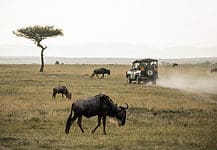
The first morning on safari usually starts in the dark. You climb into the vehicle with a coffee, the guide turns off the engine at the edge of the plains, and as the light comes up the grass starts moving: wildebeest, zebra, a lioness walking straight past the car. That moment is why most people come to Kenya, and it rarely gets old.
Kenya is more than the Masai Mara, though. Amboseli puts elephants in front of Kilimanjaro, Tsavo is wild and red-earthed, and the Great Rift Valley holds flamingo lakes, hot springs and the cliffs of Hell’s Gate. Mount Kenya can be trekked to Point Lenana at 4,985 meters, and the Indian Ocean coast has Swahili towns, coral reefs and long white beaches.
Nairobi is the start of almost every trip. It has a national park on the edge of the city, the giraffes and orphaned elephants that everybody wants to meet, and a food and nightlife scene that is worth more than one night.
Our travel tips below are sorted by place and by what you want to do: Nairobi, Great Rift Valley, Safaris and National Parks, Things to Do and See, Outdoor and Nature and General Travel Tips.
Visa Requirements for Kenya
Most visitors from outside Africa need a Kenya ETA (Electronic Travel Authorisation), which replaced the visa in January 2024. You apply online at etakenya.go.ke. A standard single-entry ETA costs $30 and usually takes about three working days, but the official advice is to apply at least two weeks before you travel. Since 2025, most African citizens no longer need an ETA.
Since early October 2026, most visitors who need an ETA must also buy Kenya’s government travel health insurance during the application, for about $44 plus a small fee. Your own travel insurance does not replace it. The rules are new, so check the current requirements before you apply.
Your passport needs to be valid for at least six months after arrival, with at least two blank pages. A yellow fever vaccination certificate is required if you arrive from a country with yellow fever risk.
General travel tips for Kenya
Important Cultural Information
English and Swahili are the official languages, and you can get by in English almost everywhere you are likely to travel. A few words of Swahili go a long way: jambo or habari for hello, asante for thank you and pole pole, slowly slowly, which you will hear a lot. Here is more on greetings in Africa.
Kenyans are polite and greetings matter, so say hello before you ask a question. Dress modestly away from the beach, especially in the Muslim towns of the coast such as Lamu and Mombasa’s Old Town. Always ask before you photograph people, including Maasai and Samburu communities you meet on safari.
Kenya banned plastic carrier bags in 2017, so pack your things in reusable bags.
Banking & Money in Kenya
The currency is the Kenyan shilling (KES). Card payments work in hotels, lodges, malls and bigger restaurants, and ATMs are easy to find in towns. Away from the cities, carry some cash in small notes for tips, markets and drinks.
Kenya runs on M-Pesa, the mobile money service from Safaricom. Locals use it for almost everything, from taxis to market stalls, and visitors can use it too with a registered Kenyan SIM card. Many safari camps and park fees are paid electronically, so ask your operator how fees are handled before you go.
Medical Emergency Information
For police and ambulance, call 999. Private hospitals in Nairobi are good, but care is expensive and outside the cities facilities can be basic. Make sure your travel insurance covers medical evacuation, especially if you are going on safari or climbing Mount Kenya.
Malaria is present in much of Kenya, especially at the coast and around Lake Victoria, while Nairobi and the highlands have a low risk. See a travel clinic about antimalarials and vaccinations at least eight weeks before you go. Our health guide for East Africa safaris has the details.
If you’re looking for travel insurance, we are an affiliate of SafetyWing, a travel medical insurance provider.
Wi-Fi and Internet in Kenya
Mobile coverage is good in towns and along the main roads, and many safari camps have Wi-Fi in the main area, though it can be slow. Safaricom has the widest network, followed by Airtel. You need your passport to register a local SIM card, which you can buy at the airport. An eSIM bought before the trip is the easiest option for data.
Use a VPN on public Wi-Fi, like ExpressVPN.
Arrival in Kenya
Most international flights land at Jomo Kenyatta International Airport (NBO) in Nairobi. Moi International Airport (MBA) in Mombasa has flights from Europe and the Middle East and serves the coast. Small planes to the safari parks and the coast leave from Nairobi’s Wilson Airport.
Kenya also has land borders with Tanzania and Uganda, which makes it easy to combine a Kenya safari with the Serengeti or gorilla trekking. Here is how a Tanzania vs. Kenya safari compares.
Areas of Kenya
Most trips combine Nairobi with one or two safari areas, and many end with a few days on the coast.
Nairobi
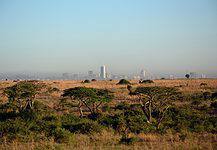
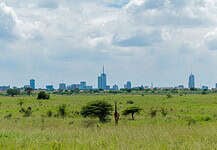
Kenya’s capital is the hub for almost every safari. Spend a day on the 24-hour Nairobi itinerary: the orphaned elephants of the Sheldrick Wildlife Trust (book ahead by email), the Giraffe Centre, the Karen Blixen Museum and Nairobi National Park, where you can see rhinos and lions with skyscrapers in the background. Golfers have some of the best courses in East Africa on the city’s edge.
Great Rift Valley
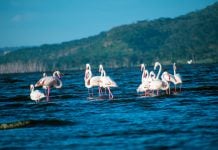
A few hours north-west of Nairobi, the valley floor is lined with lakes. Lake Nakuru National Park has rhinos and Rothschild’s giraffes, Lake Bogoria has hot springs and flamingos, and at Hell’s Gate you can cycle and hike among the wildlife. Lake Naivasha makes an easy base.
Travel tips for the Great Rift Valley
Masai Mara
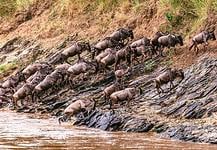
Kenya’s most famous reserve, and the Kenyan side of the Serengeti ecosystem. The Great Migration is usually here from about July to October, with the river crossings that everybody hopes to see. The private conservancies around the reserve limit vehicle numbers. Is it worth the price? Here is our honest take on whether the Masai Mara is worth it.
Amboseli and Tsavo
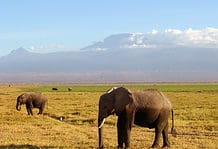
Amboseli is known for big elephant herds with Kilimanjaro behind them on a clear morning. Further east, Tsavo East and Tsavo West together form one of the largest protected areas in Africa, with red elephants, lava fields and far fewer vehicles than the Mara.
Mount Kenya and Laikipia
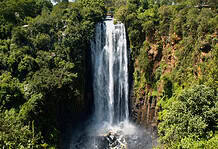
Africa’s second highest mountain can be trekked to Point Lenana without technical climbing. The Laikipia plateau around it has private conservancies such as Ol Pejeta, known for its rhinos, and Thomson’s Falls near Nyahururu.
Outdoor and nature in Kenya
The Coast
The Indian Ocean coast runs from Diani in the south to Lamu in the north. Expect Swahili culture and food, coral reefs, dhow trips and beaches such as Diani, Watamu and Malindi. Wasini Island is a quiet day trip for snorkeling, and the coast is popular with digital nomads. Lamu’s Old Town is a UNESCO World Heritage Site.
Transportation in Kenya
Distances are long and roads can be slow, so many travelers fly between safari areas. Small planes leave Nairobi’s Wilson Airport for the Mara, Amboseli, Laikipia and the coast, with strict soft-bag luggage limits.
The Madaraka Express train links Nairobi and Mombasa in about five to six hours, with stops at Voi and Mtito Andei for Tsavo. Book ahead, as economy often sells out.
Most safari visitors travel with an operator and a driver-guide in a pop-up roof vehicle. Self-driving is possible with a 4×4 and experience on rough tracks. Kenyans drive on the left. In Nairobi, Uber and Bolt are the easiest way to get around, and matatus (shared minibuses) are cheap but crowded.
Accommodation in Kenya
On safari you choose between lodges, tented camps and small camps in private conservancies. Tented camps range from simple to very comfortable, with proper beds and en-suite bathrooms under canvas. Camps in the conservancies around the Masai Mara cost more but keep vehicle numbers low.
Nairobi has everything from international hotels to small guesthouses in Karen and Westlands. On the coast you’ll find beach resorts in Diani and Watamu and old Swahili houses turned into guesthouses in Lamu.
Book early for the migration months from July to October and for Christmas and New Year.
What to Eat and Drink in Kenya
Nyama choma, grilled meat shared at the table, is the national favorite, usually with ugali (a stiff maize porridge), sukuma wiki (braised greens) and kachumbari salad. Chapati and pilau rice are everywhere. On the coast, Swahili cooking brings coconut, tamarind and spices: try fish in coconut sauce, biryani and mahamri, a sweet fried bread.
Kenyan tea and coffee are excellent, and Tusker is the local beer. Tipping is customary for safari guides and camp staff, and around 10 percent is normal in restaurants when service is not included.
Safaris and National Parks in Kenya
A first safari usually means three to five days across two parks, often the Masai Mara plus Amboseli or Lake Nakuru. The 8-day Kenya itinerary shows how that fits together, and here are five Kenyan safaris for different budgets and styles.
The dry months from late June to October and from January to February are the easiest for game viewing. The long rains usually fall from March to May and the short rains in November and December, when the parks are greener and cheaper. More on the best time to go on safari in Kenya and the best time to visit Kenya overall.
Safaris and national parks in Kenya
Things to Do and See in Kenya
Beyond the safari, Kenya has plenty to fill a trip:
- Sheldrick Wildlife Trust and the Giraffe Centre – Nairobi’s two classic animal visits. The elephant orphanage takes bookings by email only.
- Hiking and cycling – ride past zebras in Hell’s Gate or trek to Point Lenana on Mount Kenya.
- Flamingo lakes – Lake Bogoria and the other Rift Valley lakes.
- The coast – snorkeling off Wasini Island, dhow trips and the old towns of Mombasa and Lamu.
- Festivals – from the Lamu Cultural Festival to the Maralal Camel Derby, here are the festivals in Kenya worth planning around.
- Golf – Kenya golf holidays combine championship courses with a safari.
For more ideas, see our guide to Kenya attractions.
Things to do and see in Kenya
Safety Tips for Kenya
The main safari areas and the coast are generally safe for visitors who use common sense. In Nairobi and Mombasa, petty crime and phone snatching happen, so keep valuables out of sight, use Uber, Bolt or a hotel taxi after dark and don’t walk alone at night.
Some areas near the Somali border and parts of the north coast are covered by travel warnings because of the security situation. Check your government’s travel advice before you book, and follow your guide’s instructions around wildlife at all times.
Conclusion
Kenya is where safari travel started, and it still delivers: big herds, big cats and guides who know every track. Add a day in Nairobi, a few nights in the Rift Valley or on Mount Kenya and some time on the coast, and you see how much more there is.
Start with the best time to visit Kenya, sort out your Kenya ETA, and the rest falls into place.
All travel tips for Kenya