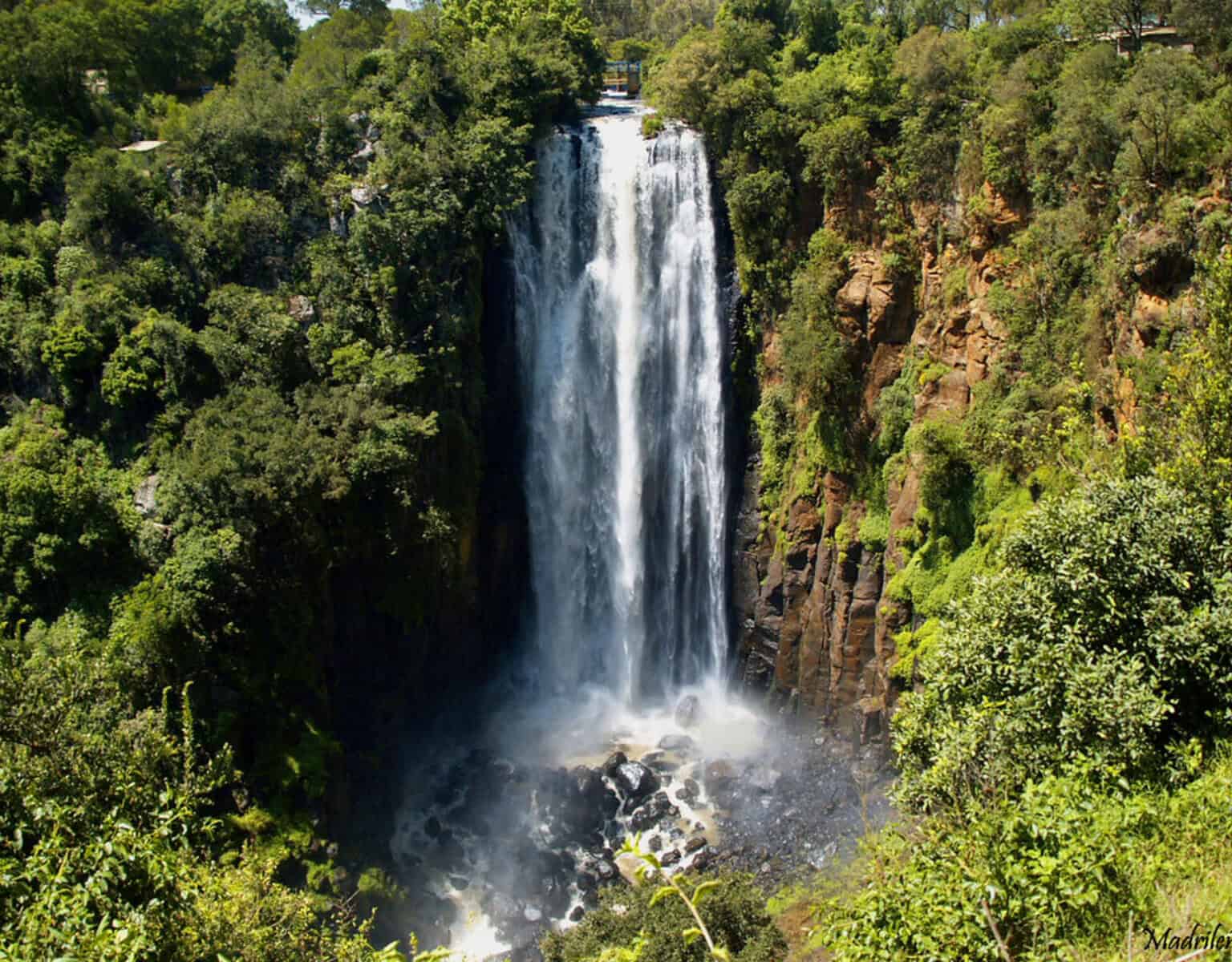
Thompson Falls in Kenya, officially Thomson’s Falls, drops 74 meters off the edge of the central highlands into a forested gorge on the outskirts of Nyahururu town in Laikipia County. You can watch it from a viewpoint a few steps from the car park, hike down to the spray at its base and browse the craft stalls by the gate, all at about 2,360 meters above sea level.
It makes an easy half-day stop on the drive between Nairobi and Lake Nakuru or Laikipia, and a quiet break from Kenya’s cities.
This guide provides everything you need to plan your visit to Thompson Falls in Kenya, from how to get there and when to go, to what to do and what else to explore.
Here’s an overview:
- Where is Thompson Falls in Kenya?
- Best Time to Visit Thompson Falls
- Dry Season (January to March, July to October)
- Rainy Season (April to June, November to early December)
- How to Get to Thompson Falls
- Things to Do at Thompson Falls
- View the Falls from the Main Lookout Point
- Hike to the Base of the Falls
- Explore the Surrounding Forest Trails
- Interact with Local Artisans and Communities
- Visit the Equator Marker
- Other Nearby Attractions to Explore
- Lake Ol Bolossat
- Aberdare National Park
- Marmanet Forest
- Travel Tips for Visiting Thompson Falls
Where is Thompson Falls in Kenya?
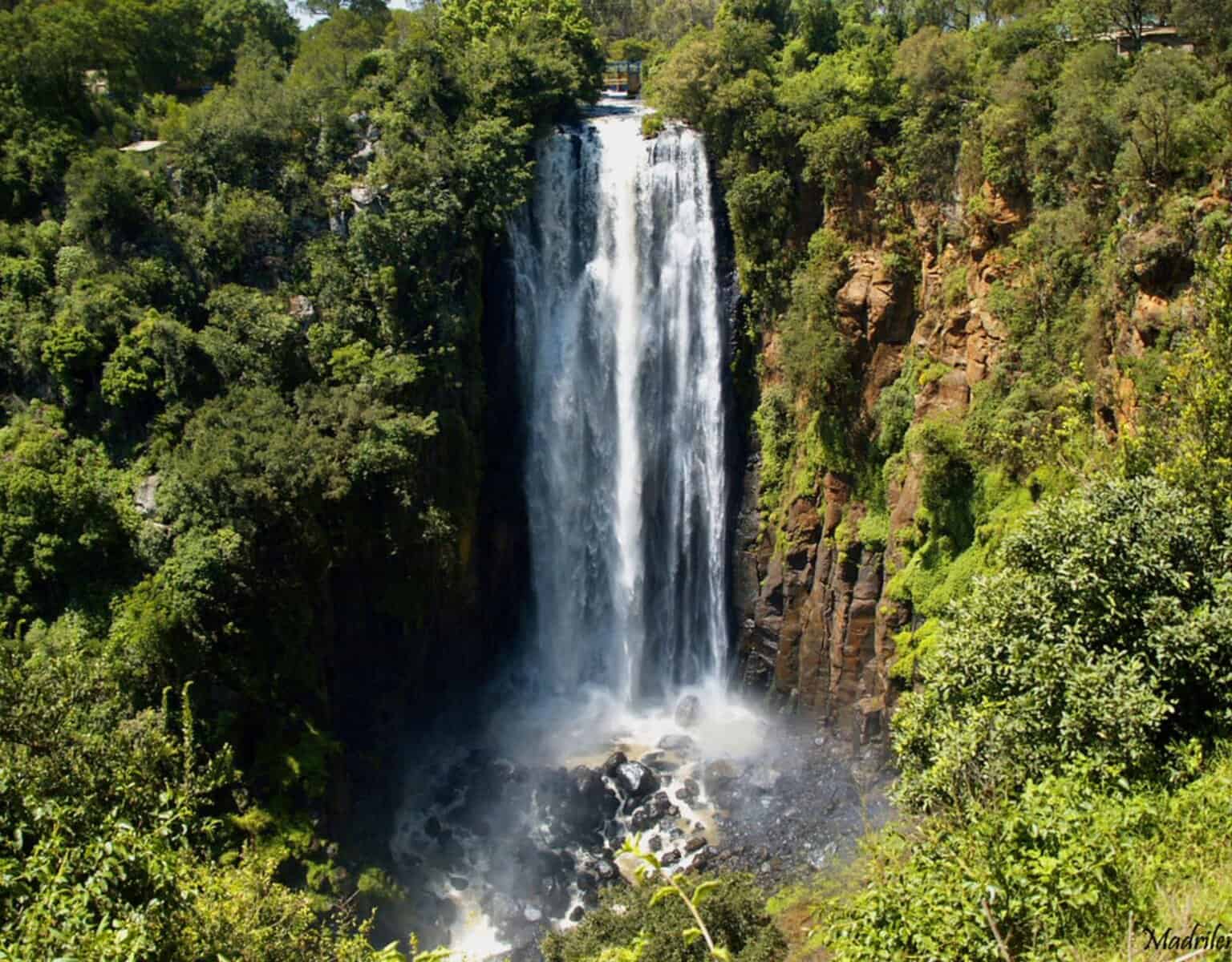
Thompson Falls is found in Nyahururu, a town situated about 180 kilometers north of Nairobi, and roughly 110 kilometers from Nakuru. The waterfall is part of the Ewaso Ng’iro River, which originates from the Aberdare Ranges, one of Kenya’s key water towers.
This high-altitude region (approximately 2,360 meters above sea level) enjoys a cool climate year-round, making it a refreshing stop for travelers moving between central Kenya and the Rift Valley.
Joseph Thomson, a Scottish geologist and explorer, was the first European to reach the falls in 1883, and he named them after his father. Local communities knew the falls long before that, and the town of Nyahururu later grew up around them.
Beyond its colonial history, the falls are a central part of the local ecosystem and a cultural landmark for the communities living in the surrounding areas, including the Kikuyu, Maasai, and other indigenous groups.
Related read: Reasons to Visit Kenya
Best Time to Visit Thompson Falls
Thompson Falls can be visited year-round, but the experience is influenced by seasonal weather patterns.
Related read: When is the Best Time to Visit Kenya?
Dry Season (January to March, July to October)
- Best time for hiking and photography
- Clear skies and easier access to the gorge
- Ideal for combining with other destinations like Lake Nakuru or Aberdare National Park
Rainy Season (April to June, November to early December)
- The waterfall is at its fullest and most dramatic
- Trails may be slippery, so hiking requires caution
- Fewer tourists, offering a more private experience
Regardless of the season, it’s advisable to bring a jacket or sweater due to the cool temperatures, especially in the morning and evening.
How to Get to Thompson Falls
There are two major ways you can get to Thompson Falls.
The first is by road where you will drive from Nairobi to Nyahururu in about 4 hours. The two main routes can be via Naivasha to Gilgil then Nyahururu, or alternatively via Thika to Karatina, Nyeri then Nyahururu. Both routes are scenic, though the Nyeri route offers beautiful views of the Aberdares and Mount Kenya.
The second way is by air. Though Nyahururu has a small airstrip, it is rarely used for commercial flights. The nearest functional airstrip is in Nanyuki which is about 1.5 hours away. From there, road transport can be arranged to Nyahururu.
Things to Do at Thompson Falls
The scenic fall offers a variety of activities to enjoy at Thompson Falls in Kenya.
Related read: Kenya Attractions: A Guide to Experiencing Kenya
View the Falls from the Main Lookout Point
Just a few meters from the parking area, visitors can access a secure viewpoint overlooking the waterfall. From here, you can capture the full drop of the cascading water into the gorge below. Early mornings offer dramatic misty views, while late afternoons are great for photography.
Hike to the Base of the Falls
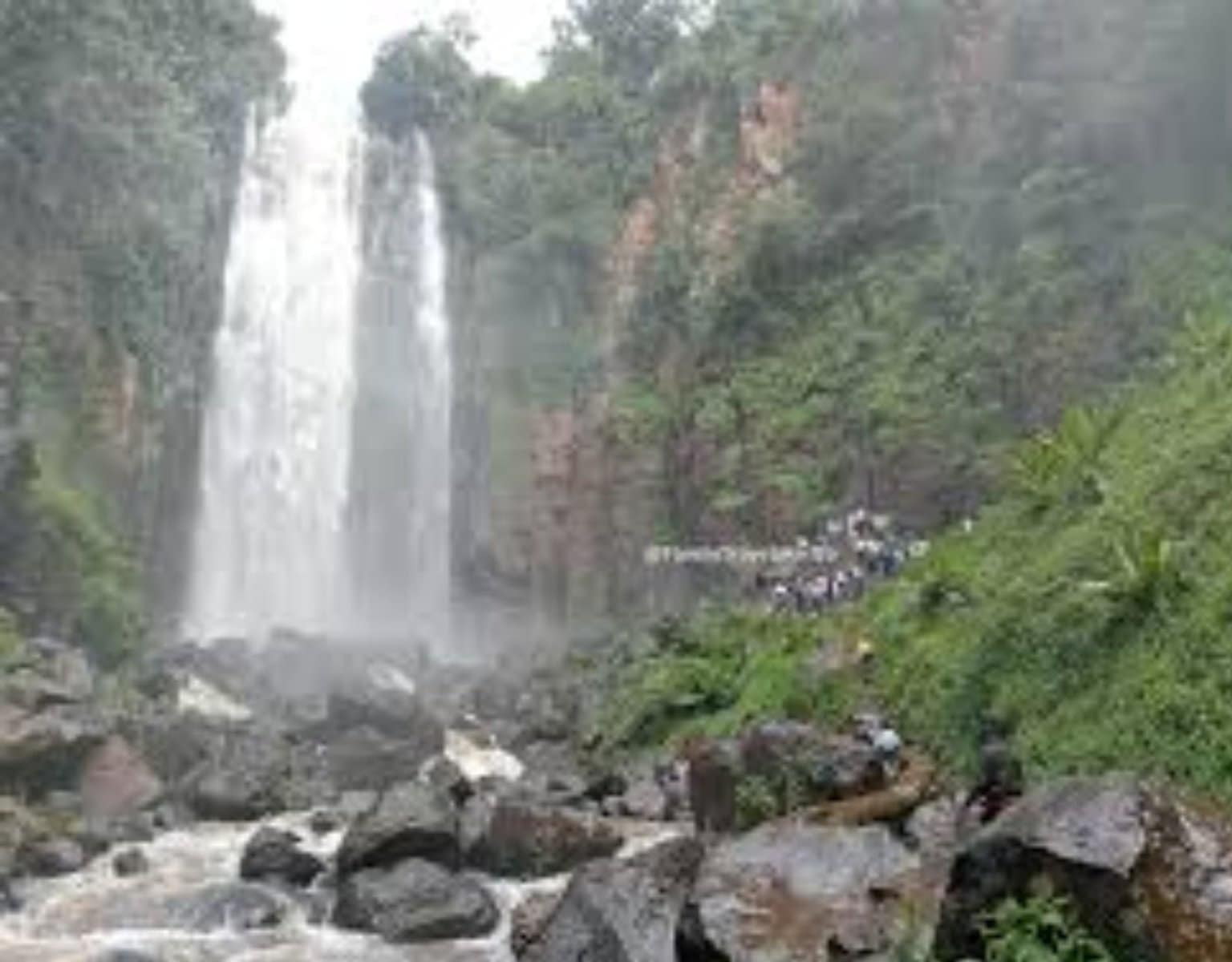
A steep path leads down into the gorge, offering adventurous travelers a chance to see the waterfall from below. The hike takes about 15 to 20 minutes downhill, but the climb back up is steep and requires moderate fitness. Hiring a local guide is highly recommended for safety and navigation. You’re also encouraged to wear good hiking boots with a nice grip while hiking this path.
Explore the Surrounding Forest Trails
The area around the waterfall is covered with dense indigenous forest, where you can see colobus monkeys, baboons, and several bird species. Short trails around the falls offer nature walks for those looking to explore the local flora and fauna.
Interact with Local Artisans and Communities
Near the main gate, local vendors sell Maasai beadwork, wooden carvings, and traditional Kenyan souvenirs. Visitors can also engage in cultural exchanges, watch traditional dances, or learn about the heritage of the Maasai and Kikuyu people who inhabit the region.
Visit the Equator Marker
Just outside Nyahururu lies a marked equator crossing. Some local guides put on a show of water draining in different directions on either side of the line. It’s fun to watch, though the swirl comes from how the water is poured, since the Coriolis effect is far too weak to steer water in a small basin.
Other Nearby Attractions to Explore
Thompson Falls can be a standalone destination or part of a broader central Kenya itinerary.
Some notable nearby sites include:
Lake Ol Bolossat
This is the only natural lake in central Kenya and lies about 20 minutes from Nyahururu. It’s an important bird habitat, best known for its grey crowned cranes. Birdwatchers and nature photographers will find this a rewarding stop.
Aberdare National Park
Approximately 1.5 hours from Nyahururu, Aberdare National Park offers dense forests, mountain peaks, waterfalls, and rich wildlife, including elephants, buffalo, and even elusive leopards. The park’s Treetops lodge, where Princess Elizabeth was staying in 1952 when she became queen, closed during the pandemic and has since reopened under new owners after renovations.
Marmanet Forest
A large indigenous forest just outside Nyahururu, Marmanet offers peaceful nature trails, picnic spots, and a chance to see native tree species and small wildlife. It’s ideal for travelers looking for a less commercialized outdoor experience.
Travel Tips for Visiting Thompson Falls
Here are some things that you can keep in mind while traveling to Thompson Falls.
- Altitude Awareness: Nyahururu is at a high elevation. Some travelers may feel slightly lightheaded or fatigued. Hydrate well and take it easy on arrival.
- Footwear: Wear hiking shoes or sturdy sneakers, especially if you plan to descend into the gorge.
- Safety: While the area is generally safe, avoid descending the trail alone. Local guides are available and affordable.
- Photography: There may be small fees for taking photos, particularly if capturing portraits of locals. Always ask before photographing people.
- Cash: Carry cash in Kenyan Shillings as many smaller vendors and attractions do not accept credit cards or mobile money.
- Weather: Rain can occur unexpectedly, so pack a light waterproof jacket and umbrella just in case.
- Sustainable Tourism and Conservation: Thompson Falls and the surrounding Ewaso Ng’iro ecosystem are part of a delicate natural balance. Visitors are encouraged to: Avoid littering and dispose of waste responsibly, refrain from feeding wild animals
Give yourself enough time for the steep climb back out of the gorge, and bring a warm layer for the highland air.
For travelers looking to explore Kenya beyond its national parks and coastal resorts, Thompson Falls provides an authentic and scenic alternative. With proper planning, it’s a destination that rewards every kind of traveler.