Most first-timers walk into Arena México hoping to understand what’s happening. The ones I take through a lucha libre school first understand it in their bodies, because they’ve already tried to fall, roll and bounce off the ropes themselves.
I’m a lucha libre fan who guides these nights for a living, and my favorite way to see lucha libre in Mexico City packs the whole sport into one evening: a real wrestling school, mezcal with the luchadores, street tacos and a live show at Arena México. Here’s how the night unfolds, and what each step teaches you about reading the ring, the moves and the crowd.
Spend a Lucha Libre Night With Calavera Tours
Calavera Tours runs lucha libre evenings in Mexico City with a professional luchador from Mi Sagrada Lucha Libre, a mask to keep and a mezcal tasting in the gym before the show.
Good to know
Nights: Tuesdays and Fridays end at Arena México; on Saturdays the evening starts at a mezcalería in the Centro Histórico and ends at Arena Coliseo
Duration: About 3.5 hours
Price: €50 to €60 per person depending on the night, checked November 2026
Included: Your own luchador mask, mezcal, street tacos and your arena ticket
Keep in mind: Drinks and snacks inside the arena are extra, better seats cost more, the upper stands mean several flights of stairs, and the tour is not wheelchair accessible
Book the Authentic Lucha Libre Tour
This section contains partner links. If you book through them, we may earn a commission at no extra cost to you. We only feature partners whose services we believe add genuine value for travelers.
Start With the Mask
Our evening begins at the entrance of Territorio Sagrado, a lucha libre school in Colonia Obrera. From the street it looks like an old corrugated-metal warehouse, until you spot the banner, the murals and the posters announcing upcoming shows.
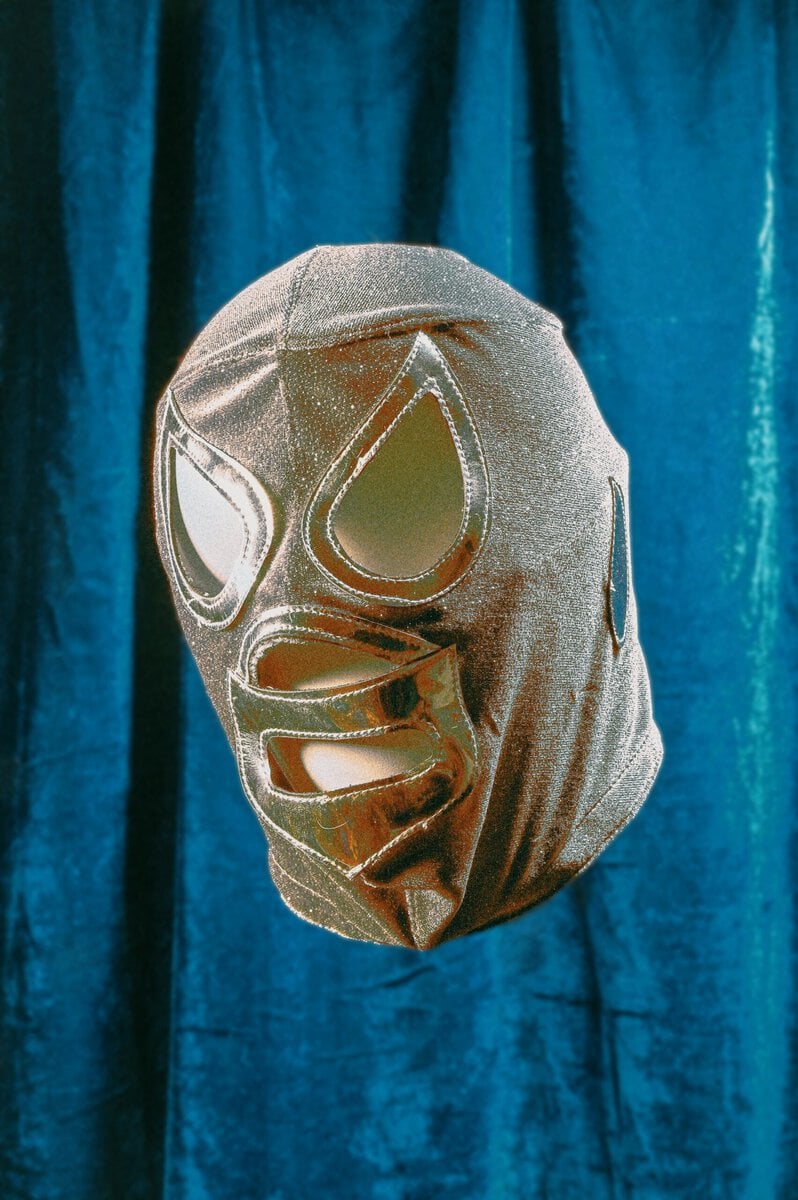
Just inside is a narrow hallway where every guest picks a luchador mask to keep. Choosing it before you see anything else is deliberate. Everything about lucha libre makes more sense once you understand what that piece of fabric means.
Why the Mask Matters
The question I want every first-timer to ask is: “Why is the mask so important?”
In lucha libre, the mask is the luchador’s identity. Behind it, he becomes a character, a hero or a villain, and he protects his real identity for his entire career. Fans know him only by his wrestling name.
That’s why the biggest bet in the sport is máscara contra máscara (mask versus mask). The wrestler who loses must take off his mask in front of the crowd and reveal who he really is, and he can never take that back. When guests understand this, the mask they picked in the hallway becomes a small piece of the tradition. I also tell each guest which luchador their mask belongs to.
Meeting the People Behind Them
A different professional luchador joins us on every tour. One of them is Sky Man, a técnico who has been wrestling for 18 years. His winged mask with a bold “S” stands for an angel who flies through the ring fighting the rudos for justice. Like every luchador, he never reveals his real identity. He loves to fight and loves teaching just as much, so showing first-timers their first moves comes naturally to him.
Inside the Gym
Past the hallway, the space opens into a huge gym under an industrial roof. A full-size ring sits in the middle, surrounded by posters from past Mi Sagrada Lucha Libre shows. Music plays loudly while luchadores train around you, and you hear bodies slamming into the canvas and the shouts of the session. It’s a closed, warm space, and it feels welcoming from the moment you walk in with your mask on.
By the ring, I introduce myself and explain what lucha libre is about. Then the luchador shares his story, answers questions and invites guests up to try some moves or pose for photos in classic holds.
Getting in the Ring
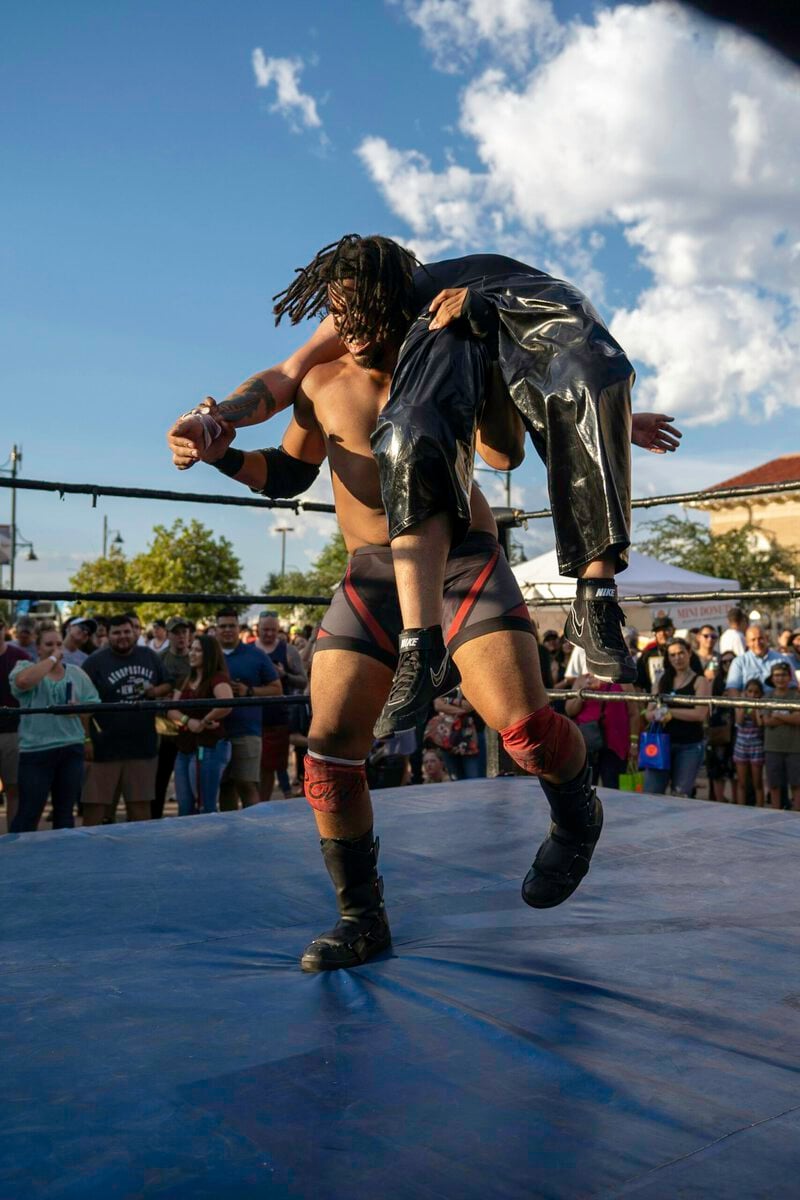
This is the moment guests remember most. Many have seen lucha libre on TV and never imagined standing in the ring of a real lucha libre school in Mexico City, wearing a mask, learning to fall and roll next to a professional. It’s a little scary and a lot of fun. One guest told us it became a new core memory.
Going in is always optional. On quieter nights, the luchador invites guests to pose for photos in classic holds instead, and that’s a perfectly good way to take part.
The Mezcal
Next comes a tasting of two ancestral Oaxacan mezcals, an espadín and an espadín capón, served in the gym with sal de gusano on the side. Both are smoky and earthy, and there’s time for another round afterward.

Why the “Basic” Moves Humble Everyone
Guests are always surprised by how hard the basics are. Falling, rolling and bouncing off the ropes look easy on TV. Within minutes in the ring, most people are laughing at themselves and breaking a sweat.
One guest from the US had spent a few days on classic sightseeing, museums and archaeological sites. In the gym she laughed at herself the whole time, struggling with even the simplest moves the luchadores taught. The moment turned later at Arena México. Once the matches started and she watched professionals fly off the ropes and land the kind of moves that had felt impossible a few hours earlier, she was completely blown away. Having tried it herself made every flip and fall mean something.
Many articles call lucha libre fake, or just theater. The outcome may be scripted, but the flips, the falls and the pain are real, and luchadores train for years to do them. Spend ten minutes on that canvas and you’ll never use the word “fake” again.
Tacos and the Walk to the Arena
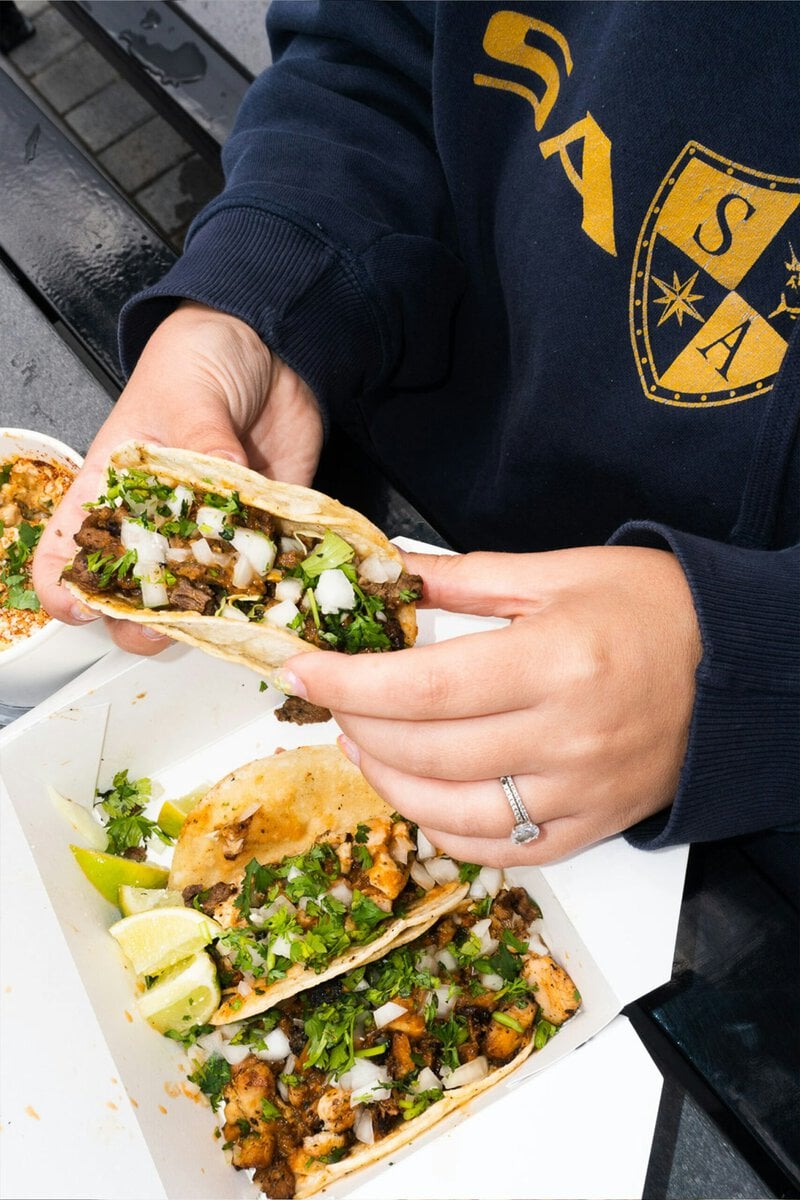
We walk one block from the gym to a street taco spot. It’s out in the cool night air, with cars passing, people calling out their orders and taqueros shouting them back to the grill. The air smells like meat on the grill and al pastor with pineapple.
Guests choose from bistec, pastor, costilla, campechanos, chicken or mushroom tacos. I recommend what to order and explain why these tacos are so typical of Mexico City. To drink, there’s agua de horchata, agua de jamaica or a Coca-Cola. If you want more of the city’s food after the show, our guide to eating through Mexico City’s Miguel Hidalgo district picks up where the taco stand leaves off.
Then we walk 15 to 20 minutes through Colonia Doctores to Arena México. On the way I explain the neighborhood’s lucha libre history, the rules and the chants we’ll shout inside, so you can join in from the first bout.
Reading the Crowd at Arena México
Arena México is known as the “Cathedral of Lucha Libre,” in the city where this tradition was born. It stands on Calle Dr. Lavista in Colonia Doctores and holds around 16,500 people for wrestling. I help everyone find good seats and stay close during the show.
Rudos and Técnicos
The basic split is simple. Técnicos are the heroes who fight clean, and rudos are the villains. The crowd cheers the técnicos and boos the rudos, loudly. I’ll admit my own favorites are often the rudos, and I still boo them with everyone else. That’s part of the game.
The Rules in Two Minutes
Most bouts on a card are tag matches between teams of two or three, often decided over two out of three falls. A fall is won by pinning an opponent for a count of three, by making him submit, by keeping him out of the ring for the referee’s count, or by disqualification for an illegal move.
The rule that confuses first-timers is the tag. In lucha libre a wrestler doesn’t need to slap a partner’s hand. Once the legal wrestler rolls out or touches the floor outside the ring, a teammate can climb in and take over, which is why the action switches so fast. In a trios match, pinning the other team’s captain, or both of his partners, wins the fall.
The Sound and Smell of the Stands
The crowd gets loud and cheerfully rude. Fans scream insults and classic chants at the wrestlers. When Místico fights, the whole arena sings along as his entrance song, “Me muero por besarte,” fills the building.
The stands smell like popcorn, beer and micheladas. Vendors sell chips, tortas, Maruchan instant soups and the classic Mexican-style Cheetos. When the arena is packed, it gets hot, with thousands of people shouting together and the energy rising with every fight.
You’ll watch differently than you would have that afternoon. You know what a fall costs, and you know what’s riding on a mask.
Arena México or Arena Coliseo?
Mexico City has two classic lucha libre venues, and both belong to CMLL, the promotion founded in 1933 that runs the big weekly shows.
Arena México is the big one. It opened in 1956 in Colonia Doctores, seats around 16,500 and hosts the regular CMLL nights, usually on Tuesdays, Fridays and Sunday afternoons. The Friday show is the main event of the week and starts at 8:30 pm.
Arena Coliseo is older and much smaller. It opened in 1943 on República de Perú in the Centro Histórico, seats roughly 5,500, and locals call it the Lagunilla Funnel because the stands drop steeply toward the ring. Its lucha libre night is Saturday at 7:30 pm. You sit closer to the action, and the crowd feels more like a neighborhood than a stadium.
For a first night, Arena México gives you the full spectacle and the biggest names. Arena Coliseo suits a second visit, or a Saturday when Arena México is dark.
Practical Information
Timing and Schedule
Our experience runs on Tuesdays, starting at 6 pm, and Fridays, starting at 7 pm. The Friday show at Arena México begins at 8:30 pm. The whole evening takes about four hours.
I recommend Tuesdays for first-timers, because the arena is less crowded and the seats are better. Lucha libre works year-round, since almost everything happens under a roof.
Tickets and Seats
On our experience, arena tickets are included, and guests can pay extra to upgrade to better seats. If you go on your own, buy at the arena box office (taquilla) or through Ticketmaster México, and skip the resellers outside the doors.
Prices depend on the night and the seat. For a Friday show at Arena México in August, tickets ran from about MXN 200 in the upper zones and around MXN 410 for most ringside sections to about MXN 1,180 for VIP.
Stairs and Heights
The upper stands have several flights of stairs. If you’re uncomfortable with heights or stairs, tell your guide or check the seating before you commit.
What to Bring
Mexico City cools down quickly in the evening, so bring a light jacket. The taco stop is outdoors. In the rainy season, roughly June to October, afternoon showers are common, but the gym and the arena are both covered. Wear shoes you can move in if you plan to get in the ring, and leave expensive cameras and spare cash at your hotel.
Getting Home
When the last match ends, I walk the group to a safe spot to catch their Uber, mask in hand. If you attend on your own, book a ride-hailing car straight from the arena and plan it before the final bout. For more on getting around, see our 48 hours in Mexico City guide and our Mexico travel tips.
Frequently Asked Questions
Do I have to get in the ring?
No. It’s always optional. On quieter nights, the luchador invites guests to pose for photos in classic holds instead, and many people enjoy that just as much.
Which night is better for a first lucha libre show in Mexico City?
Tuesday, in my experience. The arena is less crowded and the seats are better, which makes it easier to follow the action and hear the chants. Friday is livelier, with the show starting at 8:30 pm.
Is lucha libre safe to attend as a tourist?
The crowd is loud and rude toward the wrestlers, and that’s part of the show. What helps most is knowing the chants and rules before you go in, keeping valuables at your hotel, and having a plan for getting home. We walk our groups to a safe spot to catch an Uber at the end of the night.
How do you buy lucha libre tickets in Mexico City without a tour?
Buy at the box office of Arena México or Arena Coliseo on the day, or in advance through Ticketmaster México. Card payment usually works at the box office, but carry some cash as a backup.
What’s the best souvenir to bring home from lucha libre?
A mask. On our experience, each guest picks one at the start, and by the end of the night it carries the story of the evening. You’ll know who the luchador is, and what the mask stands for.
Will I understand what’s happening if I’ve never watched lucha libre?
Yes, once you know the basics: técnicos are the heroes, rudos are the villains, and the mask is the luchador’s identity. The rest you pick up from the crowd, which tells you who to cheer and who to boo.