
The flight from Barcelona to Ibiza takes under an hour. The ferry takes nine. That ratio only works against the ferry if speed is the only thing you care about.
Board at ten in the evening, fall asleep somewhere on the Mediterranean, and walk off the ship into Ibiza Town’s harbor while the streets are still empty and the light is soft enough to photograph. No baggage carousel, no taxi queue at the airport, no overhead announcement telling you to return your seat to the upright position.
Just the port, the morning, and whatever you decide to do with the rest of the day. If you are already in Barcelona and heading to Ibiza, here is how to turn the overnight ferry into the calmest transfer you have ever made.
Why Take the Ferry From Barcelona to Ibiza?
The ferry is not the fastest way to reach Ibiza. It is the one that solves the most problems at once — and creates the fewest new ones.
If you are driving through Spain or renting on the mainland and want your own wheels on the island, the ferry is your only real option. Ibiza’s rental car supply tightens sharply in July and August, prices double, and availability for anything larger than a subcompact disappears weeks in advance. Bringing your own vehicle means you step off the ferry and drive. No agency queue, no damage-waiver negotiation, no wondering whether the air conditioning actually works. The same applies to motorcycles, campervans, and bicycles — the car deck takes them all.
Luggage is another reason. Flights to Ibiza mean checked-bag fees, weight limits, and the particular anxiety of watching a surfboard disappear onto a conveyor belt.
Balearia imposes no weight restrictions on personal luggage as long as you can carry it yourself.
Trasmed caps it at 30 kg per item for seat passengers and 40 kg for cabin passengers — still more generous than any airline.
Then there are the travelers who simply prefer not to fly. Whether it is a carbon footprint decision, a fear of flying, or the slow-travel instinct that an overnight crossing satisfies better than any airport lounge, the ferry replaces an hour of security queues and gate announcements with an evening departure, a cabin with an actual bed, and a sunrise arrival. The transfer becomes part of the trip rather than something you endure before the trip begins.
Finally, cost. Off-peak foot-passenger fares on this route start below €20 one way. Even with a cabin in peak season, the ferry frequently undercuts a last-minute summer flight once you factor in luggage fees and airport transfers on both ends.
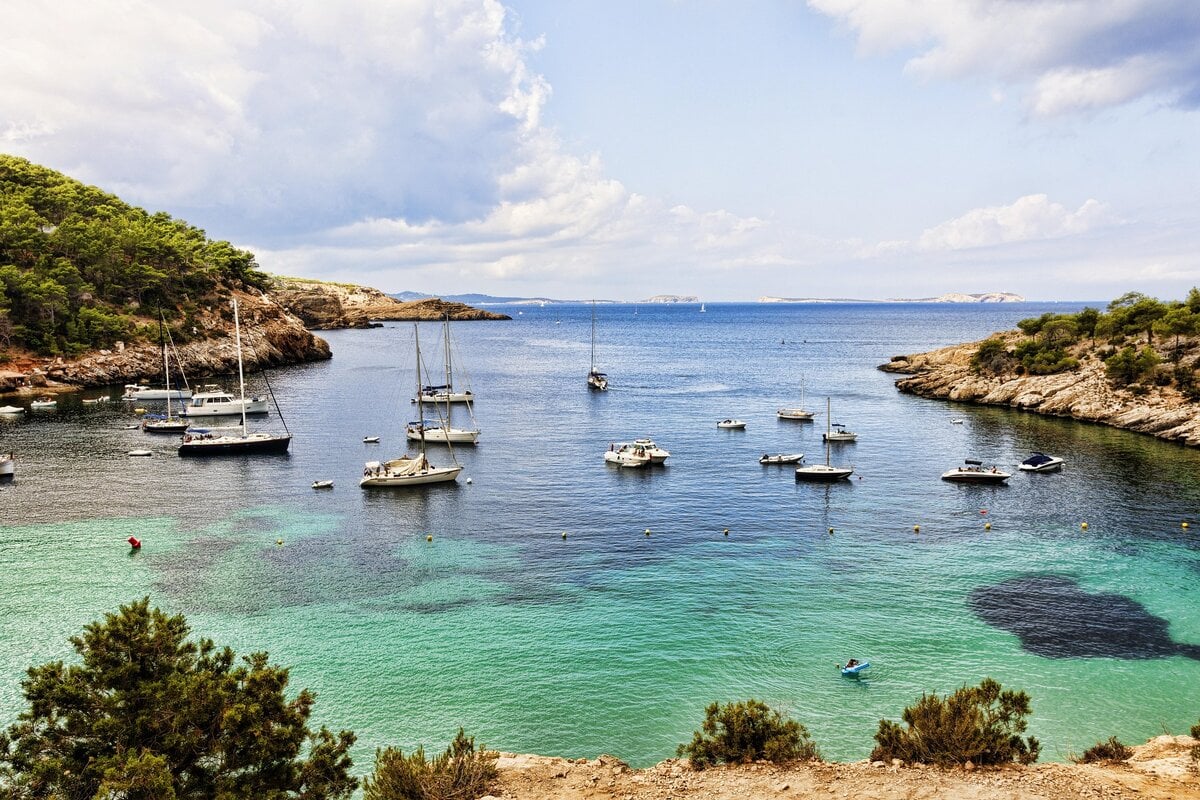
How the Barcelona–Ibiza Ferry Route Works
Three operators serve the route year-round: Balearia (a Spanish company running conventional ferries with vehicle decks), GNV (Grandi Navi Veloci, an Italian operator), and Trasmed (part of the Grimaldi Group, formerly Trasmediterranea). Between them, there are typically 5 to 7 departures per week, increasing to daily sailings in peak summer.
The crossing covers approximately 276 km (149 nautical miles) and takes between 8 hours 30 minutes and 9 hours 30 minutes depending on the operator and sea conditions. Almost all Barcelona – Ibiza ferries are overnight sailings. Departures from Barcelona cluster between 21:45 and 22:00, with arrivals in Ibiza Town the following morning between 06:15 and 07:30. That timing is deliberate: you board after dinner, sleep through the crossing, and arrive early enough to have the whole day ahead of you. Before booking, it’s worth doing a quick search on Ferryhopper, where you’ll find up-to-date Barcelona – Ibiza ferry options from all three operators.
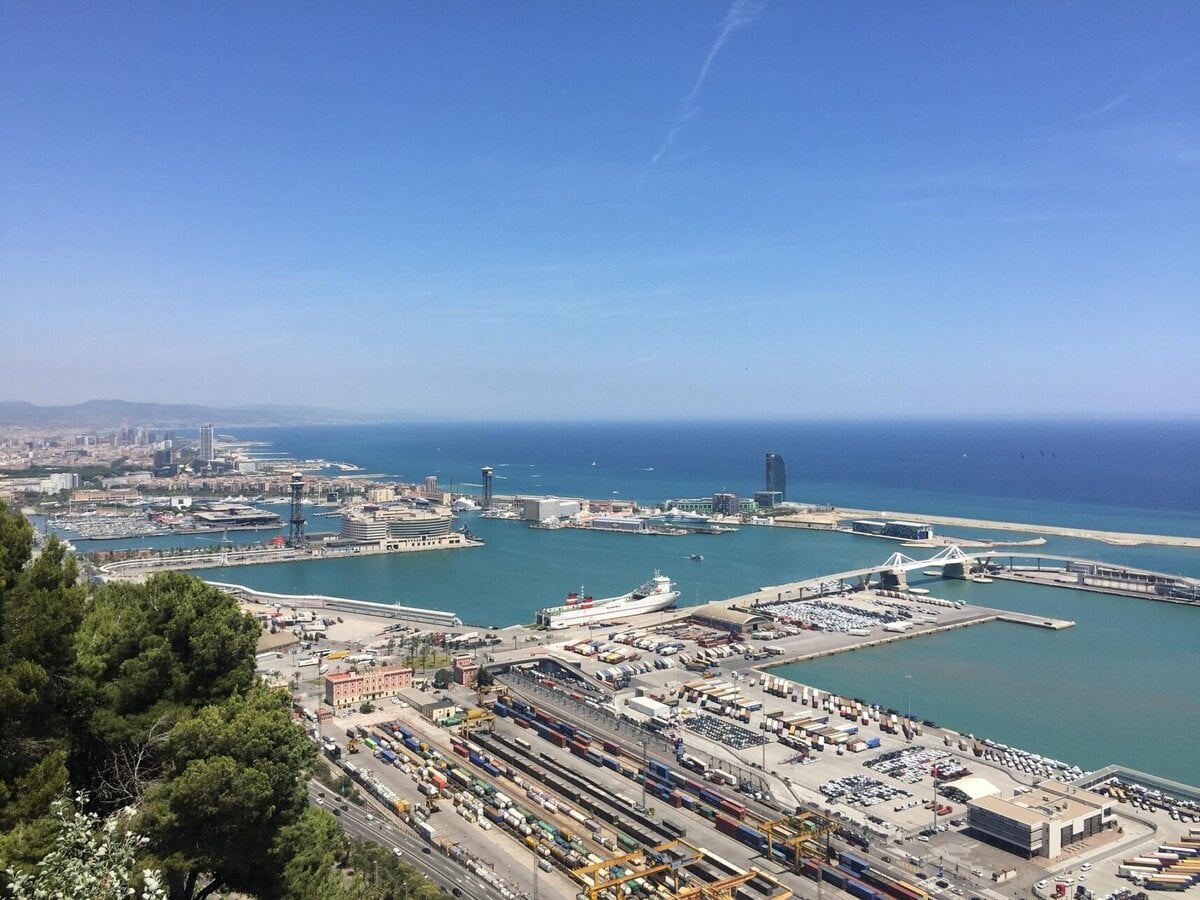
All ferries depart from Barcelona’s main port area. The exact terminal depends on the operator and whether you are on foot or driving. Balearia foot passengers typically use the Terminal Nord near the World Trade Center building. GNV and Trasmed operate from the F2 international terminal at Moll de Sant Bertran, 3. Vehicle passengers with Balearia board from Terminal F4 at Moll Adossat. Check your booking confirmation for the exact terminal — the port is large and getting it wrong at 21:00 costs time you may not have.
Ferries arrive at Ibiza Town’s port (Estacio Maritima Botafoc), roughly 1.5 km from the old town center. You can walk into Dalt Vila in about 20 minutes along the harbor, or take a short taxi ride.
If you are considering a stop in Mallorca as part of a broader Balearic trip, Ferryhopper also lists the Barcelona–Mallorca connection. Read as well our travel tip “One-Week Mallorca Itinerary for Beaches and Mountains”.
What to Expect Onboard
Since every Barcelona–Ibiza sailing is a multi-hour crossing, the ships on this route are full-sized conventional ferries — not high-speed catamarans. They are built for the overnight format, and the experience is closer to a floating hotel than a bus with a propeller.
The most affordable option is a reclining airline-style seat in a shared lounge. These are air-conditioned and functional, but sleeping in one is roughly comparable to a red-eye flight. Overhead lighting stays on, fellow passengers move around, and the hum of the engines sits right at the frequency that keeps you half-awake. If you go this route, bring earplugs and an eye mask. They make more difference than the seat angle.
Cabins are where the overnight crossing starts to feel like a smart decision rather than a logistical compromise. A basic interior cabin for two gives you a door that locks, a bed with actual sheets, air conditioning you control, and enough quiet to sleep properly for six or seven hours. Standard cabins accommodate 2 to 4 passengers. Premium and sea-view options add a window, more floor space, and an en-suite bathroom. Balearia also offers pet-friendly cabins with video monitoring — useful if your dog has stronger opinions about sea travel than you do. Cabin supplements run roughly €50–150 on top of the base fare for a standard option, with premium cabins running higher. In peak summer, book early — cabins sell out before seats do.
All three operators run an onboard restaurant or cafeteria serving hot meals, a bar, and a small shop. Balearia’s larger vessels have a self-service restaurant and a separate cafe. The food is functional — decent enough for a late-night sandwich or a morning coffee, but not the highlight of your crossing. Eat well in Barcelona before you board, and treat the ship’s kitchen as backup. Free Wi-Fi is available on Balearia and GNV, though the signal thins out once you are well offshore.
The best part of the crossing happens at either end. On Balearia’s newer ships, there is an outdoor terrace at the stern with artificial turf and sun loungers. In the evening, after the port lights of Barcelona have shrunk to a line on the horizon, the deck is nearly empty and the air is warm and salt-heavy. In the early morning, if you set an alarm for 05:30, you can watch Ibiza’s coastline materialize out of the dark while most passengers are still asleep below. These are not the reasons you take the ferry. But they are the reasons you remember it.


Planning Your Travel Day
Most departures leave Barcelona between 21:45 and 22:00. Work backward from there.
Check-in deadlines vary by operator. Balearia requires foot passengers to check in at least 60 minutes before departure and vehicle passengers at least 90 minutes. Trasmed closes foot-passenger check-in 30 minutes before departure and vehicle check-in 60 minutes before. Build in extra buffer if it is your first crossing — the port terminals are spread across a large waterfront, signage is inconsistent after dark, and the walk between the wrong terminal and the right one takes longer than you want it to at 21:30.
Getting to the port: Barcelona’s ferry terminals sit in the Sants-Montjuic district, near the southern end of La Rambla. From the city center, the Drassanes metro station (Line 3, Green Line) is a 15-minute walk from most terminals. Bus lines 45, 59, and 88 serve the port area. A taxi from central Barcelona costs roughly €10–15, or €20–25 from El Prat airport. If you are driving, follow the B-10 (Ronda del Litoral) and look for port signage to the ferry terminals.
On arrival in Ibiza: a 06:30 or 07:00 arrival gives you something most travelers to Ibiza never experience: the island before it wakes up. Disembarkation takes about 15–20 minutes for foot passengers, longer if you are collecting a vehicle. From the Botafoc port, Ibiza Town’s old town is a short walk along the harbor. The cafes that line the waterfront open early. Grab a coffee and a sobrasada croissant, watch the fishing boats come in, and let the morning establish itself before you make any decisions about the rest of the day. By 09:00, you can be on a beach with the whole afternoon still ahead.
Seasickness note: the Barcelona–Ibiza crossing is open Mediterranean, and conditions can be choppy, particularly from October through March. If you are prone to motion sickness, take medication before boarding rather than after symptoms start. Cabins on lower decks near the center of the ship feel less movement than seats in the upper lounges.

Combining Barcelona and Ibiza in One Trip
The overnight ferry makes a Barcelona-and-Ibiza combination unusually efficient. You lose no daylight hours to travel and save a night of accommodation in the process.
The classic split: spend 3 to 4 days in Barcelona — enough time to walk the Gothic Quarter, eat through Barceloneta, and see at least one Gaudi building without rushing. Take the evening ferry on your last night. You wake up in Ibiza with 4 to 7 days ahead and no transition day lost to airports and transfers.
The long weekend add-on: if Ibiza is your main destination and you are flying into Barcelona anyway, arrive a day or two early. Use the time to decompress from the flight, eat a proper meal, and adjust to the Mediterranean pace. Board the ferry on your second evening. It is a gentler way to arrive on the island than a same-day connecting flight.
Island-hopping extension: from Ibiza, frequent ferries run to Formentera (30 minutes) and Mallorca (roughly 2 hours 15 minutes). If you are building a multi-island Balearic trip, Barcelona makes a natural starting port. Take the overnight ferry to Ibiza, spend your time there, hop to Formentera for a day or a few nights, then continue to Mallorca and fly home from Palma. The itinerary builds itself once you stop thinking in flights.
Practical Information
Route: Barcelona → Ibiza Town (Estacio Maritima Botafoc)
Operators: Balearia, GNV (Grandi Navi Veloci), Trasmed
Frequency: 5–7 departures per week year-round; daily in peak summer (June–September)
Crossing time: 8 hours 30 minutes to 9 hours 30 minutes
Typical departure: 21:45–22:00 from Barcelona
Typical arrival: 06:15–07:30 in Ibiza Town
Foot passenger fares: from approximately €14–30 one way (off-peak); €40–80+ in peak season
Cabin supplement: approximately €50–150+ depending on type and season
Vehicle fares: from approximately €30–45+ one way for a standard car; significantly higher in peak summer
Check-in: foot passengers 30–60 minutes before departure (varies by operator); vehicles 60–90 minutes
Port to city center: Barcelona terminals ~3 km from La Rambla; Ibiza port ~1.5 km from Ibiza Town center
Pets: allowed on all three operators with advance booking; Balearia offers pet-friendly cabins
Booking: book early for summer crossings (June–September), especially with a vehicle – platforms like Ferryhopper can help you compare options in advance. Off-peak, last-minute availability is generally fine.
Frequently Asked Questions
Should I book a cabin or a seat for the overnight crossing?
If sleep matters to you, book a cabin. The price difference between a reclining seat and a basic two-person cabin is roughly €50–100, and the gap in how you feel at 06:30 is considerably larger. Shared lounges stay lit and noisy through the night. A cabin gives you a door, a bed, and enough quiet to arrive in Ibiza rested rather than rumpled.
Can I bring a car on the ferry from Barcelona to Ibiza?
Yes. All three operators accept cars, motorcycles, vans, and bicycles. Book the vehicle separately when purchasing your ticket. Vehicle check-in closes 60–90 minutes before departure depending on the operator, so arrive at the port with time to spare. One-way vehicle fares start from around €30 and rise considerably in summer.
How rough is the crossing? Should I worry about seasickness?
Summer crossings (June–September) are typically calm. Autumn and winter sailings can be choppy, as the route crosses open Mediterranean water with no island shelter for most of the journey. Take seasickness medication before boarding, not after you start feeling unwell. A cabin on a lower deck near the center of the ship reduces the sensation of movement significantly.
What time should I arrive at Barcelona port?
For a 22:00 departure, aim to be at the terminal by 20:30 at the latest as a foot passenger, or by 20:00 if driving on. The port is large, terminal assignments vary by operator, and navigating it for the first time after dark takes longer than expected. Check your booking confirmation for the exact terminal and boarding gate.
Is the ferry cheaper than flying from Barcelona to Ibiza?
In most cases, yes. Off-peak foot-passenger fares start below €20 one way. Even in peak summer, a ferry ticket with a cabin often costs less than a flight once you add checked luggage fees, airport bus or taxi on both ends, and the cost of the accommodation night you save by traveling overnight. The trade-off is time: 8–9 hours on the water versus under an hour in the air.
Are there daytime ferry crossings from Barcelona to Ibiza?
The Barcelona–Ibiza route runs almost exclusively overnight. If you prefer to travel during the day and watch the sea go by, consider the shorter routes from Denia (approximately 2 hours 15 minutes, daytime sailings with Balearia) or Valencia (5–7 hours, mix of daytime and overnight). Both connect to different parts of the Spanish coast and offer a faster but different approach to the island.