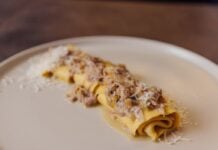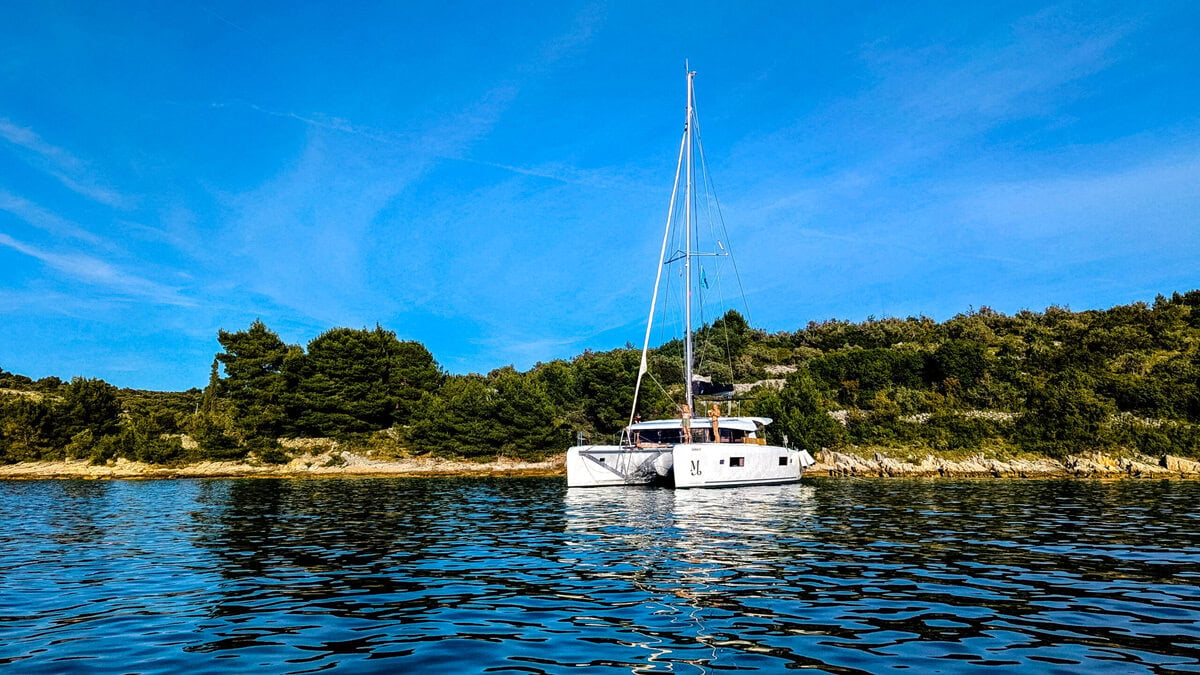
The engine cuts out. The sails fill. The boat tilts just slightly to one side and begins to glide. Quietly, smoothly through water so clear you can count the rocks six meters down. That moment, somewhere between Brač and Hvar, is why you come to Croatia on a sailing trip.
We spent five days on a catamaran with More Sailing, a Swedish-run operator that hosts skippered sailing trips out of Trogir, just outside Split. It wasn’t my first time on a sailboat and not my first time in Croatia, but it was the first time I felt like I finally understood the rhythm of Croatia.
Here’s how it went and what you’d need to know to plan a week on a catamaran in Croatia.
Overview
- Getting to Split
- One Day in Split
- Boarding the Catamaran
- Life on Board: What a Typical Day Looks Like
- Stomorska, Šolta — First Stop
- Milna, Brač — Harbor Town Worth the Stop
- Uvala Smrka — Cold War in a Bay
- The Best Part: Actually Sailing
- Stari Grad, Hvar — One of the Oldest Towns in Europe
- Where to Eat in Stari Grad
- Back to Trogir
- The Last Day: Scooter to Primošten
- About More Sailing — If You Want to Try Something Like This
- Practical Tips
- Frequently Asked Questions
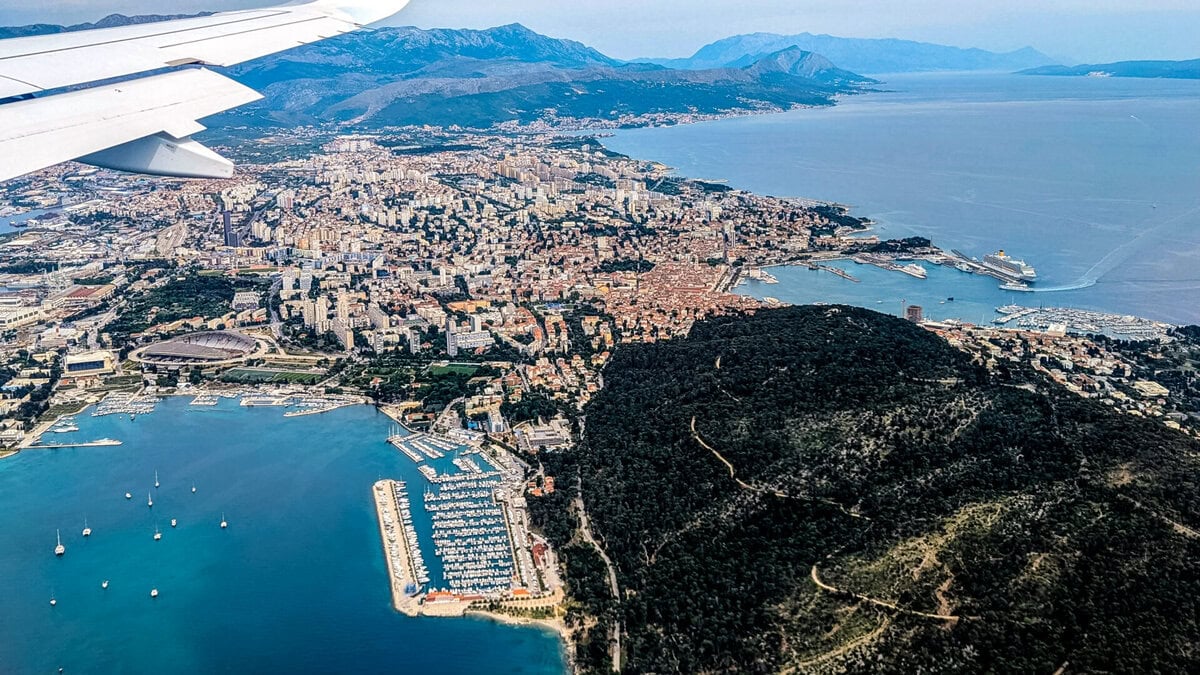
Getting to Split
The airport sits across the bay from the city, but getting in is straightforward. Two buses run the route. The Platanus airport shuttle (which replaced Pleso Prijevoz in February 2026) departs right outside arrivals and costs €10 in peak season, €9 off-season; the journey is 40 minutes to one hour, depending on traffic and drops you at the train station and harbor.
If you’re watching the budget, the Promet Split city bus (Line 37) boards from the main road, about 100 meters from the terminal, and costs €3 per person, though it takes longer and stops more often.
A taxi or Uber from the airport currently runs around €35–50 (metered, with a fixed airport starting rate).
One Day in Split
We arrived the afternoon before the boat trip and had a few hours that day, plus a short morning the next. For a single overnight, you don’t need anything fancy.
We stayed at Best Location Rooms (Ul. Vlahe Bukovca 11), in the Bačvice district. It’s about a 10-minute walk to Diocletian’s Palace and the old center, and only steps from Bačvice beach. We took the smallest and cheapest room. Tiny, but clean, and exactly what you need for one night. If you’re staying longer, their larger rooms are worth a look.
The meals you remember in Split won’t be the ones you grabbed on the Riva out of convenience; they’ll be the ones where you sat slightly off the main drag and let the evening stretch. Ask the staff at your accommodation for tips. They’ll know who’s cooking something worth eating that day.
And we have covered those two topics as well, with two extra travel tips:
Boarding the Catamaran
Check-in on the catamaran is typically between 3:00 and 5:00 p.m., depending on how quickly the cleaning crew finishes after the previous group. If weather and timing cooperate, the skipper usually gets moving straight away.
We headed directly to Mala Luka Bay on the island of Drvenik Veli for the first night, a quaint, anchored bay, a light welcome meal, and a sunset that didn’t need any help from us. This is the way to start: no town, no noise, just the boat rolling softly while you watch the sky go dark.
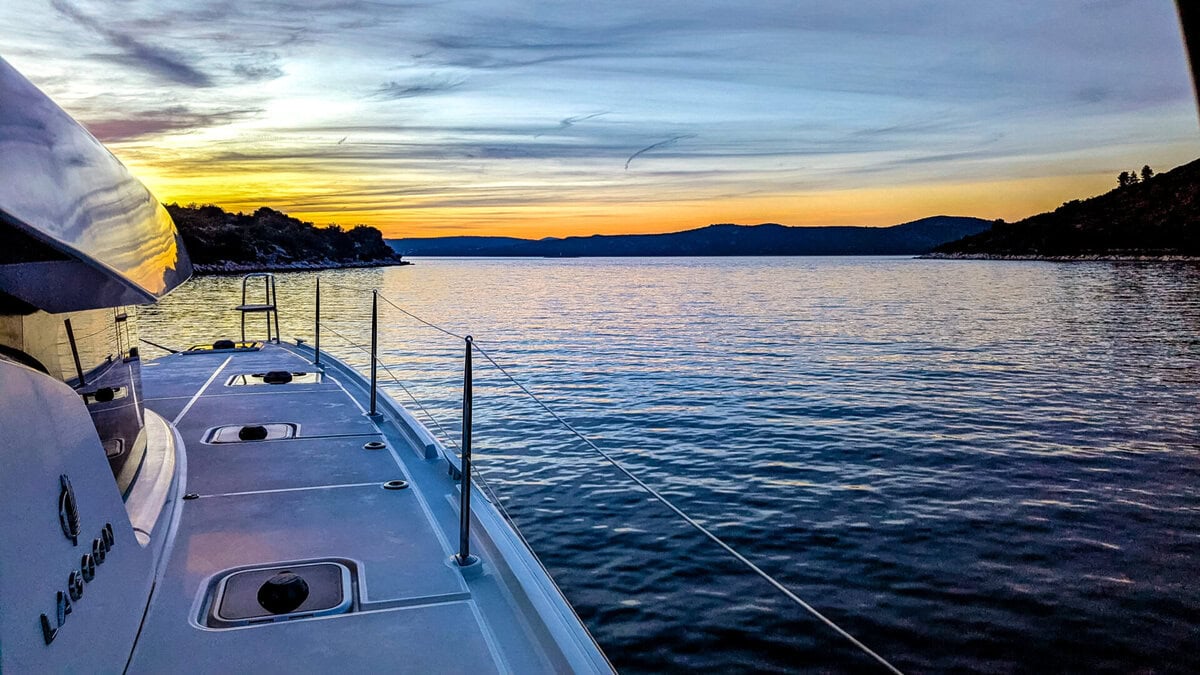
Fair warning about that first night: your body isn’t used to the boat’s motion, and most people have unusually vivid dreams. By morning, though, you wake up to silence, an open bay, and someone already making coffee.
Julia, the crew member who looked after meals on our trip, was usually up around 7 a.m., had breakfast ready before most guests had properly opened their eyes, and turned on music around 8 a.m. to ease everyone into the day. That detail alone is underrated.
Life on Board: What a Typical Day Looks Like
Once you’re in the rhythm of it, the days follow a satisfying pattern:
- Wake up, have breakfast on deck
- Sail for two to three hours
- Anchor in a bay for a swim and lunch
- Sail on (or motor if there’s no wind)
- Arrive at a harbor with an old town in the late afternoon
- Go out for dinner, have a drink or two, get back before midnight
Food ashore is dominated by Dalmatian and Balkan standards: grilled meat, fish, fries and the occasional salad. Pizza is everywhere. That’s all fine, but if you want something a step above, not expensive, just better, it takes some local knowledge. That’s exactly where the crew earns its place. Follow their restaurant recommendations without question; we weren’t let down once.
Stomorska, Šolta — First Stop
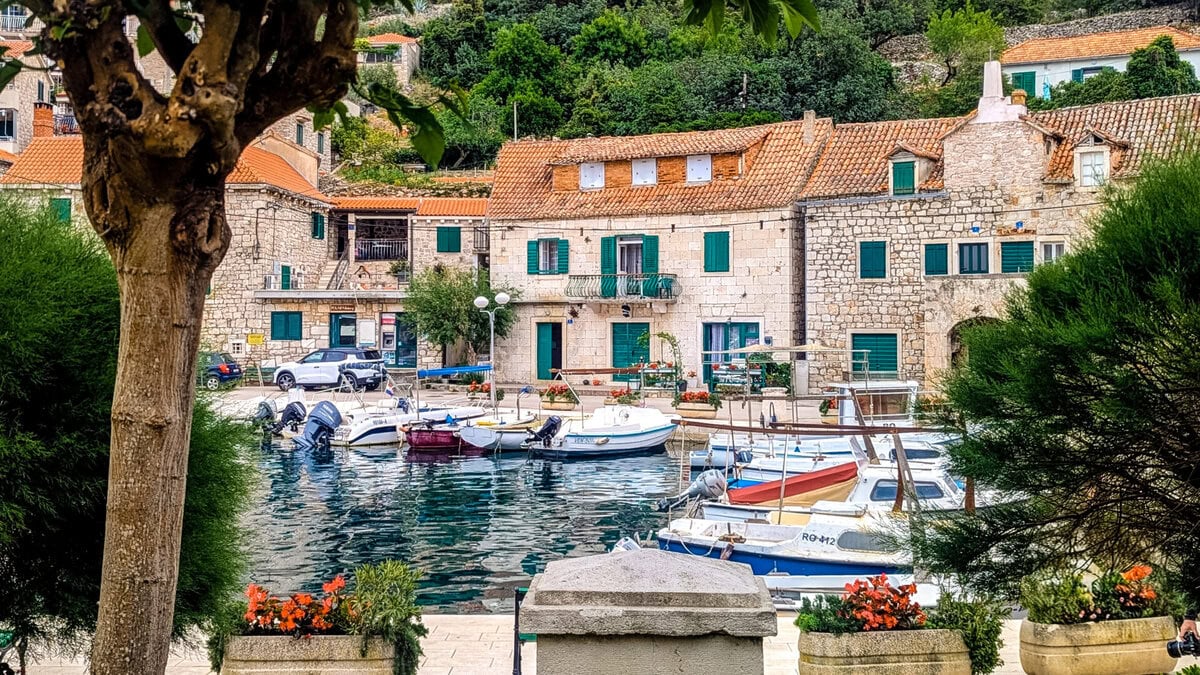
Our first lunch stop was the village of Stomorska on the island of Šolta. Skipper Julian anchored in the bay and ferried us ashore in the dinghy. We had about an hour to explore.
About Stomorska: Stomorska is the oldest coastal settlement on Šolta, located in the northeastern part of the island, 12 km by road from the main port of Rogač. A small fishing village with a permanent population of around 250, it can host roughly 500 tourists in summer, which keeps it pleasantly calm compared to the bigger Dalmatian destinations. The harbor is lined with traditional stone houses and a few cafés; old wooden fishing boats sit a few meters from modern yachts.
The village has a long maritime history: its sailors once owned cargo ships and transported wheat, lime, and other goods across the Adriatic to Split. Among sailors, Stomorska is also known for a richer and more varied food scene than other Šolta villages.
Milna, Brač — Harbor Town Worth the Stop
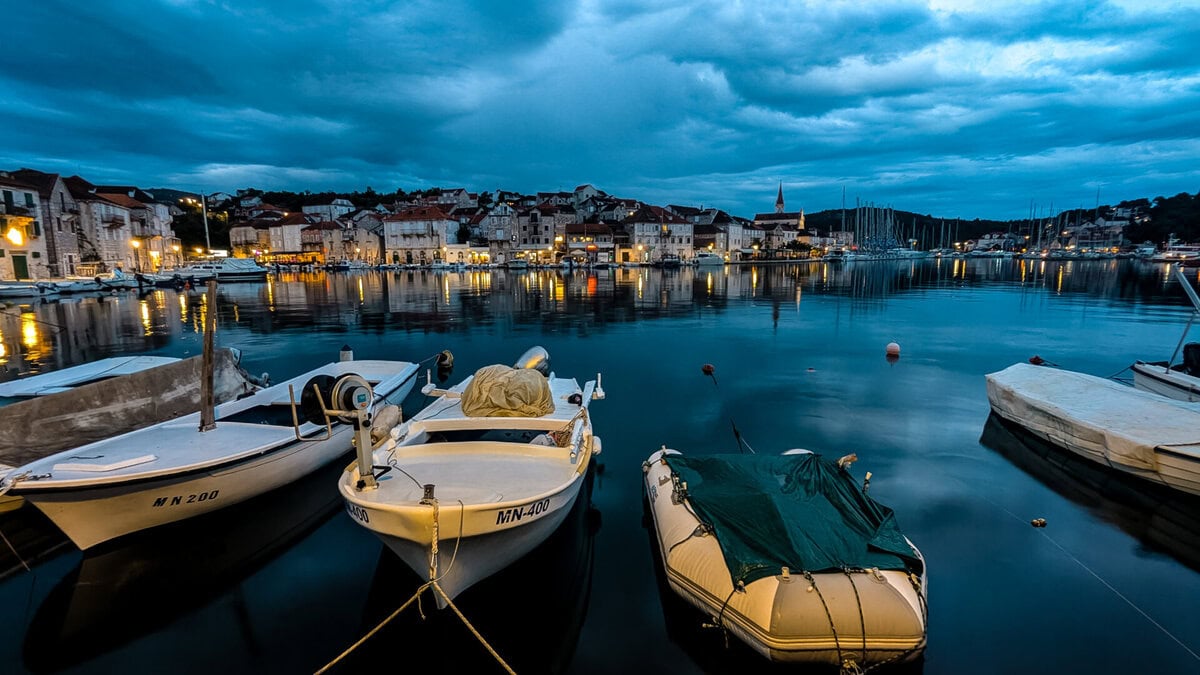
From Stomorska, we sailed a short distance to Milna, on the western side of Brač.
About Milna: Milna sits on the northwest coast of Brač and is considered the safest natural harbor on the island. The name is thought to derive from the Venetian-era phrase Valle di mille navi (the bay of a thousand boats), which gives you a sense of how long sailors have been pulling in here. Founded at the end of the 16th century around the Cerinić family castle, the town has a small old center of stone buildings arranged around a harbor that attracts everything from local fishing boats to large yachts.
There are two marinas (including ACI Milna), which together offer over 200 berths. Several pebble coves (Pasika, Osibova, Lučice) sit within easy dinghy reach of the bay.
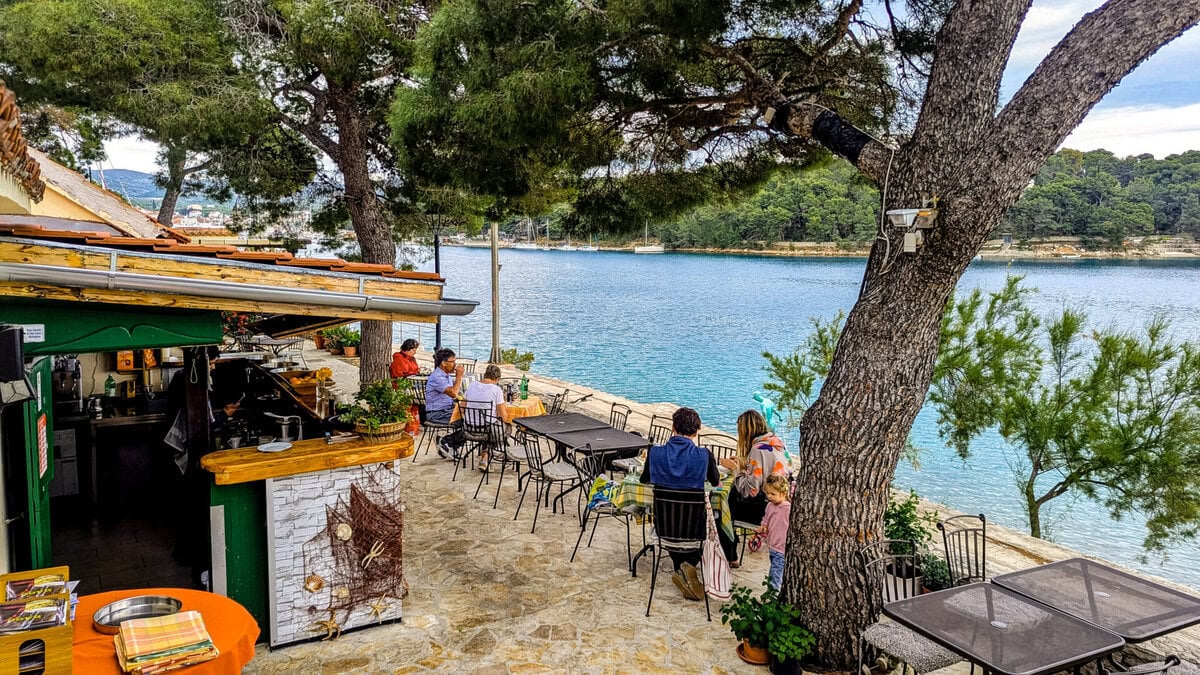
We ate at Restaurant Bago (Bijaka mala 13), a short walk along the harbor toward the beaches. We had fish and pork. Both are typical dishes, but the location makes it. Two terraces overlook the water, and the seafood usually comes from the owner’s catch. Bago is run by a working fisherman, and the wild fish on the menu is usually whatever came in that morning.
The crew also recommended two alternatives worth noting:
- Kantun Food & Wine — a wine cellar with over 25 years of history, offering local fish from their own catch, homemade pasta, and wines from local producers.
- Pizzeria / Konoba Slika — a solid, no-fuss option for pizza and Croatian comfort food, consistently ranked among the top restaurants in Milna.


Uvala Smrka — Cold War in a Bay
One of the more unexpected stops was Uvala Smrka, a quiet bay on the south side of Brač. As you walk through some of the coastal towns in Croatia, you still notice the marks left by the 1990s war. Smrka has its own version of this, in the form of the underground Yugoslav naval tunnels cut directly into the rock.
About the Smrka tunnels: The tunnels at Uvala Smrka were built during the Yugoslav era as a secret base for submarines and fast attack vessels. The tunnels are around 80 meters long and the seawater inside is roughly 10 meters deep. The entrance was designed to be concealed from aerial reconnaissance. Since being decommissioned in the 1990s, they’ve been used by local fishermen for shelter during storms and have become a destination for sailors, history enthusiasts and divers. Entry is free.
Our skipper launched the dinghy, and we went in. It’s eerie and oddly beautiful. The water inside is the same dark blue-green as the Adriatic, the tunnel ceiling close overhead. After that, we had lunch on the boat, and Sarah jumped into the water from the top of the catamaran. In May, the water is noticeably cooler than in summer, but that didn’t stop her.


The Best Part: Actually Sailing
After Smrka, we set the sails again. And this, for me, is always the highlight.
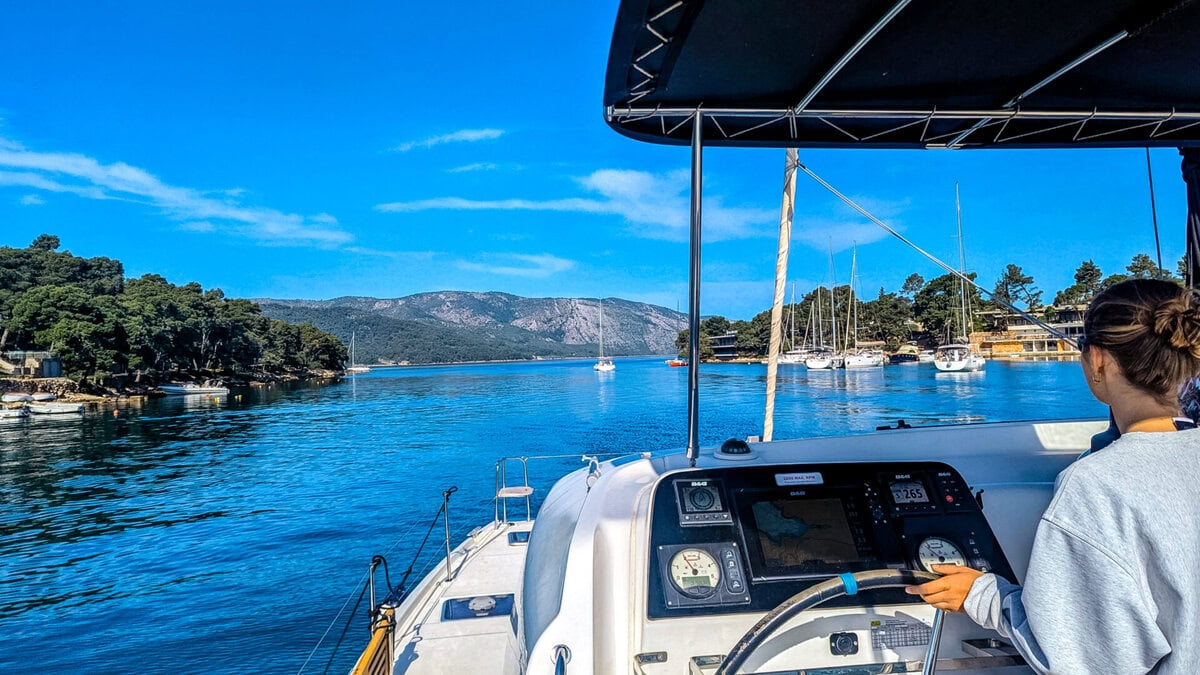
When you turn off the engine, everything changes. No vibration, no noise. Just the boat tilting gently and the sound of water moving along the hull. The skipper let me take the wheel, and we talked through how to find the right angle into the wind, how to read the instruments, and what it takes to hold 6–7 knots in light conditions. Ask all the questions you have. It’s exactly the kind of hands-on experience that’s hard to replicate anywhere else.
We were heading for Stari Grad on Hvar, watching the sails and the compass, adjusting for the wind.
And then: three dolphins, tracking towards us for a few minutes before disappearing.


Stari Grad, Hvar — One of the Oldest Towns in Europe
About Stari Grad: Stari Grad (meaning “old city”) is one of the oldest continuously inhabited towns in Europe. It was founded in 384 BC by Greek colonists from the island of Paros, who named their settlement Pharos; that name is the origin of the island’s modern name, Hvar. The town was later held by the Romans, then settled by Slavs, and remained the island’s main center until the Venetians moved the seat of power to Hvar Town in the medieval period. The surrounding Stari Grad Plain, an agricultural landscape of fields, stone walls, and shelters laid out by the original Greek colonists in the 4th century BC and still largely intact today, was separately inscribed as a UNESCO World Heritage Site in 2008. The town itself is quiet compared to Hvar Town: narrower alleys, fewer crowds, more stone and more history.
My honest tip: don’t come here or to Croatia in July or August. Late May through June, or September and October, are when you get the atmosphere without the masses.
Wander the alleys, go slowly, and if you’re looking for a small souvenir that’s actually interesting rather than generic, look for Num Atelier (Ul. dr. Ante Starčevića 2), a small gallery shop a few steps from Tvrdalj Square showing the work of local artist Jovan Brajović, founder of the Moria Association.


Where to Eat in Stari Grad
Jurin Podrum (Ul. Duolnjo Kola 11) is where I’d send anyone without hesitation. It’s a family-run restaurant that has been cooking Dalmatian food since 1917, set on a narrow medieval alley in the old town with both stone-clad indoor seating and tables squeezed outside. They grow their own organic vegetables and produce their own olive oil.
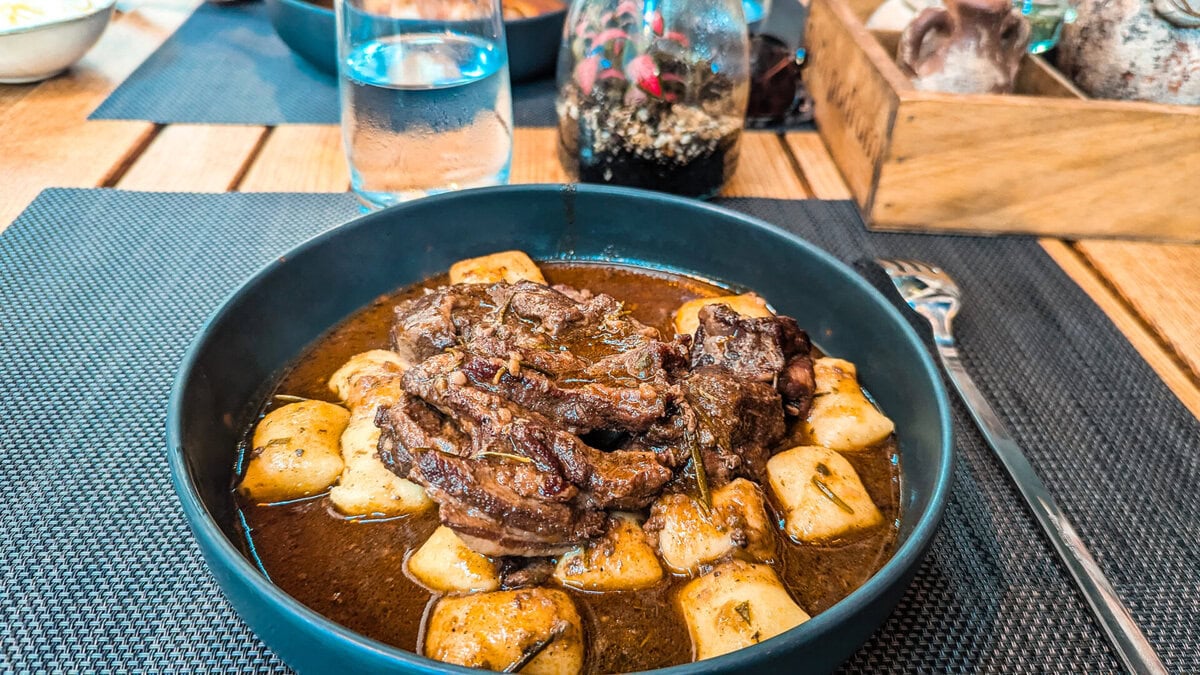
I had the wild boar with homemade gnocchi, slowly braised for hours in sweet wine and rosemary sauce. One of the owner’s signature dishes.
There’s a fun side note to that: the wild boars on Hvar swam over from the mainland years ago, fleeing a wildfire. The island now has its own small population.
The owner also recommended the cuttlefish stew, which I didn’t try this time, but it’s on the list for next time.
A few other options worth knowing:
- Restoran Marko (Pizzeria & Spaghetteria) — Open all year, reliable for pizza, pasta, and broader Dalmatian dishes, right on Trg Ploča square. Good if you want something consistent and unpretentious.
- Restaurant Albatros (Ul. Jurja Dalmatinca 1) — A family-run seafood restaurant in a centuries-old stone house just off the main square and 50 meters from the harbor. Strong on grilled fresh fish and traditional Dalmatian dishes; the owner makes his own olive oil, bread and house wine.
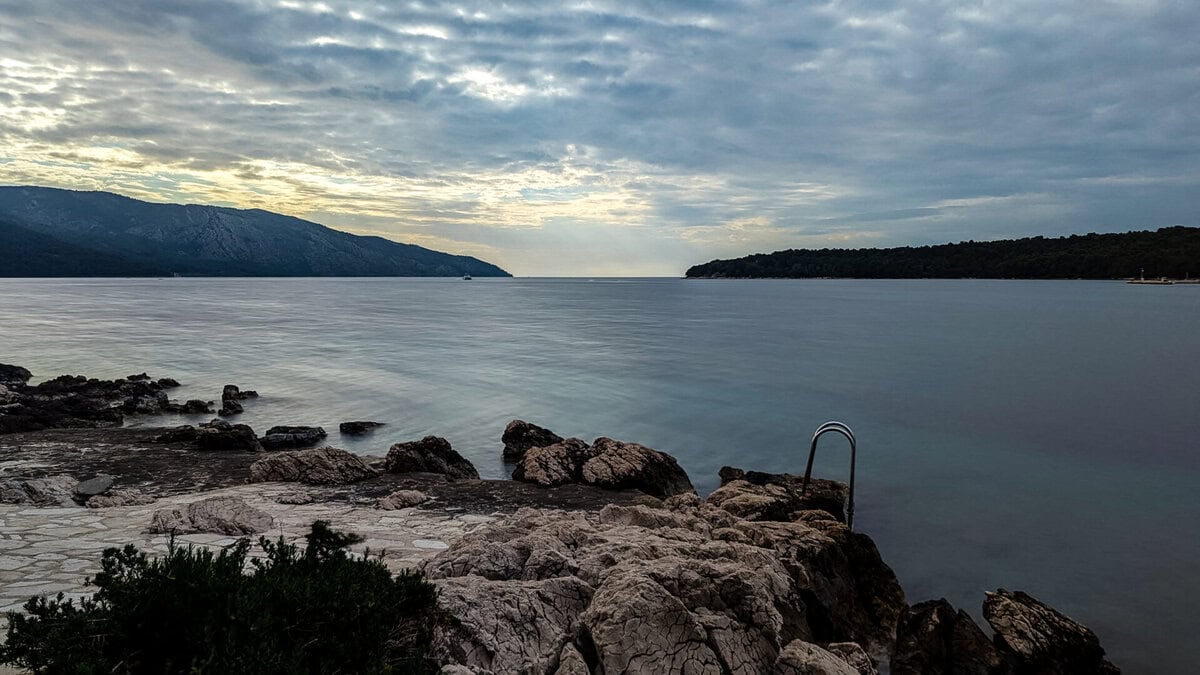
- Tramonto Bar – Lanterna — For a sundowner, this is the place. About a 10-minute walk from the center along the waterfront, on Put od Lanterne, with the best sunset view in Stari Grad and a relaxed atmosphere. Rated the top nightlife spot in town.
Back to Trogir
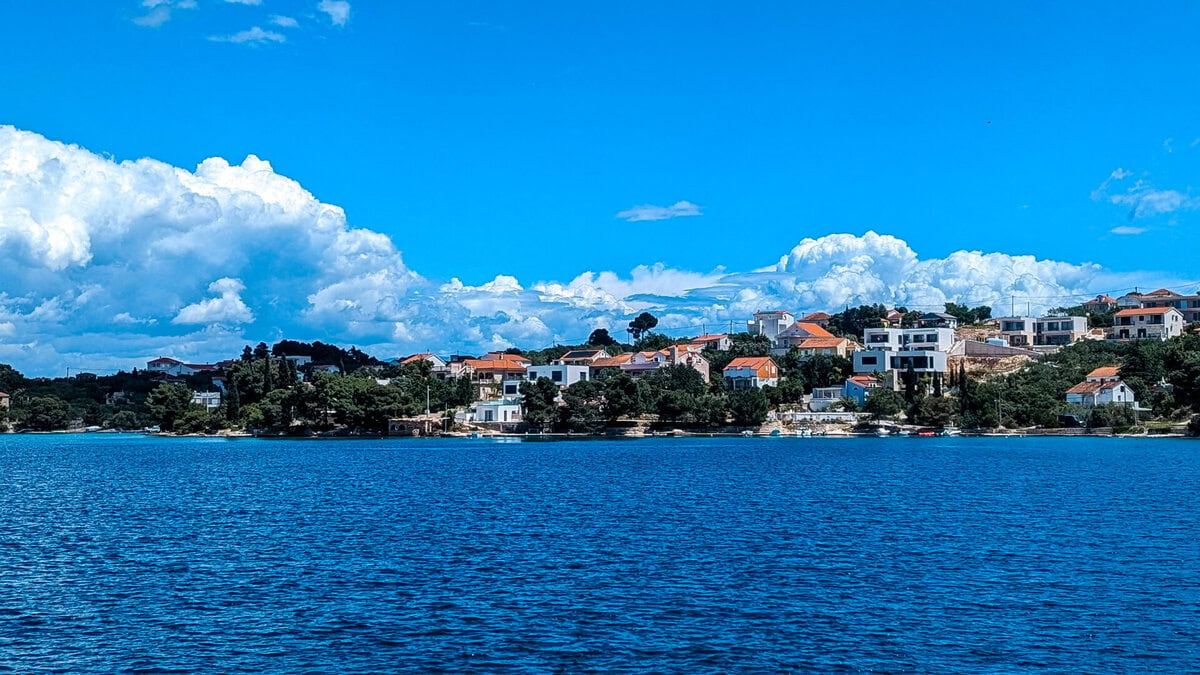
The next morning we set sails one last time, heading back toward Trogir. On the way, we stopped for lunch in the bay of Nečujam.
About Nečujam: Nečujam sits in the largest bay on the island of Šolta, about 9 nautical miles from Split. Its name comes from the Latin Vallis Surda (“the Deaf Bay”) a reference to the unusual acoustic stillness of the broad, sheltered inlet.
The bay has two distinct characters: the eastern shore has a beach, an inflatable water park and the usual summer infrastructure; the western and deeper parts are almost silent, with small coves and almost no development. Snorkelers and freedivers come for the Kontesa, a 25-meter wooden vessel originally built in 1943 as a WWII cargo ship, later converted to carry tourists along the Croatian coast, that rested just half a meter below the surface after sinking during a storm decades later.
The bay has a historical footnote too: Emperor Diocletian reportedly used the smaller inner coves as fish ponds while his palace was being built in nearby Split.
Local residents around Nečujam have launched a petition for the protection of the bay’s sea and seabed, with the village council warning that some coves have been overrun by uncontrolled anchoring, sewage and fuel discharge, and waste dumped directly into the water.
The sunken Kontesa is now flagged as a hazard as well as a curiosity. None of this means you should skip Nečujam, but it does mean how you behave on board matters.
If you’re sailing in Croatia: anchor on sand, not on posidonia meadows (the dark patches you can see from above); never discharge holding tanks or bilge water inside a bay; carry your rubbish back to a marina; tip the dinghy ashore rather than tying off to trees; and choose operators who do the same.
Croatia’s coast holds up because most sailors treat it like someone’s living room, because for the people in these villages, it is.
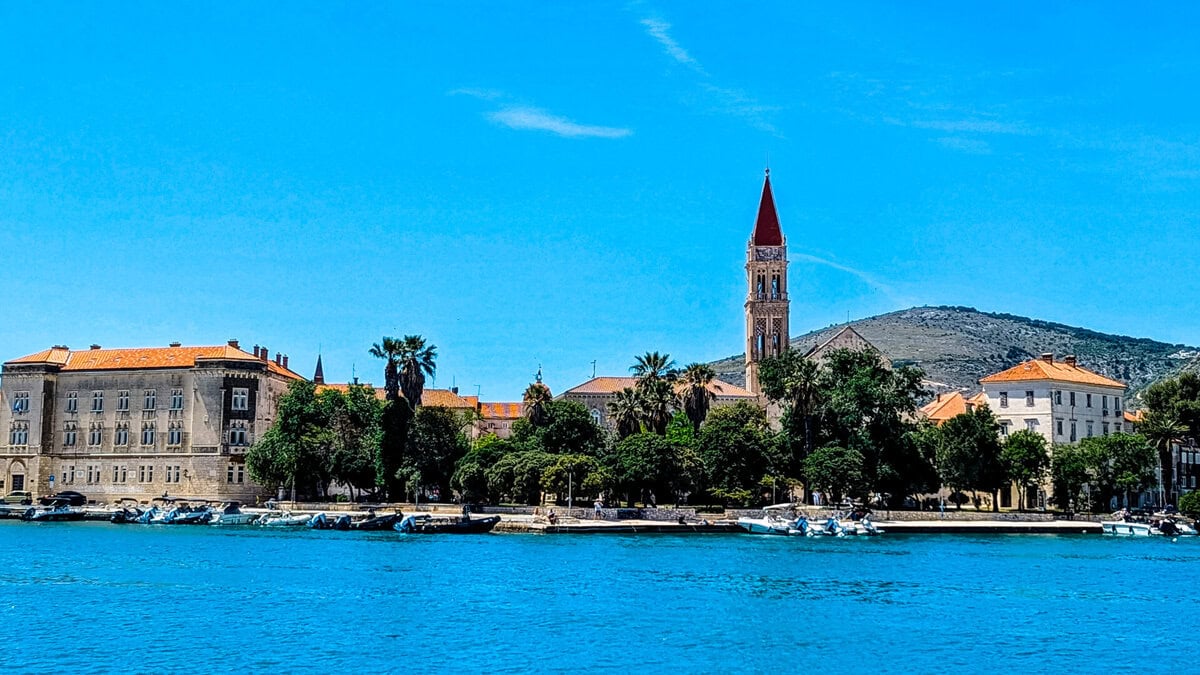
We arrived in Trogir late afternoon and timed it perfectly. We got the catamaran to the pier, and about 3 minutes later, a rainstorm rolled through. An hour after that, the sky was clear again and we went to explore the old town.
About Trogir: Trogir is a small island city in the Split-Dalmatia region, connected to the mainland and to the larger island of Čiovo by bridges. Its origins go back to the 3rd century BC, when it was founded by Greek settlers. What makes it remarkable is the density of intact architecture within its tiny footprint, about 500 meters east to west, ranging from Romanesque churches to Renaissance and Baroque buildings accumulated over centuries of Venetian rule. UNESCO recognized this in 1997 and listed Trogir’s historic center as a World Heritage Site. Walking it at dusk, after the day-trippers have left, is a genuinely different experience.
Related read: Where to Stay along Croatia’s Dalmatian Coast


For dinner, we went to Franka (Šubićeva ul. 30), which is pricier but delivers. As of May 2026, it is ranked #1 of 120 Trogir restaurants on TripAdvisor with 1,183 reviews and a 4.8 rating, and it holds a MICHELIN Guide listing for its contemporary Mediterranean food. It’s tucked into the alleys near the bridge on the mainland side.
Note: Franka closes during the off-season (typically November through May), so check before you go. The food is a step above the usual konoba fare… proper execution, good local wines.


Other solid options in Trogir:
- Restaurant Don Dino (Ul. Blaženog Augustina Kažotića 8) — one of Trogir’s older fine-dining rooms, strong on Dalmatian classics like black tagliatelle with seafood, pašticada and monkfish cigars.
- Casa Don Dino (Ul. Matije Gupca 14) — the more casual sister restaurant, Mediterranean menu with vegetarian and gluten-free options.
The Last Day: Scooter to Primošten
Checkout from the catamaran is at 8 a.m. The cleaning crew arrives, the galley crew heads out to resupply… and you’re left with a full day before your evening flight. If you’ve already seen Trogir and Split, this is the part where a plan helps.
My solution: rent a 50cc scooter from Joke – Bike & Scooter Rental (Put Dragulina 13B, Trogir). I paid €28 for 6 hours, but check current prices when you book. The recommendation had been to visit Primošten, but public buses there are infrequent, and a taxi back from Primošten to the airport ran €90–120 one way. With the scooter, it took about 45 minutes each way and we had complete flexibility and more fun.
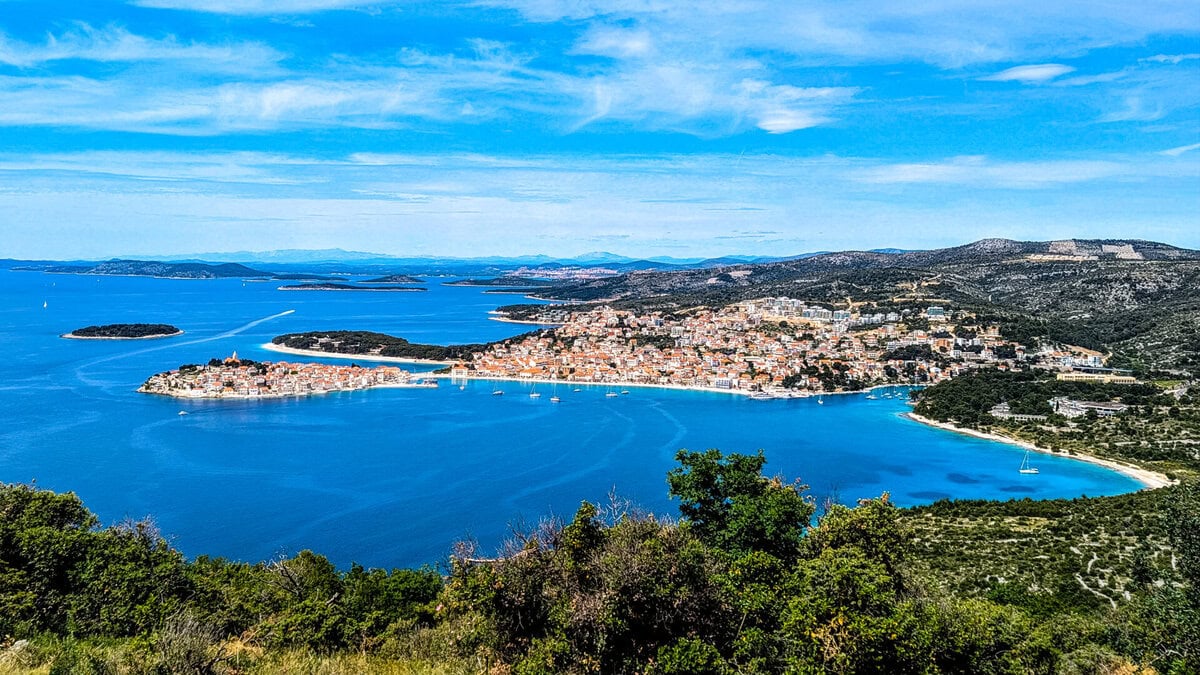
About Primošten: Primošten is a small town in Šibenik-Knin County, between Trogir and Šibenik. The old town sits on what was originally an island, now connected to the mainland by a causeway. The name itself comes from the Croatian word primostiti, meaning “to bridge”. The history goes back to the 16th century, when a fortified settlement was established there during the Ottoman invasions.
Today, the old town retains a maze of cobbled alleys and traditional stone houses on the narrow peninsula, surrounded by vineyards, olive groves, and clear water. The beaches Mala Raduča and Velika Raduča, just outside the old town, are among the most pleasant pebble beaches on this stretch of coast.


We drove up to the lookout opposite the bay and walked up to the statue of Our Lady of Loreto, which sits on the hill of Gaj, around 173 meters above sea level. The mosaic-clad statue is roughly 17 meters tall, was unveiled in 2017, and represents a bond between Primošten and the Marian shrine of Loreto in Italy. On a clear day, the view stretches across the islands of the Šibenik archipelago. It’s an unusual combination of religious monument and impressive viewpoint over the coast.
We returned the scooter, filled the tank (about €6 of fuel), and made it to the airport with time to spare.
About More Sailing — If You Want to Try Something Like This
If you read this and think the format sounds like what you want, the operator I went with is More Sailing. I’m writing about them because I had the trip, not because we have any commercial arrangement.
Two things make them different from the standard Croatia charter market. First, you book a single cabin rather than the whole boat. Most charter companies will only rent you the entire yacht. This is fine if you have eight or twelve friends and a large group budget, awkward if you’re a couple or traveling solo and don’t want to organize a small crowd to make the maths work. With More Sailing, you turn up with one or two people, get a private cabin on a catamaran or monohull, and share the common areas with seven or so other guests plus a skipper and host.
Second, the trips can be fully hosted: a Swedish-trained, English-speaking skipper handles navigation and safety; a host prepares breakfast and lunch on board; dinners are ashore in the harbor towns each evening. You don’t need any sailing experience to step on board.
The company was founded in 2009 on the west coast of Sweden by sailors who wanted to make this kind of trip accessible to people who’d otherwise never charter a boat. They operate from Trogir (next door to Split airport) and run routes through Šolta, Brač, Hvar and Vis, which is more or less what you’ve just read about. Or you set sail with them in the Caribbean, in Greece, in Italy, or in Sweden.
Related read: Family Sailing Holidays on a Catamaran Charter in Croatia


Practical Tips
- Best time to go: May–June or September–October. Better weather for sailing in Croatia, fewer people ashore, and easier restaurant bookings. July and August are beautiful but crowded and expensive.
- Getting to Split airport: The €10 Platanus airport shuttle is the easy default; the Promet Line 37 city bus is the €3 budget option. A taxi or Uber currently costs €35–50.
- What to bring on board: Layers for the evening, even in June, sunscreen, a hat, grip shoes for the deck, and motion sickness tablets if you’re not sure how you’ll handle it.
- Food strategy: Trust the crew’s restaurant tips. For everyday meals ashore, the standard konoba fare is reliable. For a memorable dinner, ask for the specific local recommendation. The crew will know where the kitchen is actually good.
- Sailing time: On a trip like this, expect 2–4 hours of actual sailing per day. The rest is anchored in bays or docked in town.
- Swimming in May: The water is noticeably cooler than in July or August, still swimmable, but bring a short wetsuit if you’re sensitive to cold.
- Last day planning: If you have a long airport wait at the end, consider the scooter option to Primošten. It’s around 45 minutes from Trogir, independent of any bus schedule, and far cheaper than taxis for round trips.
- Checkout is at 8 a.m.: Be ready to go. The cleaning crew doesn’t wait and the next group has a schedule too.
Frequently Asked Questions
How much does a week-long catamaran sailing trip in Croatia cost?
Prices vary considerably by operator, season, and boat type. A hosted catamaran trip with a skipper and a crew member, including meals, typically runs €1,000–€2,500 per person for 5–7 days, depending on the cabin type and how far in advance you book. You’ll also need to budget for dinners ashore, drinks, and any entrance fees; roughly €30–60 per day additional.
Is sailing experience required to join a catamaran trip in Croatia?
No. On a hosted trip with a skipper, no sailing experience is needed. The skipper handles navigation and the boat; you’re free to participate as much or as little as you like. Most skippers are happy to let guests take the wheel and learn the basics during the crossing.
What is the best time of year to sail in Croatia?
The sailing season runs from May to October. May–June offers mild temperatures, fewer crowds, and good wind conditions; the sea is cooler but still swimmable by mid-May. July and August are peak season with beautiful weather but crowded anchorages, higher prices, and packed harbors. September and October bring warmth, calmer seas, and a noticeably quieter atmosphere ashore.
How do you get from Split Airport to the city center?
Take the Platanus airport shuttle from outside arrivals. It costs €10 (€9 off-season) and takes 40–60 minutes to the train station and harbor. The Promet Line 37 city bus boards about 100 m from the terminal and costs €3 per person. A taxi or Uber runs €35–50 and takes 20–30 minutes, depending on traffic.
Is Stari Grad on Hvar worth visiting instead of Hvar Town?
Yes, especially if you’re arriving by boat and traveling outside peak season. Stari Grad is one of the oldest towns in Europe, founded by the Greeks in 384 BC, and is far quieter than Hvar Town. It has good restaurants, walkable medieval alleys, and a UNESCO-listed agricultural plain outside town. Hvar Town has more nightlife but is significantly more crowded in summer.
Can you visit Primošten as a day trip from Trogir?
Yes, but check the bus schedule carefully, as connections are infrequent. Renting a scooter from Trogir (I paid around €28 for 6 hours; check current rates) is a much more flexible option, takes about 45 minutes each way, and leaves you free to visit the lookout above town and the Lady of Loreto statue at your own pace.