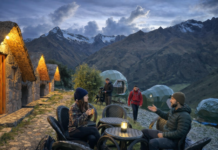
Colombia is one of the most biodiverse countries on earth, with more bird species than any other country, and a growing share of ecotourism in Colombia is run by the people who live in these places: Wayuu families in La Guajira, farmers in Santander and small lodges on the Caribbean coast. Visiting well here mostly means choosing local hosts, following park and community rules and leaving little behind.
Each place below comes with what makes it an eco destination and how to visit it with a light footprint. For a wider route across the country, see our list of ten places to visit across Colombia.
Six places for ecotourism in Colombia and how to visit them well
We have personally traveled to (which was sometimes no easy task!) and hand-picked these ecotourism destinations in Colombia. Enjoy!
Bahia Aguacate
Bahia Aguacate sits on the Colombian side of the Darien, where rainforest runs straight down to the Caribbean. No road reaches this coast. Capurgana, the nearest village, has no cars, and you arrive by boat from Necocli or Turbo, a crossing of about 2 to 3 hours depending on the sea. That isolation is a big part of why the forest here still meets the water.
From Capurgana it is about an hour’s walk on a forest trail to Bahia Aguacate, or a short boat ride. Walking is the lower-impact choice and the better way to see the forest. Keep to the trail, bring a refillable bottle and carry your rubbish back with you, since anything left here has to leave by boat.
Further along the coast, a trail climbs from Sapzurro over the hill to La Miel on the Panama side, about 30 minutes each way. For the wider story of this border coast, read our guide to the Darien Gap.

Cabo de la Vela
Cabo de la Vela lies in the desert of La Guajira, the ancestral territory of the Wayuu people. Many of the places to sleep are simple posadas run by Wayuu families, with chinchorros, the woven hammocks Wayuu women make by hand. Staying with a family, eating at their kitchens and buying mochila bags straight from the weavers keeps your money in the community.
Fresh water is scarce in La Guajira, so short showers matter more here than almost anywhere in Colombia. Pilon de Azucar and Ojo de Agua beach are a walk or a short ride from the village. The dunes and cliffs are fragile, so stay on existing tracks and ask before photographing people or homes.
Most visitors arrive on a 4×4 tour from Riohacha via Uribia, as the last stretch has no paved road. Plan two nights so the long drive is worth it.
Mesa de Los Santos
Mesa de los Santos is a farming plateau about an hour south of Bucaramanga, on the edge of the Chicamocha Canyon in Santander. Ecotourism here is small scale. Coffee and pineapple farms open for visits, and family-run guesthouses and restaurants make it easy to keep your spending local.
The plateau was once the land of the Guane, and their petroglyphs and caves are still here. Hike with a local guide to find them, and never touch or chalk the rock art. Climbers come for La Mojarra, one of the best-known sport climbing areas in Colombia; follow the local climbing community’s rules on routes and bolts and pack out everything you bring.
Palomino
Palomino sits where the Palomino River leaves the highest coastal mountain range in the world and reaches the Caribbean, about two hours by bus from Santa Marta. The Sierra Nevada is a UNESCO biosphere reserve and the ancestral territory of the Kogi, Arhuaco, Wiwa and Kankuamo peoples. Some sacred sites upriver are not open to visitors, so go with a local guide and respect signs and closures.
The classic trip is to walk upriver into the foothills of the Sierra Nevada, then float back down to the sea on an inner tube. Book it with a local operator and skip it after heavy rain, when the river rises fast. Back in town, small eco lodges and hostels line the beach road; ask how they handle water and waste before you book.
Barichara
Barichara, in Santander, has kept its colonial look partly through how it builds. Many houses use tapia pisada, rammed earth, a traditional low-energy technique the town is known for, behind whitewashed walls and stone “zocalos” at the base.
The greenest way to see the area is on foot. The “Camino Real Guane,” an old stone path, runs downhill from Barichara to the small village of Guane through the Suarez River canyon, past stones full of fossils. Most walkers take two to three hours. Carry water, start early to avoid the midday heat and take the bus back.
Hormigas culonas, roasted ants harvested once a year by local families, are the regional snack. Buy them from local vendors and you support the families who collect them.
Termales Santa Rosa de Cabal
The hot springs above Santa Rosa de Cabal, in the coffee region, are fed by water heated deep in the volcanic Central Andes, and a cold mountain waterfall runs right beside the pools. There are two sites, one with a hotel and private baths and a separate one for day visitors.
For a lower-impact visit, go on a weekday, when the pools are quieter, and stay in Santa Rosa de Cabal or on a coffee farm nearby instead of making a long day trip. The town is a short drive from Pereira. Shower before you get in, keep soap and sunscreen out of the pools and take your rubbish back down the mountain.
Paths around the springs pass cloud forest and more waterfalls, a good reminder of the forest the springs depend on. It is an easy way to add slow time to your Colombia trip.
If you’re looking for unique ways to travel around Colombia, look at the routes available on Bookaway. Search for buses, minivans, private cars and flights around Colombia.