Armenia is the kind of country where a first-century temple, a medieval monastery and a Soviet-era staircase can belong to the same day without feeling forced. The country is compact. Its history sits in layers dense enough that a week feels much longer than seven days.
Churches founded seventeen centuries ago still hold services. Lavash still comes out of a clay oven sunk into the floor. In a cave in Vayots Dzor, archaeologists uncovered a winemaking site from around 4100 BC, and the valley around it is producing wine again after decades of interruption. Hospitality reads as a social instinct here long before it reads as a tourism slogan.
That mixture of deep history and ordinary daily life is what stays with first-time visitors.
Overview:
- Christianity Arrived Early, and It Still Shapes the Landscape
- Geghard and Garni, Two Worlds in One Valley
- Yerevan Changes Color Through the Day
- The Landscapes Shift Faster Than You Expect
- Wine, Bread, and Traditions That Go Back Thousands of Years
- Hospitality Is Part of the Journey
- How Seven Days Actually Fit Together
- Group Tours
- Private Tours
- Practical Information
- When to Go
- Getting There and Around
- Money, Connectivity, and Language
- Safety and the Borders
- Frequently Asked Questions
Christianity Arrived Early, and It Still Shapes the Landscape
Stand in an Armenian church during a service and the sound reaches you before the language does. Deep, unaccompanied voices moving through stone.
Armenia was the first state to adopt Christianity as its official religion. The traditional date is 301, under King Trdat III, who converted after Gregory the Illuminator was released from thirteen years in a pit and, by tradition, cured him. Historians still debate the exact year, and many argue for around 314. Either date puts Armenia roughly eighty years ahead of Rome, which made Christianity its state religion under Theodosius I in 380.
The spiritual center is Etchmiadzin, about twenty kilometers west of Yerevan. Its cathedral is widely described as the oldest cathedral in the world. It closed for restoration in 2018, and after work that reinforced the structure and conserved around 620 square meters of frescoes, it was reconsecrated in September 2024. It is open to visitors again, which matters for planning, because guides spent six years routing people around it. The nearby churches of Hripsime, Gayane and Shoghakat, together with the ruins of Zvartnots, complete one of Armenia’s richest concentrations of early Christian architecture, all inscribed by UNESCO in 2000.


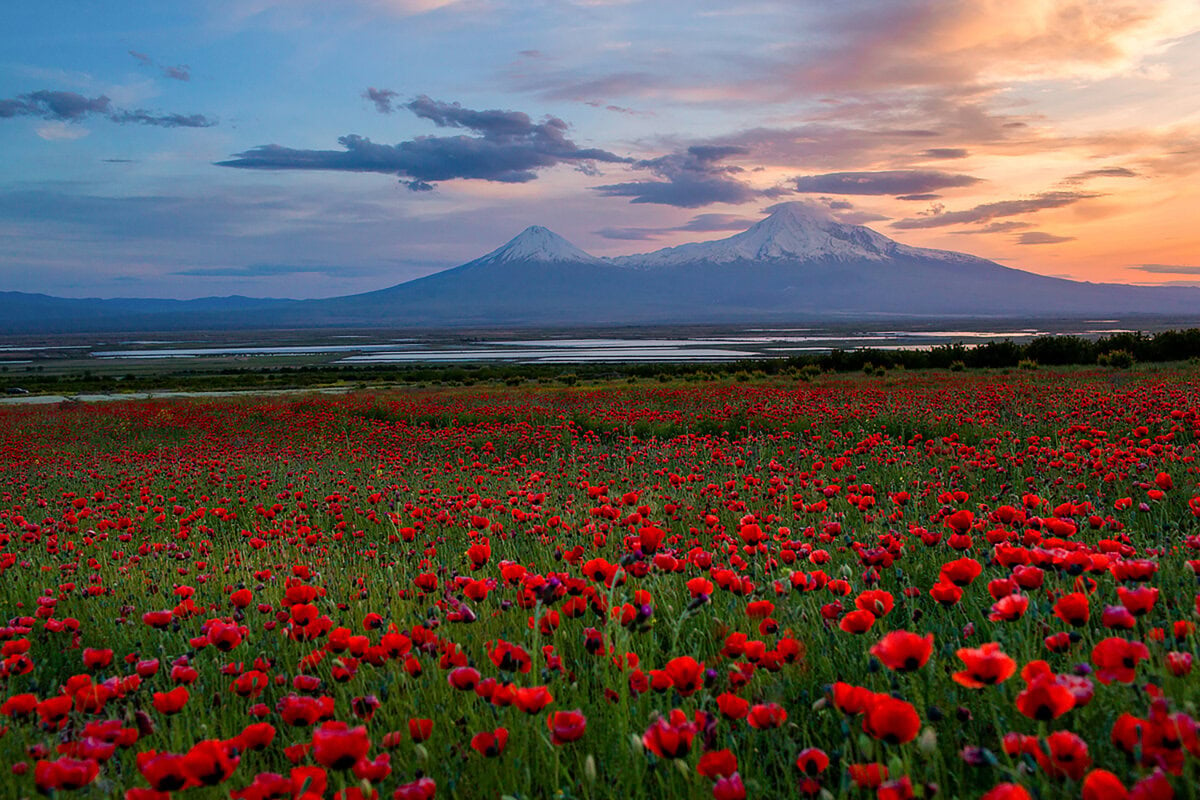
Khor Virap tells the same story from a more dramatic setting. The monastery stands on the Ararat plain about forty kilometers south of Yerevan, and beneath it is the pit traditionally associated with Gregory’s imprisonment. Visitors climb down a narrow metal ladder into the chamber, then come back up to the view the country is known for. Mount Ararat rises 5,137 meters directly beyond the monastery walls, just across a closed border in Turkey. On a clear morning it looks close enough to touch.
Geghard and Garni, Two Worlds in One Valley
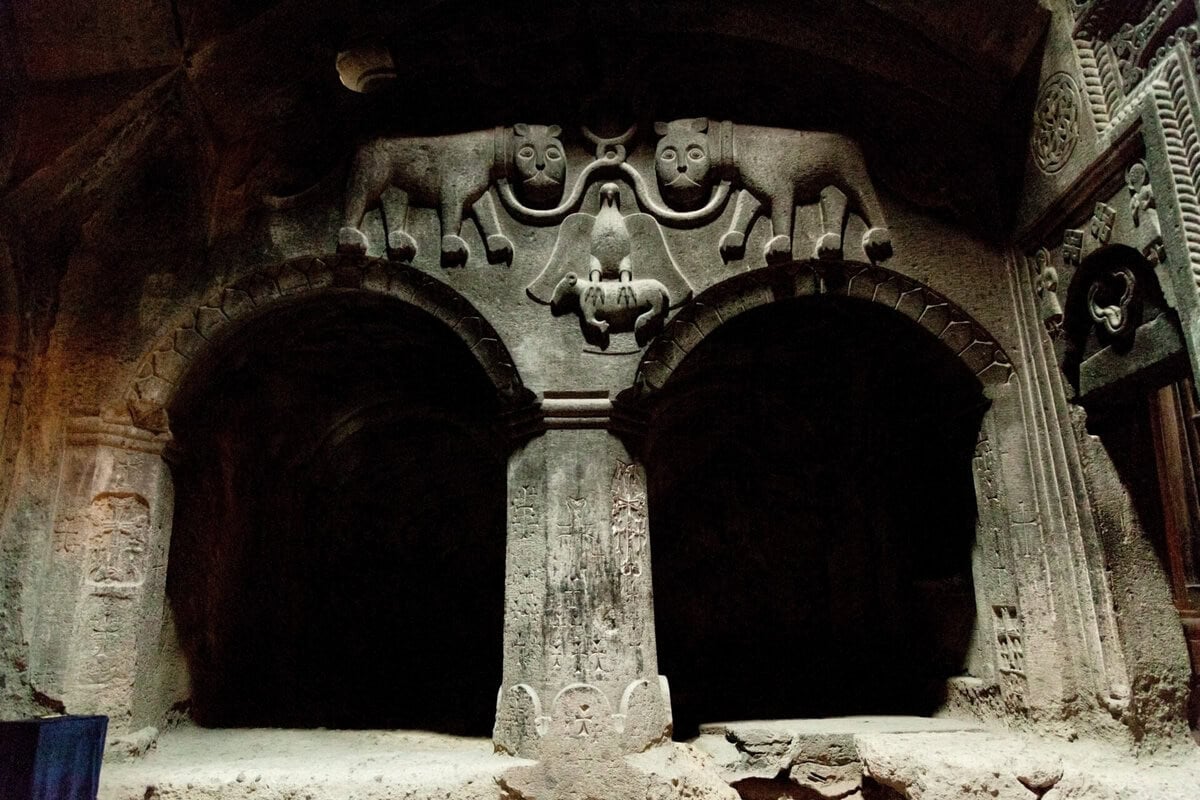
Geghard is partly carved into rock, and the rock changes how the place feels. Voices carry through the chambers, light enters in narrow shafts, and the architecture moves gradually from built stone into mountain.
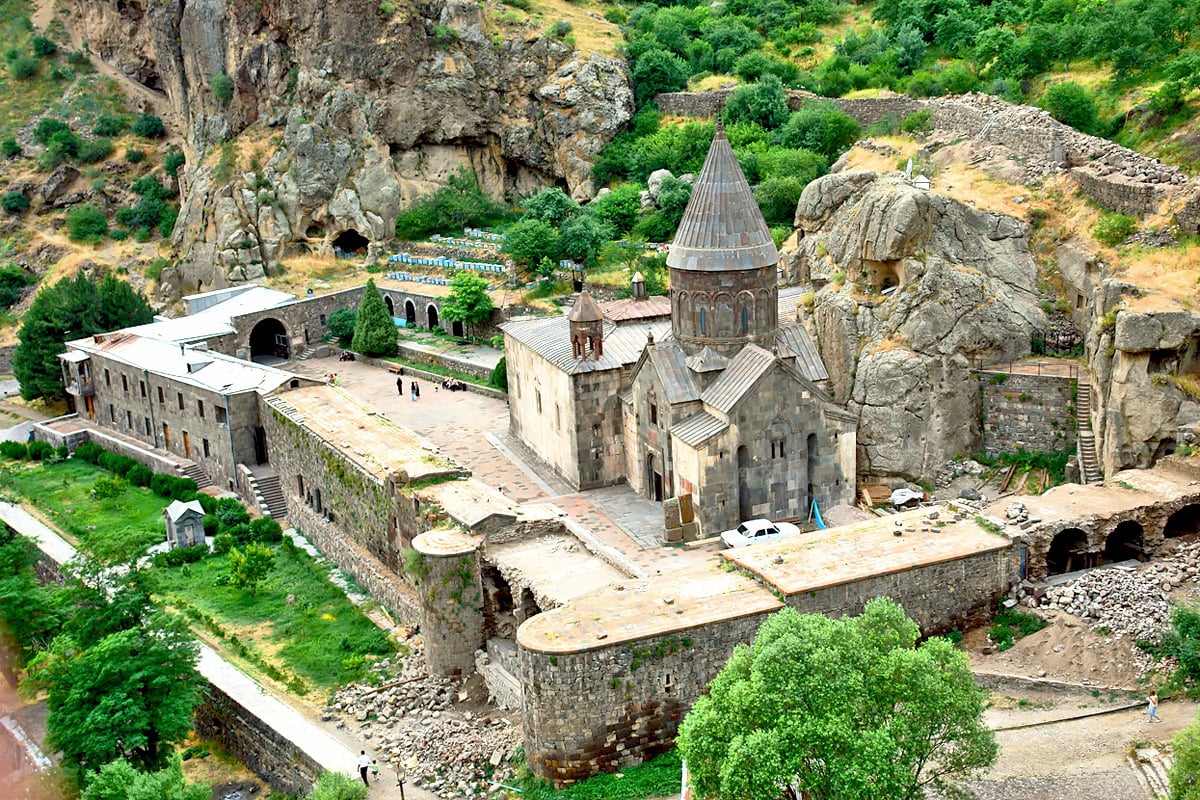
The monastery lies east of Yerevan at the entrance to the Azat Valley, about forty minutes by road. Its origins trace to the fourth century and a monastery founded at a sacred spring inside a cave. The main chapel dates to 1215. UNESCO inscribed Geghard in 2000, describing the rock-cut churches and tombs as “the very peak of Armenian medieval architecture.”
Entry is free. Arrive between nine and ten in the morning and you will have long stretches of the interior to yourself. By late morning the buses come up from Yerevan in a steady sequence, and the carved chambers, which are small, fill quickly.
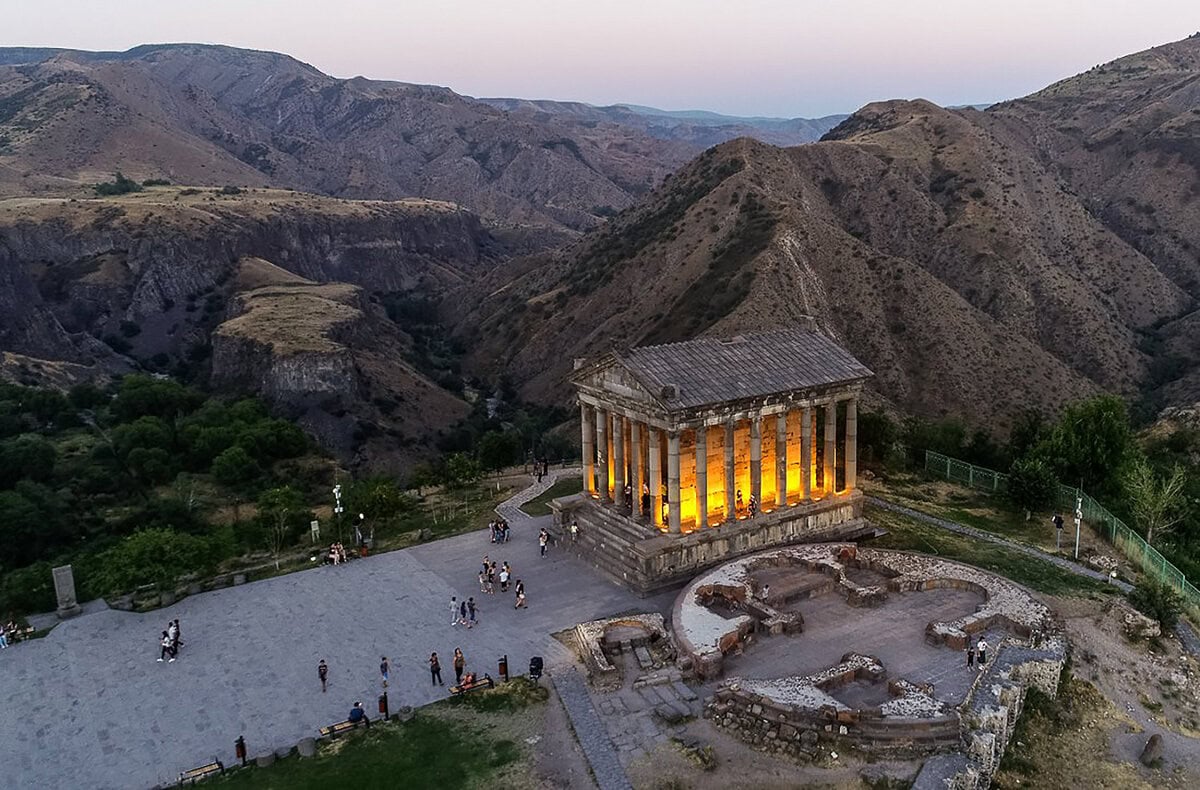
A short drive away, Garni belongs to a different chapter entirely. The colonnaded temple dates to the first century, twenty-four Ionic columns cut from basalt, traditionally associated with the sun god Mihr. It survived Armenia’s conversion while other pagan sanctuaries disappeared, most likely because it had become a royal summer residence. An earthquake brought it down in 1679, and archaeologists rebuilt it between 1969 and 1976 using many of the original stones, so you can still pick out which blocks are ancient and which are replacements. Entry is 1,500 dram, around four US dollars.
Below Garni, the gorge narrows around the Symphony of Stones, a wall of hexagonal basalt columns hanging above the riverbed in long vertical formations. Add a lavash-baking session in a nearby village and a single day moves from pagan Armenia through medieval Christianity into a living food tradition, without ever feeling like a checklist.
Yerevan Changes Color Through the Day
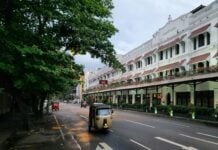
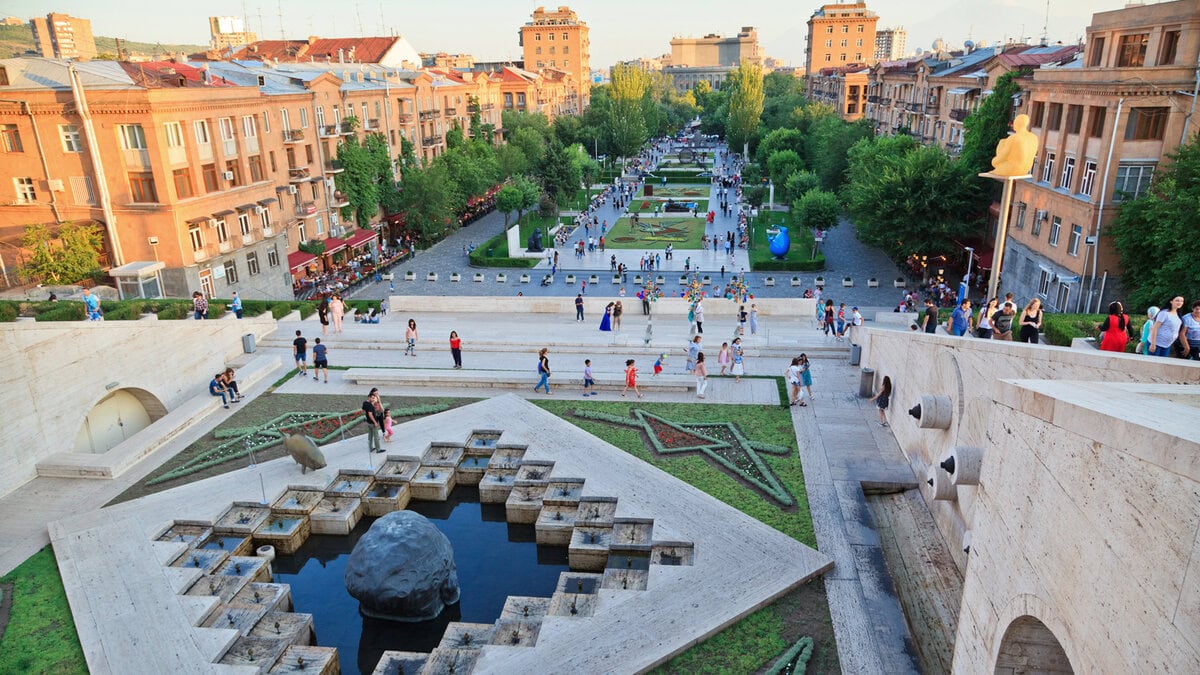
Yerevan earns more than its role as a base for day trips. Much of the center is built in volcanic tuff, and the stone shifts from pale rose in the morning to apricot and warm honey in the last light. The nickname Pink City makes sense after one evening walk.
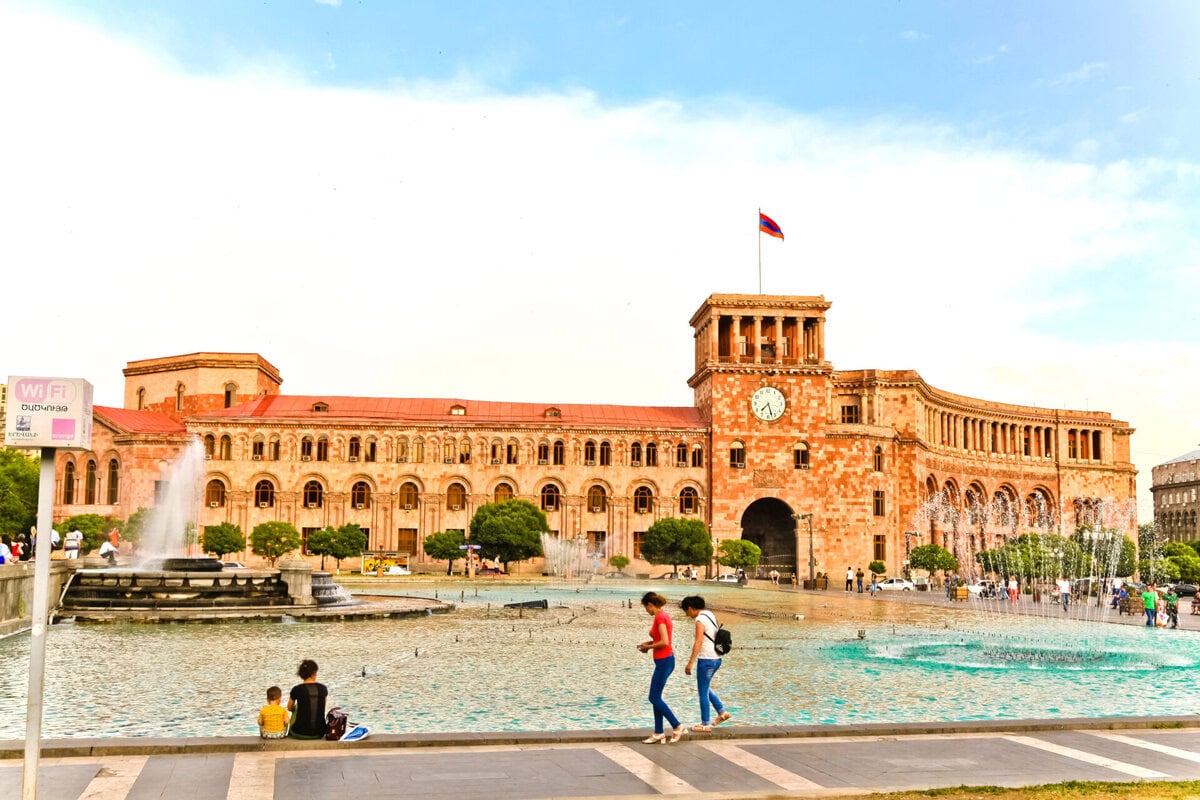
Republic Square is the formal heart of the center, framed by monumental buildings and animated by fountains on summer evenings. From there the city opens easily on foot. Cafés, wine bars, small courtyards, museums, and long streets where the pace feels more Mediterranean than post-Soviet.
North of the center, the Cascade climbs the hillside as a staircase of 572 steps rising about 302 meters across five terraces, with escalators running inside if the climb does not appeal. The outdoor sculpture garden and the Cafesjian Center for the Arts turn the structure into one of Yerevan’s most unusual public spaces. Each landing frames the city slightly differently, and on a clear day Mount Ararat closes the view beyond the rooftops.
Vernissage adds another layer. On weekends the tables fill with carpets, silver, carved khachkars, duduks, ceramics, paintings and Soviet-era objects. Some of what looks like souvenir shopping connects to traditions that are still very much alive, including khachkar carving and duduk music, both recognized by UNESCO.
The Landscapes Shift Faster Than You Expect
Armenia is small and landlocked, and the scenery changes quickly enough to make distances feel larger than they are.
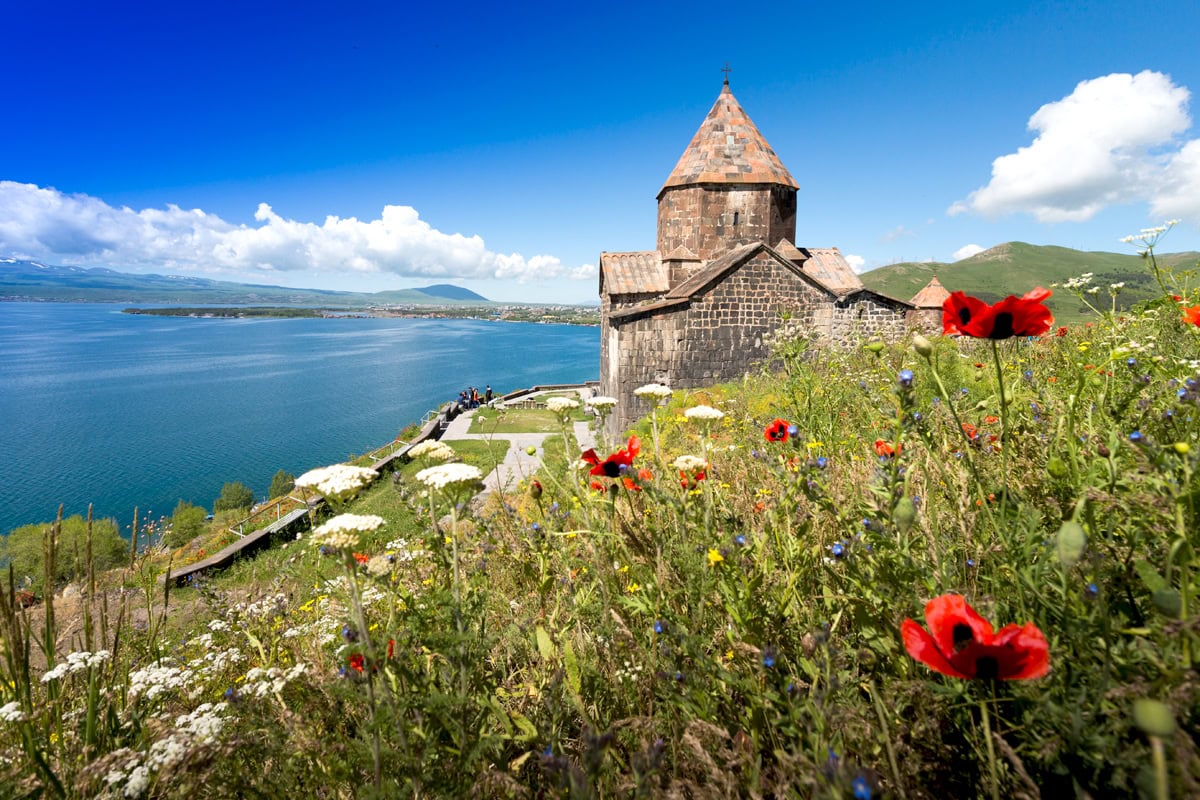
Lake Sevan sits at close to 1,900 meters above sea level and covers around 1,240 square kilometers, the largest lake in the Caucasus. Sevanavank monastery stands above the water on a peninsula, and the climb up is rewarded with views that dissolve into blue in every direction.
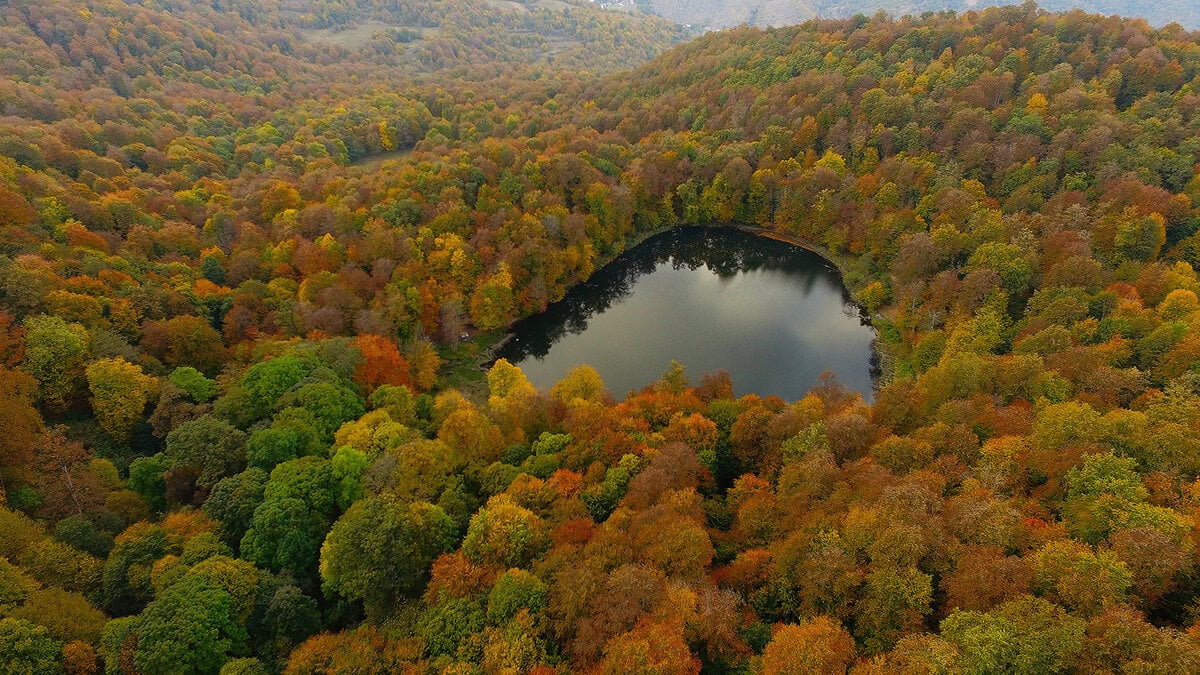
Continue north and the landscape changes again. Dilijan sits among forested mountains in Tavush, with beech, oak, hornbeam and pine replacing Sevan’s open horizons. Haghartsin and Goshavank monasteries lie among the trees, and the region feels cooler, greener and slower than the capital.
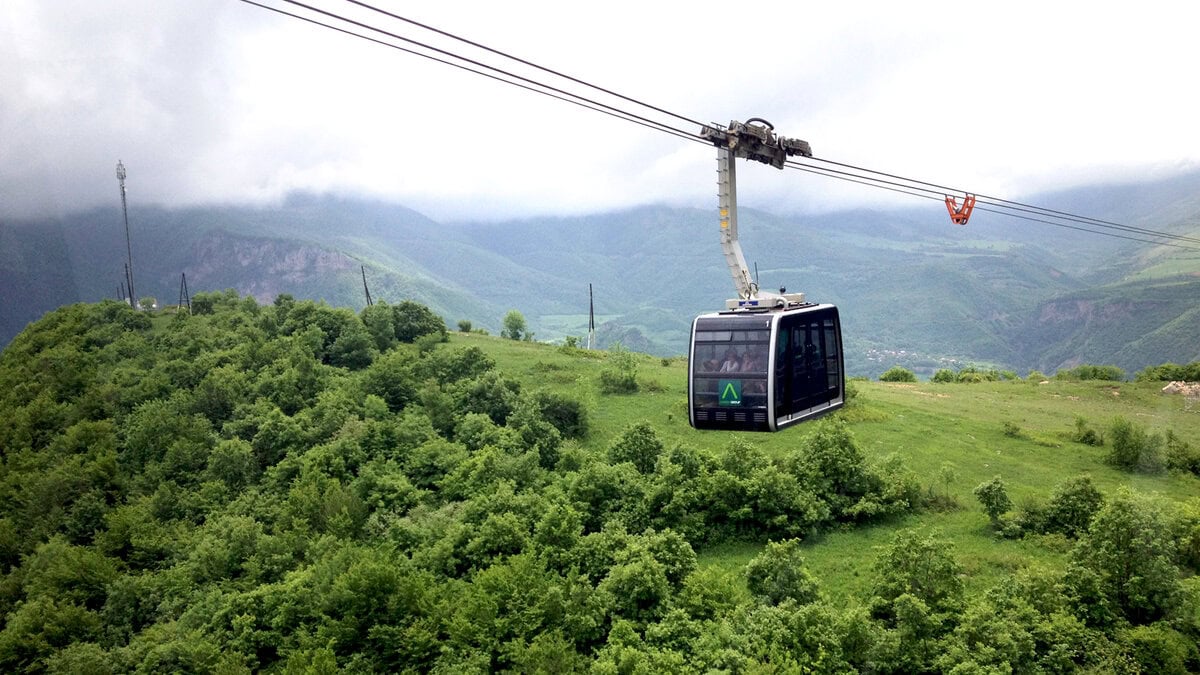
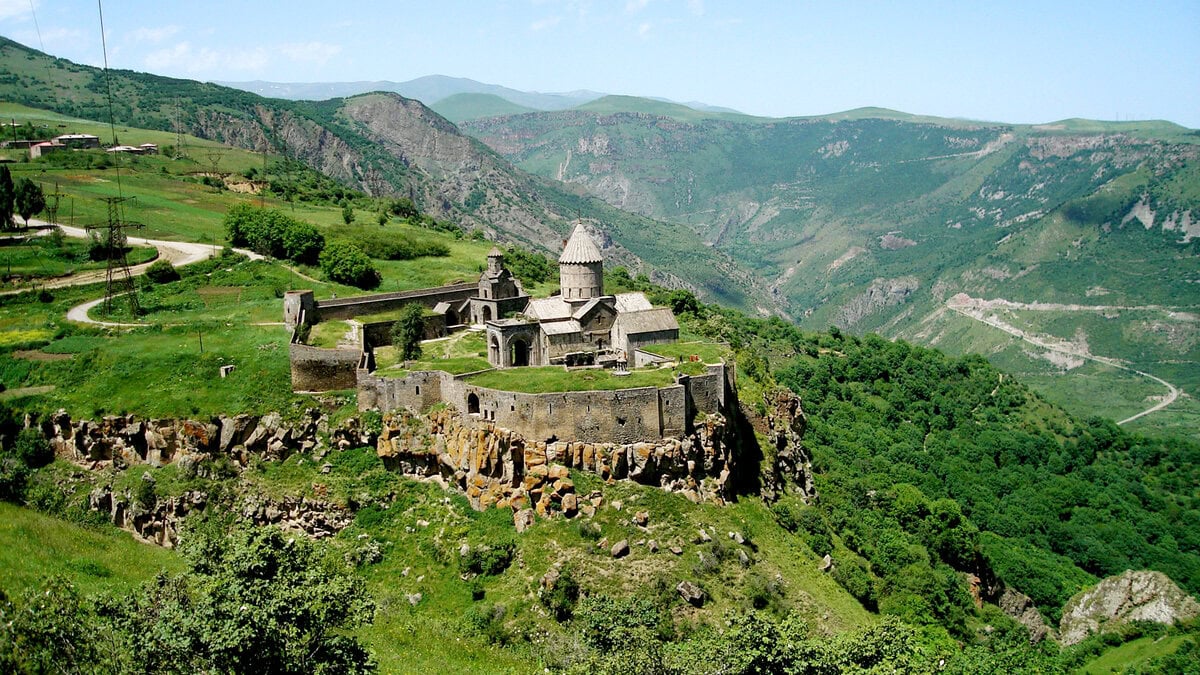
Farther south, the Wings of Tatev crosses the Vorotan Gorge in a single unbroken span of 5,752 meters and holds the Guinness World Record for the longest non-stop double-track reversible cable car. The ride takes around twelve minutes, with forest and gorge dropping away below. A round trip costs 9,000 dram, roughly 24 US dollars, and children up to 140 centimeters pay 1,000 dram, around three dollars. The cableway normally operates Tuesday through Sunday, and weather or technical conditions occasionally affect service.
Tatev is a long journey from Yerevan, though it should not be written off as a day trip. Well-planned full-day routes make it practical by combining the drive with stops such as Khor Virap and Noravank. Travelers who enjoy ambitious sightseeing days return to Yerevan the same evening. Those who prefer a slower rhythm overnight in Goris and give southern Armenia more room.
Wine, Bread, and Traditions That Go Back Thousands of Years
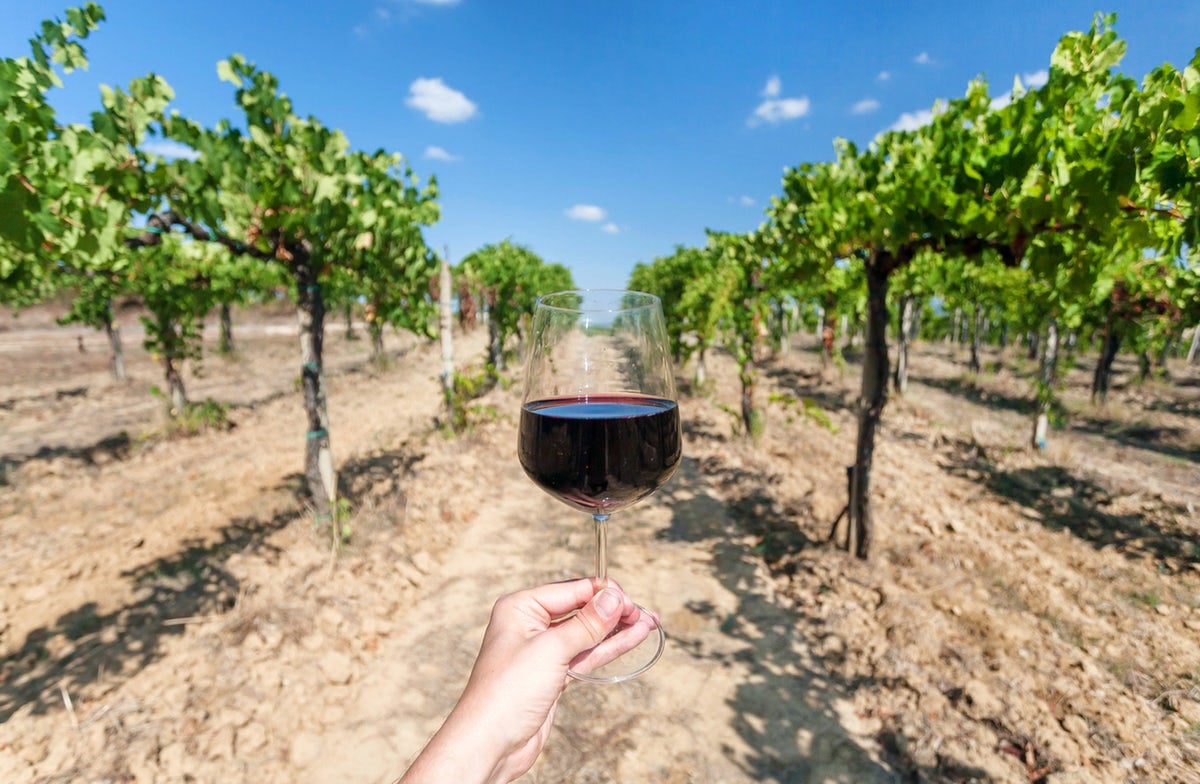
In 2007, archaeologists working in the Areni-1 cave in Vayots Dzor uncovered a wine press, fermentation vat and storage vessels dating to roughly 4100 to 4000 BC. It is regarded as the world’s oldest known winemaking facility, older than the next known example by at least a thousand years. The same cave later produced the world’s oldest known leather shoe, preserved for more than five millennia by the cool, dry conditions inside.
The cave is an excavation rather than a working cellar, but the valley around it never stopped being wine country for long. Areni Noir is the indigenous red variety most closely associated with Vayots Dzor, while Voskehat is one of Armenia’s best-known native whites. Seventy years of Soviet policy pushed the region toward brandy and nearly erased the table-wine tradition, so the current revival is young. That contrast is part of the appeal. Ancient evidence of winemaking, new producers, high-altitude vineyards and a growing culture of tastings all occupy the same valley.
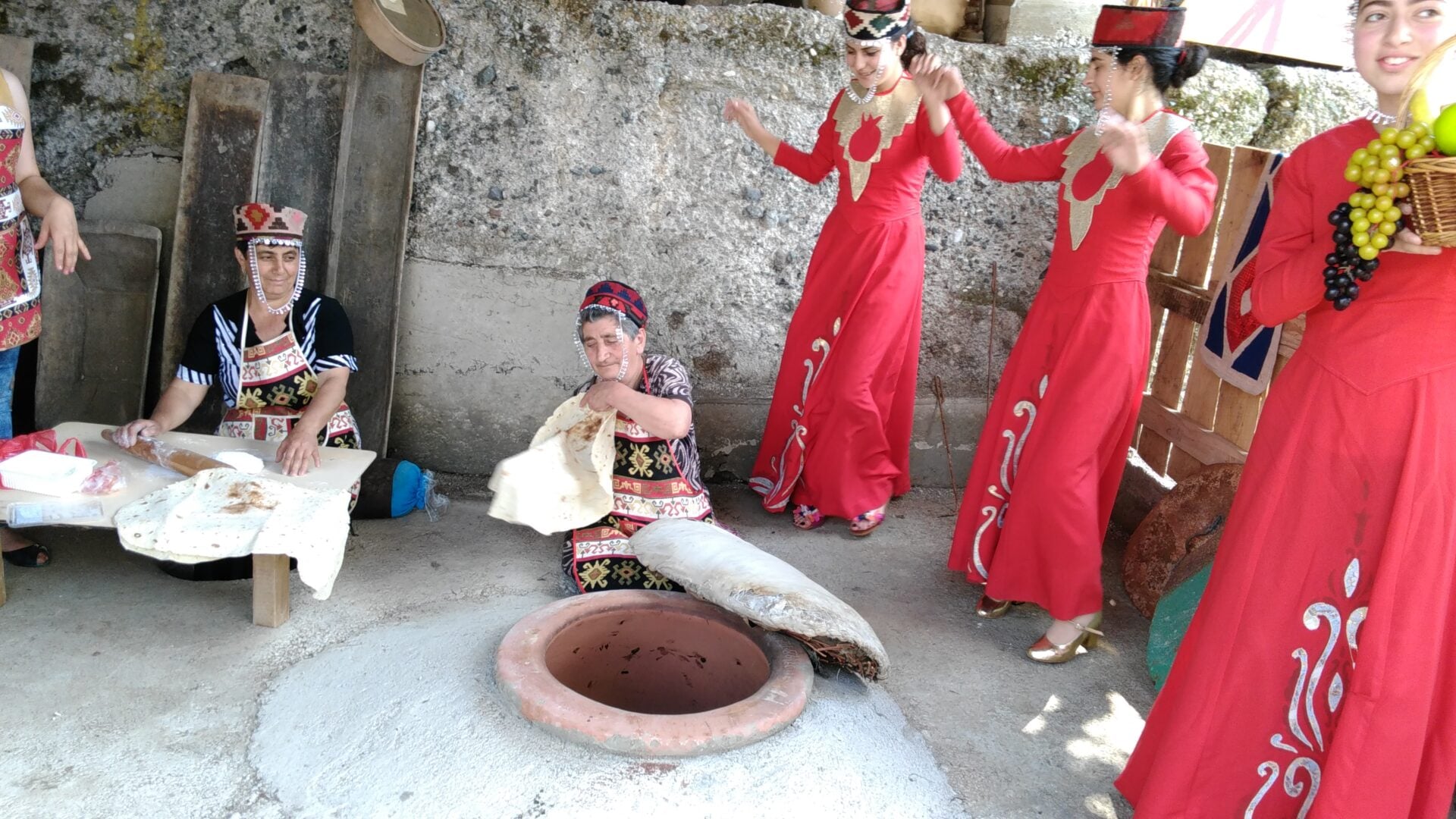
Bread tells a similar story. Lavash was added to UNESCO’s Representative List of the Intangible Cultural Heritage of Humanity in 2014, and the listing covers the process as much as the product. Dough is rolled thin, stretched over an oval cushion and pressed against the hot inner wall of a tonir, a clay oven set into the ground, where it bakes in under a minute and comes out close to eighty centimeters long.
Then the table expands. Khorovats brings charcoal-grilled meat. Tolma comes wrapped in grape or cabbage leaves. Harissa slow-cooks wheat and chicken into something closer to ritual than comfort food, and gata arrives sweet and buttery. Zhingyalov hats, a flatbread packed with wild greens, is a reminder of how much of Armenian cooking runs on herbs and vegetables. Meals are meant to be shared, and they usually take longer than planned.
Hospitality Is Part of the Journey
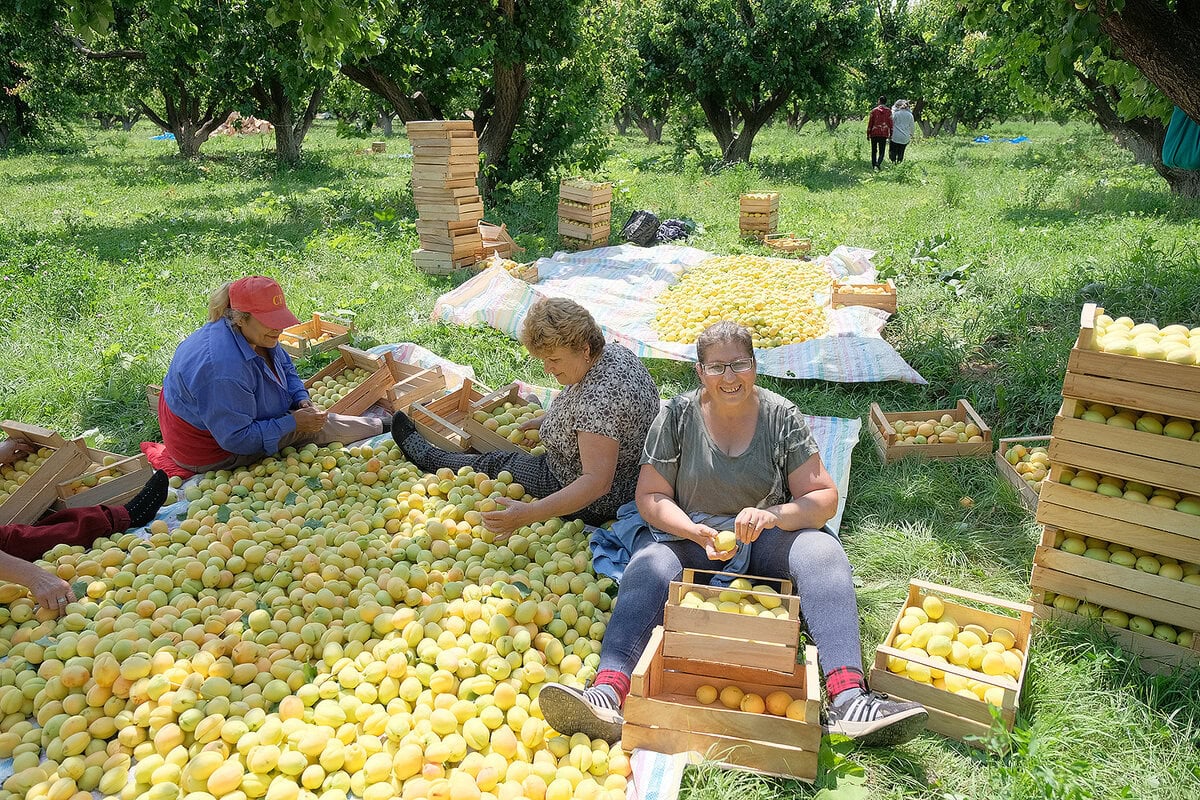
The Armenian word hyur means guest. Hospitality, hyurasirutyun, is built from the same root, and the connection explains something visitors notice quickly. Being a guest carries weight here.
In practice that means meals stretch, hosts insist that one more plate will fit, guides speak about places with personal attachment, and small gestures of care turn up everywhere from a village table to a city café. The warmth feels cultural before it feels commercial.
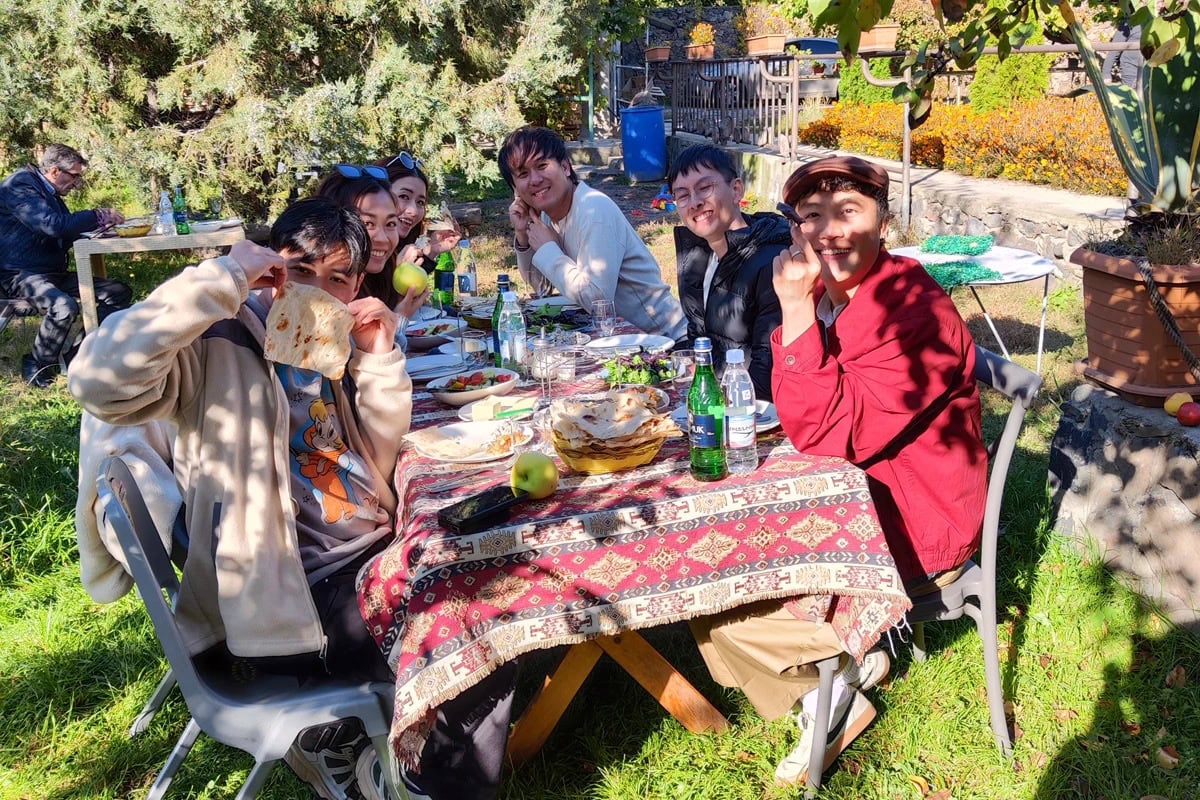
It is also why Armenia is easier to remember through moments than through monuments alone. The view from Khor Virap matters, and so does the conversation over coffee afterward. Geghard’s carved chambers stay with you, and so can the smell of fresh lavash. The country makes history tangible, then surrounds it with ordinary life.
How Seven Days Actually Fit Together
A week is enough for a strong first look if you use Yerevan as your base and resist squeezing every region into the same trip. The routes below are realistic, though they are not the only way to do it.
Day 1. Yerevan. Republic Square, the Cascade and a long walk through the center. Add the Matenadaran if manuscripts and history interest you, and Vernissage if your visit falls on a weekend. Leave space for dinner and the city after dark.
Day 2. Garni and Geghard. Pair the temple and the monastery with the Symphony of Stones and, if possible, a lavash-baking session. Leave early for Geghard. It is one of the easiest ways to understand how different periods of Armenian history sit beside one another.
Day 3. Lake Sevan and Dilijan. The landscape-change day. Open water, Sevanavank, then the forests of Tavush and monasteries such as Haghartsin and Goshavank.
Day 4. Etchmiadzin and Zvartnots. A half day covers the cathedral and the ruins, which leaves an afternoon in Yerevan for the museums, the wine bars or whatever you skipped on Day 1.
Day 5. The southern day. This is the big one. An organized full-day route from Yerevan combines Khor Virap, Noravank, Tatev Monastery and the Wings of Tatev in roughly 14 to 15 hours, with a lunch stop along the way. If that pace sounds too intense, split it into a two-day southern loop with an overnight in Goris.
Day 6. Areni wine country. The Areni-1 cave and a working winery, at a slower pace than Day 5 allows. You retrace part of the southern road, which is a fair trade for time in the cellars. Travelers who took the two-day option arrive back in Yerevan around now instead.
Day 7. Keep it flexible. A market, a museum, a café, or another walk through central Yerevan before departure.
The point is not the exact order. It is that Armenia works as a series of strong day routes radiating out from Yerevan, with the south as the one direction where you choose between an ambitious single day and a slower overnight.
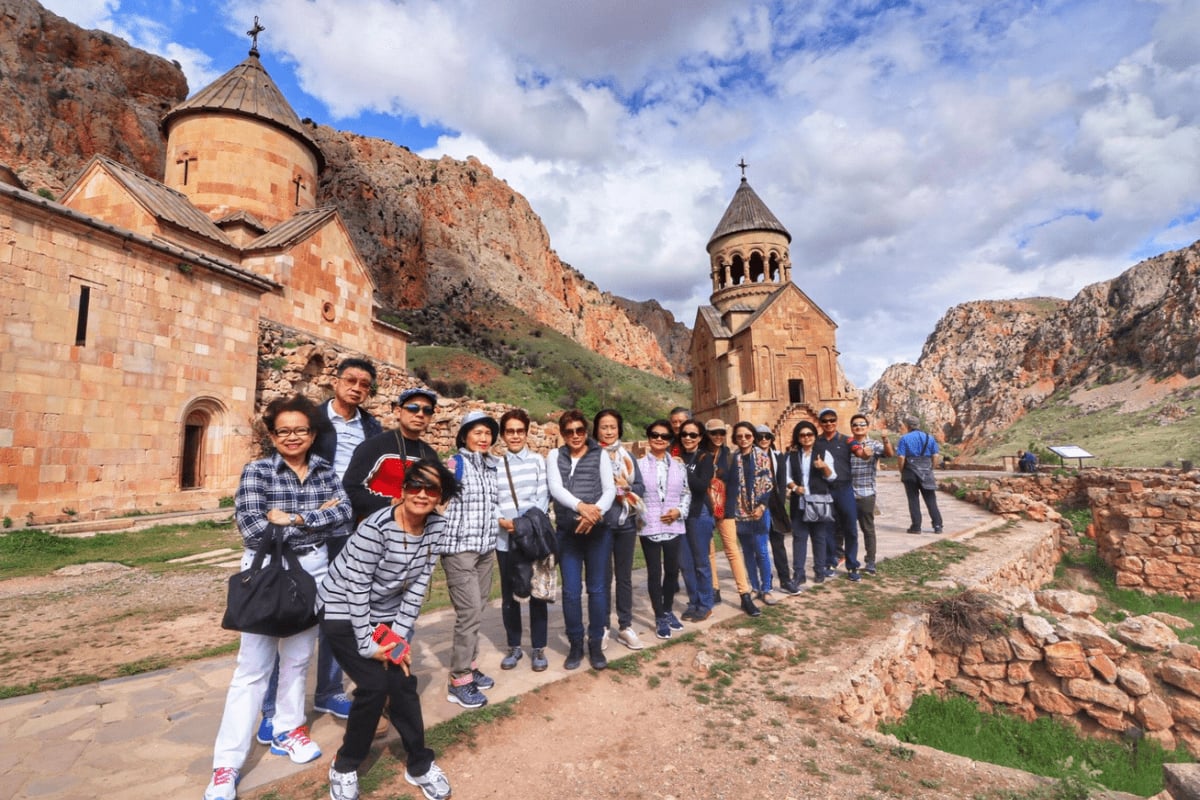
Once those routes are on a map, a small-country paradox shows up. Distances look manageable, and then the mountains, the winding roads and the different directions of travel make logistics matter more than the map suggests. The easiest trips are the ones where transport, timing and stops are settled before arrival.
That is where Hyur Service fits into the picture. The Yerevan-based company has operated since 2002, has welcomed more than 760,000 travelers, and holds a 4.9 rating across more than 17,500 TripAdvisor reviews. Its site runs in seven languages and works as a planning resource as much as a booking system, with practical information about attractions, restaurants and festivals sitting alongside the services themselves. Much of a week can be arranged from home, which is worth something in a country most people arrive in without a mental map.
Group Tours
Group tours in Armenia follow published schedules from Yerevan and run with guaranteed departure, even when only one traveler is booked. Routes are guided in English and Russian. Standard inclusions cover transportation, Wi-Fi, water, light snacks, entrance tickets and masterclasses on the route, passenger and vehicle insurance, plus free pick-up from selected central hotels. Children receive discounts.
The format works particularly well for Garni and Geghard, for Lake Sevan and Dilijan, and for the long southern day out to Tatev. You know the route, the timing and the price in advance, then join the group and let someone else handle the day.
Private Tours
Private tours in Armenia are built around flexibility. You choose the date, the start time, the route and the pace, with a professional driver included and a guide in your preferred language available if you want one. Pick-up and drop-off within Yerevan are included, child seats are available on request, and extra stops can be added when the route and timing allow. Online booking takes a 15 percent deposit with instant confirmation, and the balance is paid at departure.
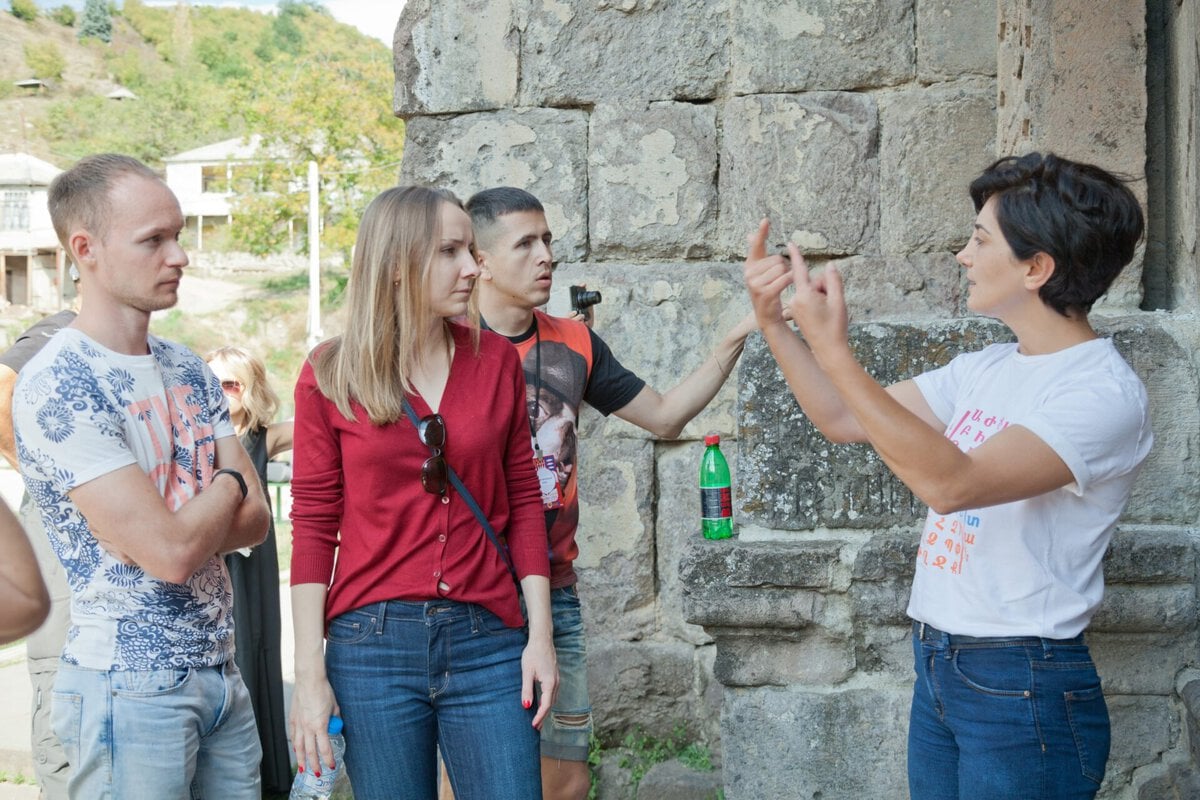
Many first-time visitors end up mixing the two. Scheduled group tours for the classic routes where the timing already works, then a private day for the one they want to slow down, start earlier, or push farther south.
Practical Information
When to Go
Late spring, from April to June, and early autumn, from September to October, usually offer the most comfortable balance of weather and road conditions. Yerevan summers are hot, with daytime temperatures often above 30 degrees Celsius, while winters are cold and mountain conditions can be far harsher than in the capital. The Selim Pass, at 2,410 meters, is generally open only from around May to November.
Seasonal events change the character of a trip. Vardavar, in mid-July, turns streets and squares into a nationwide water fight. The Areni Wine Festival is generally held in early October. Check the exact dates for the year you plan to travel.
Getting There and Around
Zvartnots International Airport is about twelve kilometers west of central Yerevan, roughly twenty minutes from the center. Taxis and ride-hailing apps make the transfer straightforward, and central Yerevan is easy to explore on foot.
Renting a car is possible, though self-driving becomes demanding on long mountain routes, especially in the south. For day trips, many visitors prefer a driver or an organized tour so they can watch the landscape instead of the road surface.
Money, Connectivity, and Language
The currency is the Armenian dram. At the time of writing the rate is roughly 370 dram to the US dollar. Cards are widely accepted in Yerevan, and cash is useful for markets, smaller shops and rural stops.
Local SIM cards are easy to buy, including at the airport, and Yerevan has reliable mobile coverage and ride-hailing through Yandex Go and GG. Armenian is the official language, Russian is widely understood, and English is common in the tourism sector and among younger Armenians.
Safety and the Borders
Armenia’s main tourist routes are straightforward to visit, and travelers should still be aware of border restrictions. At the time of writing, the U.S. State Department lists Armenia at Level 2, “Exercise Increased Caution”, and advises against travel to the border region with Azerbaijan. Specific restrictions apply to areas east of Vardenis, east of Goris and south of Kapan. Travel through Yeraskh is permitted, but stopping is not.
None of the standard sightseeing routes described here requires entering the restricted border zone. As with any trip, check your own government’s latest travel advice before departure, especially if you plan to explore remote parts of Syunik or Gegharkunik.
Frequently Asked Questions
Do I need a visa to visit Armenia?
Citizens of many countries, including EU member states, the United Kingdom, the United States, Canada and Australia, can enter Armenia without a visa and stay for up to 180 days within one year. Visa rules depend on nationality and can change, so confirm your status through the Armenian Ministry of Foreign Affairs before booking flights.
Do you need to book tours in advance, or can you arrange them after arriving?
Both work outside the July and August peak, when the popular routes fill several days ahead. Booking from home has one practical advantage beyond availability, which is that you land with the week already shaped and lose no time to arranging transport. Departures for the classic day routes are frequent enough that a spontaneous booking is usually possible in shoulder season.
How many days do you need in Armenia?
Seven days gives first-time visitors a strong introduction to Yerevan, the monasteries around the capital, Lake Sevan, Dilijan and at least one southern route. Ten days lets you slow down, add an overnight in the south, and explore more wineries or less-visited regions. Under five days, leave the south for another trip rather than rushing it.
Is Mount Ararat actually in Armenia?
No. Ararat lies across the closed border in eastern Turkey, though it dominates the skyline of the Ararat plain and appears on the Armenian coat of arms. Haze builds over the plain as the day warms, so the mountain shows most clearly in the first hours after sunrise.
What should you drink in Armenia?
Armenian coffee arrives strong and unfiltered in a small cup, and it is offered constantly. Beyond the Areni wines, look for matsun, a thick fermented dairy drink, and tan, its salted, diluted version, which locals treat as the correct answer to a hot day and a plate of grilled meat. Armenian brandy carries a long reputation and is widely available.
Should first-time visitors choose a group tour or a private tour?
Group tours are ideal when you want a clear schedule, strong value and an easy way to meet other travelers. Private tours are better when flexibility, privacy or a custom pace matters more. For a one-week first visit, mixing the two often works best.