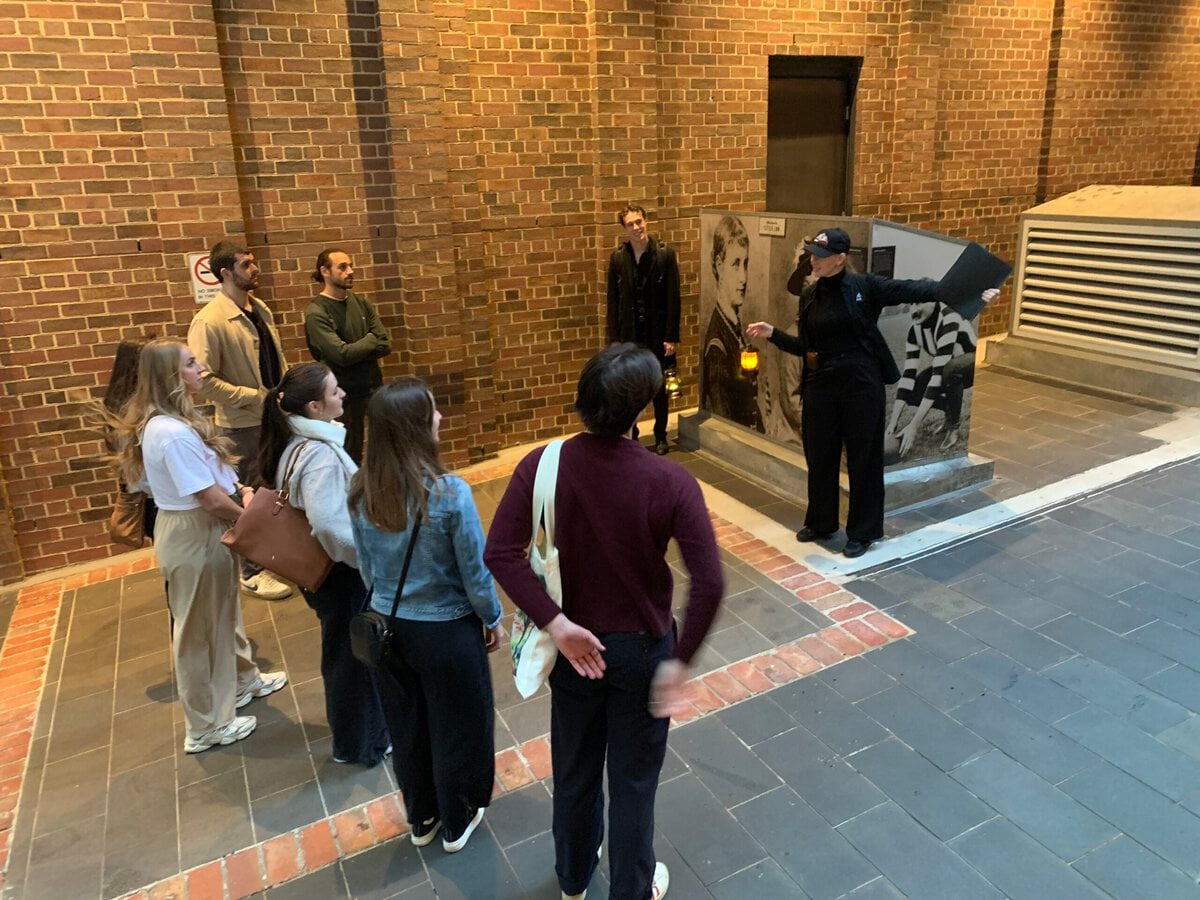
I’ve stood in the same central-city meeting points hundreds of times: bright shopfronts, heritage facades lit for the evening, people heading out to dinner without a thought for the ground beneath their feet. Every guide who works with us starts a tour the same way, welcoming a group into the city they already know, then promising to show them the one underneath. Sydney has one. So do Brisbane, Perth and Fremantle. This is what that walk actually looks like, and what it teaches you about a place no landmark ever could.
- The City Everyone Photographs Isn’t the Whole Story
- How the Walk Actually Unfolds
- Starting in Familiar Ground
- Into the Laneways
- The Final Revelation
- The Stories Get Personal More Often Than You’d Expect
- What a Dark History Walking Tour Teaches You That a Landmark Can’t
- Practical Information
- When to Go
- What to Expect
- Who It’s For
- Frequently Asked Questions
- What is a dark history tour?
- How long does a typical dark history walking tour last?
- What’s the difference between a dark history tour and a ghost tour?
- Are dark history tours suitable for children?
- Is it disrespectful to take a tour built around real crimes and tragedies?
- Do dark history tours require any fitness or preparation?
Book the best dark history tours across Australia
Sydney — The Rocks: Walk the cobblestone streets of The Rocks, Sydney’s first and roughest neighborhood, and hear the true crime stories the postcards leave out — gang rule, dubious alibis, and a district built on more than sandstone. [Book the Sydney Dark History Tour →]
Brisbane: Follow your guide into the version of Brisbane most visitors never see: brawlers, fraudsters, and the scandals the bright lights never quite covered up. [Book the Brisbane Dark History Tour →]
Perth: Trace Perth’s historic crime sites on foot and hear the stories behind the city’s quietest-looking streets, from unsolved cases to the criminals who made headlines. [Book the Perth Dark History Tour →]
Fremantle: Walk the port town’s wharves and back streets to uncover the crimes and characters behind Fremantle’s working-harbor history. [Book the Fremantle Dark History Tour →]
The City Everyone Photographs Isn’t the Whole Story
Most travel writing about Australian cities runs on the same fuel: famous landmarks, polished modern identity, a few postcard views. Even the true-crime coverage that does exist tends to circle the same handful of notorious cases, the ones already turned into documentaries. What gets left out is everything else: the forgotten local stories, the corruption that shaped a street’s development, the characters nobody wrote a book about. That’s the gap we work in.
Dark history is a lens on a city’s character: the pressures and conflicts that shaped who ended up where, and why. An ordinary street corner can carry more of a city’s real history than the landmark two blocks over that every visitor photographs.


How the Walk Actually Unfolds
Starting in Familiar Ground
A tour begins in the middle of a city everyone recognizes: traffic, footsteps, conversations spilling out of pubs, the general hum of a Friday night or a quiet Tuesday. The guide gathers the group, and within a few minutes those same familiar surroundings start to look different. That heritage building on the corner. That laneway you’ve cut through a dozen times without looking up.
Into the Laneways
The group moves on foot, stopping at ordinary-looking buildings and street corners where extraordinary events once unfolded. As the tour pushes into quieter streets, the traffic noise tends to fall away, and the stories take over. What starts as a handful of separate incidents starts connecting: a name that comes back two stops later, a detail that recontextualizes something the guide mentioned twenty minutes earlier. It rarely goes where you expect.
The Final Revelation
After roughly 90 to 100 minutes, the tour reaches its last story, and the earlier details click into place. This is the moment guests describe most often afterward: the sense that the whole thing added up to something bigger than a list of true crimes. One guest, a local who’d walked those same streets for years, stopped near the end and looked back at the block behind him. He said he’d passed through that exact spot countless times and never once known what had happened there. It’s a common reaction.
There’s an Australian phrase for it: you wouldn’t read about it, used when something is so extraordinary it’s hard to believe. Guests say some version of that line most nights.
The Stories Get Personal More Often Than You’d Expect
Something happens on these tours that doesn’t happen on a landmark walk: people recognize themselves in the history. A guest will mention, out of nowhere, that their grandfather went to school with the man the guide just described. Someone else might realize they’re distantly related to a person involved in one of the cases, or that a relative witnessed the event firsthand. Those moments aren’t planned and they change the tour every time. The stories are the same, but the room reacting to them never is.
That’s also why no single local personality anchors every tour the way a landmark or a museum piece might. Instead, each experience runs through a local guide who brings personality and firsthand context to buildings and streets that would otherwise mean nothing to a passerby. The guide is doing the work a plaque can’t: turning a facade into a scene.
What a Dark History Walking Tour Teaches You That a Landmark Can’t
If you’re deciding whether this kind of tour is worth your evening, ask yourself a different question than “what should I see”: what can true crime teach you about a city that its famous landmarks cannot?
True crime surfaces the people and decisions that shaped a city from underneath, the parts that don’t make it onto a tourism brochure. It introduces you to characters history mostly forgot, and it shows you that an ordinary street can hold more of a city’s real character than its most celebrated view. By the time the final story lands, most guests aren’t just holding a set of interesting facts. They’re looking at the same streets they walked in on with a completely different understanding of what happened beneath them.


Practical Information
When to Go
These tours run year-round, and the season changes the atmosphere more than it changes the experience. Brisbane evenings run warm and subtropical. Sydney, Perth, and Fremantle bring crisper air and sea breezes that cool things down after dark. Tours go ahead in most weather, and honestly, a bit of wind or light rain in a shadowed laneway tends to add to the mood rather than take away from it.
What to Expect
Plan for about 90 to 100 minutes on foot, covering a route of ordinary-looking buildings, corners, and laneways rather than any single monument. The pace is walking, not hiking: comfortable shoes matter more than fitness. The tour doesn’t include a set meal or tasting, though you’ll pass the restaurants, pubs, and late-night kitchens that give each city its own smell and sound as the evening goes on.
Who It’s For
The tours draw a mix of people: couples looking for something different to do with an evening, families with older kids curious about the city they’re visiting, and anyone who genuinely likes history and wants more than the landmark version. Because each city’s stories are locally researched and specific to that place, the experience changes from Sydney to Brisbane to Perth. It’s not the same script delivered against a different skyline.

Frequently Asked Questions
What is a dark history tour?
A dark history tour walks visitors through real, documented events tied to specific locations, rather than the landmarks a city is best known for. The guide connects those events to the streets and buildings where they happened, using local research rather than folklore. It’s built around verified history, not urban legend.
How long does a typical dark history walking tour last?
Most dark history walking tours run somewhere between 60 and 120 minutes, covering a handful of stops within a compact, walkable area. Exact length depends on the operator and how many stories the route covers. Check with the specific tour company for their route’s timing.
What’s the difference between a dark history tour and a ghost tour?
A ghost tour centers on hauntings and supernatural claims, often built for atmosphere and entertainment rather than strict accuracy. A dark history tour sticks to documented events, verified through court records and newspaper archives. Overlap happens, but a dark history tour is grounded in what actually happened at that address.
Are dark history tours suitable for children?
It depends on the operator and how they present the material. Reputable dark history guides handle violent or upsetting subject matter with care rather than for shock value, but the content still involves real crime and real victims. Ask the operator directly how they handle content for younger guests before booking.
Is it disrespectful to take a tour built around real crimes and tragedies?
Done well, a dark history tour treats real events and real victims with the same seriousness a documentary or museum exhibit would. The line between respectful history and voyeuristic dark tourism comes down to framing: context and accuracy versus shock and sensationalism. Operators who research their stories carefully and avoid gratuitous detail generally land on the right side of that line.
Do dark history tours require any fitness or preparation?
Most dark history tours are easy walking tours at a relaxed pace, built around a fixed route on foot rather than strenuous terrain. A comfortable pair of shoes goes further than any fitness routine. Check the specific operator’s listing for exact distance and terrain before you book.