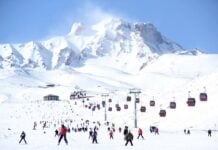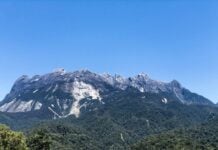
The first time guests stand under Mount Erciyes at dawn, most of them go quiet. The peak fills the horizon, a snow-capped volcano rising to 3,917 meters above the Central Anatolian steppe. A couple of hours later they’re standing near 3,400 meters with skis on, dropped there by a snowcat rather than a lift. By evening they’re underground in Cappadocia, inside rock that same volcano laid down.
We run this catskiing day every winter, and it’s the side of skiing in Turkey that almost nobody plans for. Here’s how the day works, what it asks of your legs and lungs, and what to know before you go.
- The Climb Up Erciyes
- Leaving the Lodge at First Light
- The Snowcat Ride to 3,400 Meters
- Dropping In on the Devil’s Route
- Why the Powder Stays So Dry
- The Bowl That Isn’t on Any Map
- The Guide Who Grew Up Under the Volcano
- Afternoon in Cappadocia
- Ruins and Fairy Chimneys
- Down Into the Underground City
- Dinner in the Cave
- The Winemaker’s Cellar
- Fire, Bread, and Charcoal
- “Erciyes, Kapadokya’nın Mimarıdır”
- Why Turkey Rarely Makes the Ski Shortlist
- Practical Information
- Timing
- Who It Suits
- What to Bring
- Frequently Asked Questions
- Is Mount Erciyes catskiing suitable for intermediate skiers?
- Can I do this trip as a solo traveler?
- How do people recover after a day on the volcano?
- What is the food like at the mountain lodges?
- Where else in Turkey can you ski backcountry?
Ski Erciyes for a Week, With a Day in Cappadocia
If you want a full week on Mount Erciyes rather than a single catskiing day, this guided trip bundles the hotel, ski pass, rentals, and a day in Cappadocia into one booking.
Good to know
8 days, 7 nights at Erciyes Ski Resort, half board (breakfast and dinner)
5-day ski pass and ski rental (skis, boots, poles) included, plus optional group lessons, so complete beginners through advanced skiers can join
One day in Cappadocia with a sunrise hot air balloon flight (weather permitting), the Göreme Open-Air Museum, Paşabağ, and a local lunch
You fly in and out of Kayseri Airport (ASR), and every airport and ground transfer is covered
No minimum group size, with a tour leader from arrival to departure
Price: from $1,886 per person, excluding international flights (checked November 2026).
The main facts
Included: 7 nights’ half-board accommodation, 5-day ski pass, ski equipment rental, the Cappadocia day trip (balloon flight, guided tour, entrance fees, and lunch), all transfers, a tour leader and local guides, and winter sports insurance
Not included: international flights, visa fees, drinks and meals not listed, ski clothing rental, tips, and optional extras such as catskiing
One honest limitation: the catskiing described in this article isn’t part of the package. It’s an optional add-on at extra cost that has to be booked in advance, so if powder off the snowcat is your main reason to go, confirm availability and price before you book.
Check dates and book the White Route to Cappadocia
This section contains partner links. If you book through them, we may earn a commission at no extra cost to you. We only feature partners whose services we believe add genuine value for travelers.
A Morning on the Volcano
Leaving the Lodge at First Light
You step out of the alpine lodge into air that’s freezing and dry. It’s the kind of cold that wakes you faster than coffee. Above you, the mountain looks exactly like what locals have long called it, a sleeping giant.
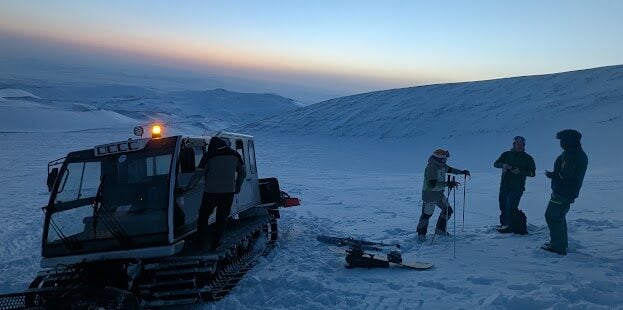
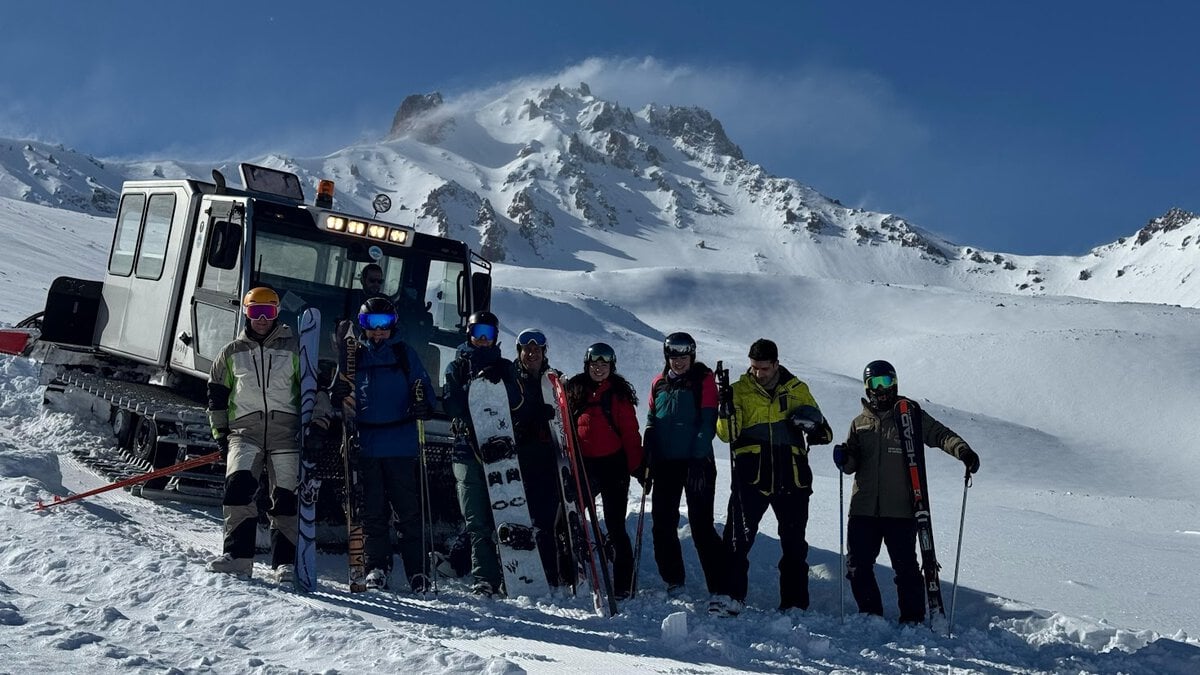
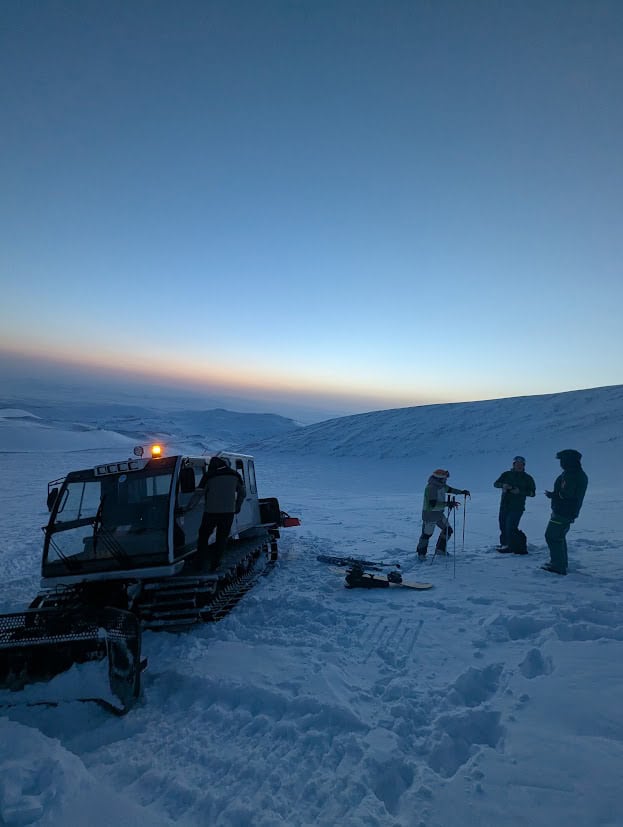
You’re part of a small crew, and the first job is practical: loading skis and packs into the snowcat, a tracked machine built to climb where lifts don’t go. The cats used for catskiing on Erciyes seat around 10 people in a heated cabin, so your group on the upper mountain is rarely bigger than that.
The Snowcat Ride to 3,400 Meters
The engine starts with a deep rumble, and the cat pushes up open volcanic slopes above the top of the lift system, which ends at about 3,350 meters. Near 3,400 meters it stops and the engine cuts out.
What follows is the part guests mention first when they get home. Apart from the wind, there is no sound at all.
Dropping In on the Devil’s Route
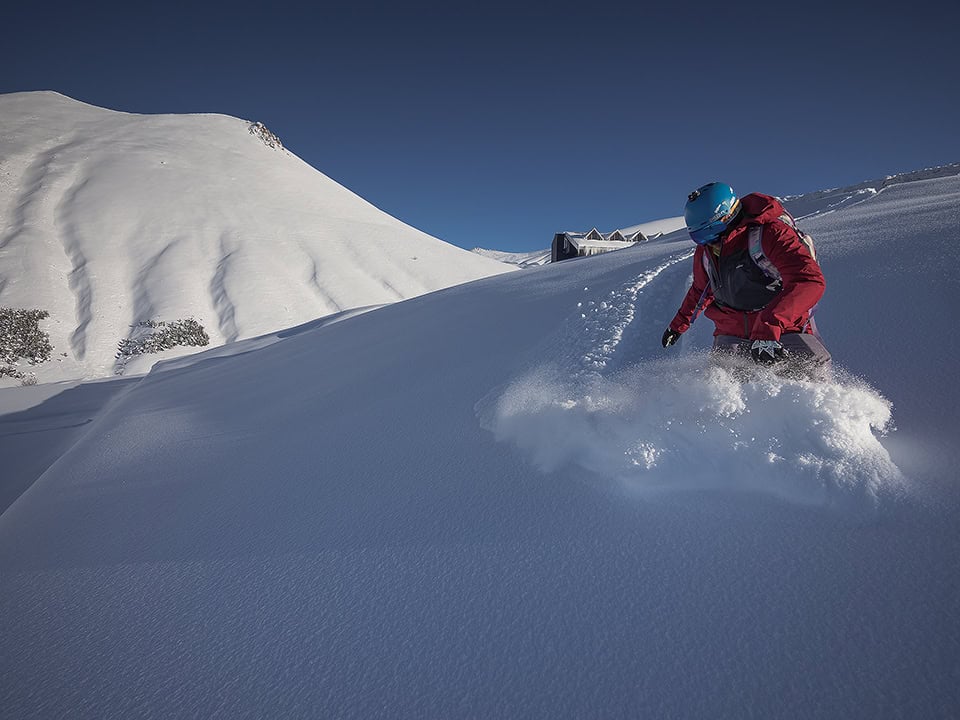
You click into your bindings below the summit crater, take a breath, and drop in. The Şeytan Rotası, or Devil’s Route, is the line people come for. It runs from around 3,400 meters down toward 2,000 meters, roughly 1,400 vertical meters in a single descent. On a good day you’re carving wide turns through dry, untracked powder that sprays up behind you, with the Anatolian plains running out to the horizon below. When conditions don’t suit the Devil’s Route, guides often switch to the Çoban İni, the Shepherd’s Descent, another long line off the upper mountain.
At the bottom, the cat is waiting. You climb back in and go again.
Why the Powder Stays So Dry
Guests notice how light the snow is, and they rarely ask why. Erciyes sits in the middle of the arid Central Anatolian steppe, and the mountain ranges around the plateau strip most of the moisture out of incoming winter storms. What reaches the peak falls as light, dry snow, the kind skiers call champagne powder. (For more on the climate and the lift-served side of the mountain, see our guide to skiing Erciyes and seeing Cappadocia in one winter trip.) That same dry climate matters again later in the day.
The Bowl That Isn’t on the Piste Map
Weather above 3,000 meters on a volcano can turn quickly, and when it does, the route changes with it. Sometimes the cat detours into a wind-protected bowl well outside the resort’s marked terrain, and more often than not that unplanned stop delivers the deepest run of the trip. Guests who arrive worried about a forecast often leave talking about that bowl.
The Guide Who Grew Up Under the Volcano
Your lead freeride guide is a local mountaineer born in a village at the foot of Erciyes. He knows the mountain’s microclimates and wind-loaded lips from a lifetime of reading them. When the weather shifts, he decides where the cat goes next, and that local knowledge is the reason the bowl days happen at all.
Afternoon in Cappadocia
The drive from the slopes into central Cappadocia takes about an hour. White snow gives way to pale, honey-colored valleys, and the pace of the day drops right down. Your legs are still buzzing from the mountain. Now you’re walking.
Fairy Chimneys and Rock-Cut Ruins
You walk among fairy chimneys and through dwellings and churches carved into the soft stone. The wind that howled across the summit a few hours earlier still finds you here, moving through the old rock. It’s an odd feeling to stand inside that much history with ski wax still on your hands. If the carved churches pull you in, read about the monasteries of Cappadocia.
Down Into the Underground City
Then the day goes deeper, literally. You descend narrow, hand-carved stairs into a multi-level underground city, expanded over centuries into refuges that could shelter thousands of people. Your hands brush against cool volcanic walls as you go.
Underground, the air is still and naturally cool, insulated by the rock, and it smells of tuff and dry earth. Your footsteps echo back at you in the tunnels, and guests tend to lower their voices without being asked. After a morning of wind and glare at altitude, the quiet feels like shelter.
Dinner Inside the Rock
The Winemaker’s Cellar
In Cappadocia, guests meet a local winemaker whose family has carved cellars out of the soft volcanic tuff for generations. He works with Anatolian grapes such as Öküzgözü and Kalecik Karası, and hearing him explain how the volcanic soil shapes the wine sets up everything that happens at dinner.
Fire, Bread, and Charcoal
You come up into a warmly lit dining room carved into the rock. A fire crackles in the corner. The smell of charcoal-grilled meat reaches you first, then spices and wood-fired flatbread. Someone pours a glass of deep red Cappadocian wine, and the crew raises their glasses together, tired in the best way.
“Erciyes Is the Architect of Cappadocia”
Locals have a saying: Erciyes, Kapadokya’nın mimarıdır, “Erciyes is the architect of Cappadocia.” Millions of years ago, eruptions from Erciyes and its neighboring volcanoes laid thick layers of ash across the region. That ash hardened into tuff, the soft rock people later carved into underground cities, churches, and wine cellars. In the morning you ski the architect. By evening you’re sitting inside its work.
Sometimes guests work this out over the first sip of wine. Other times the guide points it out. The cave walls around you and the soil that grew the grapes in your glass came from the volcano you skied a few hours earlier, and the same dry climate that keeps the summit powder light has helped the carved rock last.
One guest, a freerider who had skied all over the world, was clearly impressed when he dropped into the powder at 3,400 meters. His real moment came that evening. He came out of the underground city’s tunnels into a stone-carved hall, someone handed him a glass of local wine, and the smell of spiced kebabs and flatbread filled the room. I watched his face change. He had spent the morning on a frozen peak and the evening eating inside the rock it made, and the contrast floored him.
That’s the feeling people carry home. You feel very small next to that much nature and history, and very much alive.
Why Turkey Rarely Makes the Ski Shortlist
Most travel coverage files Turkey under summer beaches and city breaks. It misses that Central Anatolia has a volcano rising to 3,917 meters, a modern lift-served ski area between roughly 2,090 and 3,350 meters, and dry powder above it. Our guests regularly compare the catskiing to what they’ve done in the Alps or Canada, and few of those trips end the day in a 1,000-year-old cave. If you’re weighing it against an Alpine week, our winter guide to Austria’s Ötztal Valley makes a useful comparison.
Practical Information
When to go: The Erciyes ski season usually runs from early December to late April, depending on snowfall. Catskiing needs solid cover on the upper mountain, so check current snow conditions before you fix dates. The Cappadocia half of the day works year-round.
Getting there: Fly into Kayseri Erkilet Airport (ASR). The ski area is about 40 minutes by road from the airport and 30 minutes from Kayseri city center. A metered taxi from the airport to the resort costs around €43 (checked November 2026). Central Cappadocia is about an hour’s drive from the slopes. Starting in Istanbul? Our guide to getting from Istanbul Airport to the city center covers your first hour on the ground.
Costs: Catskiing on Erciyes is mostly sold as multi-day guided packages rather than single days, and it costs far more than lift-served skiing. Week-long packages listed by international ski agencies start at around €1,800 per person (checked November 2026). Budget separately for Cappadocia entrance fees, dinner, and transfers. For cheaper ways to see the valleys, see Cappadocia on a budget.
Crowds: A snowcat carries around 10 people, so the upper mountain feels close to empty. The lift-served resort below is busiest on weekends and during the Turkish school winter break in late January and early February.
Physical effort: Each Devil’s Route descent drops about 1,400 vertical meters from near 3,400 meters, where the thin air leaves even fit skiers short of breath on the first runs. The afternoon adds steep, narrow stone stairs and low tunnels underground.
Who it suits: Strong intermediate to expert skiers and snowboarders who are comfortable off-piste. Solo travelers, couples, and groups of friends all fit easily into a small cat crew. The underground city is a tight squeeze if you’re claustrophobic.
What to bring:
- Technical layers that block a hard alpine wind at 3,400 meters
- Goggles and strong sun protection for high-altitude glare on snow
- A warm mid-layer for the underground city, where the air stays cool and still
- Shoes with good grip for the carved stairways
For the rest of your trip, see our Turkey travel tips and what to expect from Cappadocia’s day tours.
Frequently Asked Questions
Is Mount Erciyes catskiing suitable for intermediate skiers?
The Snowcat lines are backcountry freeride terrain, so you’ll get far more out of the day if you’re confident in ungroomed powder. Mount Erciyes also has developed resort infrastructure, which gives less experienced skiers in a group somewhere to ride. If you’re unsure about your level, raise it with your guide before the trip.
Can I do this trip as a solo traveler?
Yes. The day runs with a small crew, so solo travelers slot in easily. Sharing the Snowcat in the morning and the cave dinner at night means you rarely end the day as a stranger.
How do people recover after a day on the volcano?
Down in the valleys, the dry winter chill gives way to crackling fires and traditional Turkish hammams. A hammam session after a morning at altitude is the recovery our guests tend to choose.
What is the food like at the mountain lodges?
Guests are often surprised by it. The traditional stone-oven pide, a Turkish flatbread, and the local cooking served up at the mountain lodges hold their own against good restaurants in Istanbul, so arrive hungry.
Where else in Turkey can you ski backcountry?
The Kaçkar Mountains in Rize, in the northeast, are the other name to know. Heli-skiing has run there out of the Ayder plateau since the mid-2000s, with a season from mid-January to the end of March. The Kaçkars are wilder and more remote, and Erciyes is the better choice if you want to pair skiing with Cappadocia.
Where can I visit a hammam near Mount Erciyes?
Kayseri, about 30 minutes from the slopes, has a historic hammam inside the Hunat Hatun complex, a 13th-century Seljuk mosque, madrasa, and bath. After a morning at altitude, a hot scrub and steam is the recovery many skiers choose. Heading to Istanbul too? See our guide to traditional hammams in Istanbul.