China rewards travelers who mix the famous sights with a few places further out. You can watch the sun drop behind the Great Wall in the evening, walk a Tibetan pilgrim circuit in Gansu a few days later and finish among the karst peaks of the Li River. Here are the places on the Travel Dudes list, from Beijing to the edge of the Tibetan plateau. For visas, money and getting around, start with our China travel guide.
Getting around is easier than it looks. The high-speed rail network links most of the places below, and booking trains ahead saves you from guessing at station counters where little English is spoken. Our list of useful things to know before you travel to China covers apps, payments and the language gap.
Places to visit in China
The Great Wall of China
Start here. The Wall runs for thousands of kilometers across northern China, and the sections within reach of Beijing show it at its most dramatic, climbing steep ridges with watchtowers every few hundred meters.
Pick your section with care. Badaling is one of the closest and by far the most crowded. Mutianyu, about 90 minutes from the city, is restored but quieter and has a cable car and a toboggan run down. Jinshanling and Simatai further northeast are steeper and partly unrestored, and Simatai is one of the few sections open in the evening, reached through Gubei Water Town. Sitting on the edge of the Wall there and watching the sun set into the mountains is the moment many travelers remember most from China.
Our guide to climbing the Great Wall of China compares the sections in detail.

Stargazing at Labrang Monastery in Xiahe
Labrang in Xiahe, in southern Gansu, is one of the largest Tibetan Buddhist monasteries outside Tibet. It was founded in 1709 and still houses hundreds of monks. The town sits at about 2,900 meters, which keeps the air thin and dry.
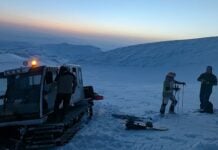
Walk the kora at dawn with the pilgrims. The circuit around the monastery is about 3.5 kilometers long and lined with more than 1,700 prayer wheels, one of the longest rows of prayer wheels anywhere, and a full lap takes around two hours. At night the sky above the valley fills with stars, and with little light pollution you have a good chance of seeing shooting stars while the smell of juniper incense drifts down from the monastery.
The karst peaks of Yangshuo
The limestone towers around Yangshuo in Guangxi rise straight out of rice fields and river bends, hundreds of them, in every direction. The classic way to see them is the Li River boat trip from Guilin, around four hours downstream to Yangshuo. The stretch near Xingping is the scene printed on the back of the 20-yuan banknote.
Once you’re in Yangshuo, rent a bicycle and ride along the Yulong River, or climb one of the peaks for sunrise. Moon Hill, with its arch cut through the rock, is an easy morning ride from town. Our guide to things to do in Guilin covers the city end of the river.

Camping in the grasslands around Xiahe
The high grasslands around Xiahe are summer pastures for Tibetan nomads. Sangke is the closest, about 14 kilometers from town, with open meadows, yak herds and horse rides. The Ganjia grasslands, around 34 kilometers away, are wilder and have more to explore, including a walled Tibetan village and cliffside caves.
Camping out here is a different side of China from the cities. In early summer the slopes are green and covered in wildflowers, and you’ll likely share the meadow with a few curious yaks. Nights are cold even in July, so bring a warm sleeping bag.
The Impression Liu Sanjie light show in Yangshuo
Impression Liu Sanjie was the first of the outdoor “Impression” shows created by Zhang Yimou, who later directed the opening ceremony of the 2008 Beijing Olympics. It premiered in 2004 and uses the Li River as its stage, with a dozen karst peaks lit up behind it.
More than 600 performers, most of them local villagers and fishermen, tell the folk story of Liu Sanjie, a Zhuang girl famous for her singing. Much of it happens on the water, on bamboo rafts and fishing boats. The show runs about 70 minutes, usually twice a night, and the theater is a 10 to 15 minute walk from West Street.
Wangfujing Snack Street in Beijing
If you’re hungry and a little brave, take a walk down Wangfujing Snack Street in central Beijing. For years it was known for scorpions, starfish, seahorses and silkworms on skewers. The nearby Donghuamen night market closed in 2016, and the exotic stalls are fewer today. You’ll still find candied hawthorn, lamb skewers and dumplings, and enough strange snacks for a photo. For what locals actually eat, read our list of authentic Chinese dishes to try in China.
Hiking the Dragon’s Backbone rice terraces in Ping’an
The Longji terraces near Longsheng, a two-hour drive from Guilin, climb the hillsides in hundreds of curving steps, built over centuries by Zhuang and Yao farmers. Ping’an is the most accessible village, with guesthouses and two signposted viewpoints that are each a 20 to 40 minute climb up stone paths.
The look changes with the season. From mid-May to early June the fields are flooded before planting and reflect the sky. Summer turns them bright green, and from late September they ripen to gold before the harvest.
Shanghai and the Bund
China’s largest city mixes glass towers with old temples tucked between them. Walk the Bund at dusk, when the colonial-era buildings on one side of the Huangpu River and the Pudong skyline on the other light up together. Then head into the lanes of the former French Concession or Yu Garden. Shanghai’s two airports make it an easy place to start or end your trip.
Practical information
- Getting around: high-speed trains link Beijing, Shanghai and Guilin, and most travelers reach Xiahe by bus or car from Lanzhou, about four hours away.
- Altitude: Xiahe and the grasslands sit around 2,900 to 3,000 meters. Take the first day slowly if you arrive from the lowlands.
- When to go: spring (April to May) and autumn (September to October) are the best times for most of this route. The Gansu grasslands are at their best from June to August.
- Booking ahead: buy train tickets for public holidays well in advance, especially around Chinese New Year and the first week of October, when much of the country travels.
Our Chinese festival calendar helps you plan around those dates.
This section contains partner links. If you book through them, we may earn a commission at no extra cost to you. We only feature partners whose services we believe add genuine value for travelers.
- Book Chinese train tickets online
- Simatai Great Wall hike from Gubei Water Town
- Tickets for Impression Liu Sanjie in Yangshuo
- Things to do in Shanghai
Frequently Asked Questions
Which section of the Great Wall is best for first-time visitors?
Mutianyu is the best balance for most first-timers. It is restored and safe to walk, about 90 minutes from Beijing and far less crowded than Badaling. For steeper, wilder walls and sunset views, go to Jinshanling or Simatai.
How many days do you need to see the main places in China?
Plan around two weeks to cover Beijing, Shanghai and the Guilin and Yangshuo area by high-speed train. Adding Xiahe and the Gansu grasslands needs another four to five days, because you travel there by road from Lanzhou.
Is the Li River cruise worth it?
Yes, if you want to see the karst landscape from the water. The four-hour trip from Guilin to Yangshuo passes the stretch shown on the 20-yuan note. A shorter bamboo raft trip near Xingping is cheaper and gets you closer to the water.
When is the best time to see the Longji rice terraces?
From mid-May to early June the terraces are flooded and reflect the sky. From late September to October they turn gold before the harvest. Summer is green but often rainy and misty.
Do you need to book train tickets in China in advance?
On most routes you can book a few days ahead. Around Chinese New Year and the October holiday week, tickets sell out quickly, so book as soon as sales open.