Rheinland-Pfalz (Rhineland-Palatinate) is one of the most overlooked sustainable travel destinations in Germany. Rhineland-Palatinate travel combines wine villages, river valleys and long forest trails, and much of it works by train and bike.
From the UNESCO-protected Upper Middle Rhine Valley to the sprawling Palatinate Forest, Germany’s largest contiguous forest area, the region delivers genuine “feel-good” travel without compromising environmental responsibility.
Unlike many European destinations that struggle with overtourism, Rheinland-Pfalz has built a certified sustainable tourism network across multiple certified regions, making it possible to experience renowned wine regions, multi-day hiking trails, and medieval castles while actively minimizing your carbon footprint.

Overview: What Makes Rheinland-Pfalz a Sustainable Travel Hotspot
Rheinland-Pfalz spans Germany’s southwestern region and encompasses four certified sustainable destination networks:
- the German Wine Route (certified since 2020 with 60+ verified partner enterprises),
- the Westerwald region,
- the Lahn Valley,
- and the Moselle Wine Towns,
…each with documented commitments to resource-efficient operations and local environmental protection.
The region’s sustainable infrastructure isn’t theoretical; it’s built into daily travel logistics. Public transportation is seamlessly connected, with the PfalzCard offering unlimited train and bus travel across the entire region while you explore car-free cycling routes and hiking trails.
The region received recognition from the Excellence Initiative of Sustainable Destinations, an official partnership platform for German destinations committed to measurable sustainability standards. When planning your trip to this region, you can arrange your arrival through different travel options, which facilitate sustainable entry into the region via Frankfurt, Cologne, or regional airports with direct rail connections to major Rheinland-Pfalz towns.
Verified Eco-Friendly Accommodations
Wohlfühlhotel Alte Rebschule (Rhodt unter Rietburg)
Located at the edge of the Palatinate Forest with sweeping views over vineyards toward the Rhine Plain, the Wohlfühlhotel Alte Rebschule represents the region’s approach to certified sustainable hospitality.
The hotel operates a 400-square-meter solar panel installation generating 70 kWp of renewable electricity, supplemented by a block heat and power plant installed over a decade ago that now covers approximately 30% of energy demand through combined heat and power generation. All remaining electricity comes from 100% renewable hydroelectric sources. The property was constructed using sustainable, local materials with deliberate landscaping to minimize environmental impact, and it maintains TourCert certification as a verified sustainable destination partner.
Guest rooms feature classic Palatinate design, and the hotel’s restaurant serves exclusively organic, seasonal, and regional ingredients purchased from local suppliers. The facility includes a full wellness spa with heated indoor pool, sauna facilities, and dedicated spa services.
Rates vary by season and room category, so check current prices with the hotel.

me and all Hotel Mainz
For travelers preferring urban base locations, the me and all Hotel Mainz in Rhineland-Palatinate’s capital scored 89/100 points in a comprehensive sustainability assessment, earning a “Silver” environmental rating.
The 89-room property demonstrates measurable commitments across energy management, water conservation, waste reduction, and locally-sourced catering.
Located in central Mainz with easy rail access to regional attractions, the hotel integrates modern sustainability practices without sacrificing contemporary comfort.

Pfalzblick Wald Spa Resort (Palatinate Forest)
Situated within the UNESCO Biosphere Reserve of the Palatinate Forest-North Vosges protected area, Pfalzblick Wald Spa Resort operates as a nature-integrated property with direct access to 7,000+ kilometers of marked cycling routes and multiple long-distance hiking trails.
The resort’s location within Germany’s largest contiguous forest provides immediate connection to protected ecosystems while offering full spa and wellness facilities.

Certified Sustainable Activities & Experiences
The Moselle Cycle Path (Mosel-Radweg): 248 Kilometers of River Valley Riding
The Moselle Cycle Path ranks as one of Germany’s most accomplished long-distance cycling routes, earning the ADFC’s prestigious 4-star quality certification for infrastructure, signage, and safety.
The 248-kilometer route follows the Moselle River from Perl, the Saarland town where Germany, Luxembourg and France meet, to its confluence with the Rhine at Koblenz, passing through 10 distinct sections that can be tackled as a complete journey or as individual day rides. The route primarily uses paved, traffic-separated cycling infrastructure with minimal elevation changes, making it accessible for leisure cyclists of all abilities. Alongside the path, travelers encounter countless wine villages, medieval castles, Roman archaeological sites, and Europe’s steepest vineyards.
The Moselle region was recently certified as a sustainable destination with integrated public transport connections; regional trains along the valley carry bikes, so you can ride one stretch and return by rail.
Practical logistics: Rent e-bikes from established operators like Burg & Bike (€30-42 per day depending on rental length) at Koblenz or Lahnstein stations. Baggage transport services allow riders to cycle unencumbered while hotels hold luggage. The route offers refreshment stops, restaurants, and wine tastings at regular intervals.

The Lahn Valley: Multi-Modal Sustainable Exploration
The Lahn Valley extends 245 kilometers from its mountain source through multiple German states, with about 166 kilometers in Hesse, 23 in North Rhine-Westphalia and 57 in Rheinland-Pfalz, where it merges with the Rhine at Lahnstein.
This region earned official certified sustainable destination status and represents an instructive model for integrated eco-tourism infrastructure.
The valley offers three distinct activity channels:
- the Lahn Hiking Trail (295 kilometers total, awarded “Quality Trail Wanderable Germany” status by the German Hiking Association),
- the Lahn Cycle Path (it follows the river all the way to Lahnstein, with roughly 57 kilometers of river in Rhineland-Palatinate),
- and the canoe-friendly Lahn River (160+ kilometers of paddling from Wetzlar downstream, accessible for beginners through experienced paddlers).
The lower Lahn Valley between Diez and Bad Ems represents the most scenic section, where the river carves up to 200 meters deep into slate cliffs, creating dramatic vistas alongside vineyard-covered slopes. Key stops include the medieval Arnstein Monastery, Nassau’s medieval castles and Roman artifacts, and Bad Ems’ imperial spa facilities, including the Emser Therme thermal water pools heated by natural geothermal springs.
Travelers can arrange stays in regional partner hotels throughout the valley with advance notice, the integrated public transport network means you can cycle without pre-booking accommodation, then reserve hotels daily using the regional booking system.

German Wine Route (Deutsche Weinstraße): 85 Kilometers of Vineyard Immersion
The German Wine Route, stretching 85 kilometers from Bockenheim in the north to Schweigen-Rechtenbach on the French border, holds the distinction of being Germany’s oldest and most developed wine tourism route, established over seven decades ago.
The region encompasses 130 idyllic wine villages interspersed with castles, palaces, and award-winning hiking/cycling infrastructure. In 2020, the route received certification as an “Excellence Initiative Sustainable Destination” with over 60 verified partner enterprises, wineries, restaurants, hotels, and retail operations, committed to documented sustainability standards including renewable energy adoption, waste reduction, and regional supply chain prioritization.
The Wine Route’s certification distinguishes it from generic wine tourism; each partner underwent an audit confirming measurable environmental practices and community benefit standards. Visitors can experience this through structured activities: wine tastings at certified organic and biodynamic producers, hikes along marked trails connecting villages (the Palatinate Wine Trail and Palatinate Almond Trail are signature routes), and meals at restaurants prioritizing local ingredients.
The route’s signature wine variety is Riesling, accounting for substantial vineyard acreage, alongside Silvaner, Müller-Thurgau, and Pinot Noir.
Sustainable logistics: Arrive via train to the Wine Route’s central towns (Neustadt an der Weinstraße, Bad Dürkheim, or Deidesheim), then proceed car-free using the PfalzCard if your host is a partner; it covers buses and regional trains in the VRN area. E-bike rental from local operators costs approximately €30-35 per day for standard trekking models.

Geierlay Suspension Bridge & Hunsrück Hiking
The Geierlay Suspension Bridge, which spans 360 meters across the Mörsdorf valley in the Hunsrück region at nearly 100 meters above ground, ranks among Europe’s longest rope suspension bridges for pedestrian use. Opened in October 2015, the bridge was designed by Swiss engineer Hans Pfaffen in the style of Nepalese suspension bridges. It carries visitors across a deep, wooded valley without requiring motorized transport or significant infrastructure modification to the natural environment.
The bridge integrates into multiple multi-day hiking routes: the Geierlay Loop (approximately 6 kilometers, 3 hours, rated moderate difficulty) circumnavigates the bridge valley, combining sections of the Saar-Hunsrück-Steig long-distance trail with quieter forest paths. Parking at the Mörsdorf visitor center (free) places the bridge 1.7-4.3 kilometers away depending on which parking section you use and which hiking loop you choose. Total visit time, including the bridge crossing and a moderate loop hike, typically requires 2-3 hours.

Eifel National Park & Vogelsang IP
Just across the state border in North Rhine-Westphalia, the Eifel National Park, established in 2004, spans approximately 10,700 hectares of protected wilderness where the German government has formally committed the space to a “let nature be nature” management philosophy. The park features 240 kilometers of marked walking trails, with the signature Wildnis-Trail (Wilderness Trail) offering an 85-kilometer, four-day immersive experience designed to showcase the park’s complete landscape diversity, from beech forests to moorlands to volcanic formations. Daily stages range from 18-25 kilometers and can be shortened with pre-planning.
Vogelsang IP (Vogelsang International Place), located within the park, serves as the primary visitor center and educational hub. The site combines a National Park Center exhibition (“Wildnis(t)räume” – Wilderness Dreams) with a 48-meter observation tower offering 360-degree views, cultural history tours through the former Nazi-era Ordensburg building (now contextualized as a historical education site), and a 172-step tower climb providing panoramic vistas of the conservation area. Multi-day hiking routes departing from Vogelsang include the Eifelsteig and Wildnis-Trail, both designed for hikers of intermediate to advanced fitness levels.

Trier: Germany’s Oldest City & Roman Heritage
Trier, located in the southern Moselle region, holds distinction as Germany’s oldest city, founded by Romans around 16 BC as Augusta Treverorum (City of Augustus among the Treveri).
The city served as capital of the Roman Empire’s Gallic provinces and retains exceptional Roman archaeological monuments including the Porta Nigra (largest Roman city gate north of the Alps), Roman Amphitheatre (capacity 20,000 spectators, built 2nd century AD), Constantine Basilica (throne hall of Roman Emperor Constantine), and St. Peter’s Cathedral (oldest church structure, 4th century AD). Multiple sites hold UNESCO World Heritage designation.
Sustainable travel within Trier involves car-free exploration via pedestrian-friendly medieval streets and city buses (Trier has had no trams since 1951); the city center remains highly walkable for multi-hour exploration.

Koblenz & UNESCO Upper Middle Rhine Valley
Koblenz, one of Germany’s oldest cities (2,000-year history), sits at the confluence of the Rhine and Moselle rivers, a geography that inspired its name (“Castellum at the Confluences”).
The iconic Deutsches Eck (German Corner), an artificial peninsula created by 13th-century Teutonic Order settlement, anchors the cityscape and hosts the Kaiser Wilhelm I Monument completed in 1897. The monument stands 37 meters tall (14 meters for the equestrian statue alone) and annually attracts approximately 2 million visitors.
Since 2002, the entire Upper Middle Rhine Valley (65 river kilometers between Bingen and Koblenz) received UNESCO World Heritage Site designation for its combination of dramatic geological features, wine culture, castle architecture, and natural beauty.
Sustainable Koblenz exploration involves pedestrian-based old-town walks through narrow medieval streets (“Gassen”), the scenic Rhine Promenade (Rheinanlagen), and optional cable car ascent to Ehrenbreitstein Fortress. The fortress, Europe’s second-largest preserved castle complex, sits 120 meters above the river and commands panoramic views across the UNESCO World Heritage valley.

Verified Organic & Regional Restaurants
Die Mosel (Traben-Trarbach)
Housed in a restored wine tavern in the Moselle wine town of Traben-Trarbach, Die Mosel operates as an integrated wine bar, restaurant, and natural wine shop specializing in local, seasonal, and organic cuisine paired with natural wines produced by regional winemakers.
The venue’s commitment to natural wine sourcing, wines produced without synthetic pesticides or industrial processing additives, provides verified connection to sustainable viticulture practices. Natural wine producers typically employ organic vineyard management and minimal intervention fermentation, aligning with broader regional sustainability goals.

Hofgut Ruppertsberg (German Wine Route)
This historic estate on the edge of the wine village of Ruppertsberg is one of the original properties of the Bürklin-Wolf wine estate, and its restaurant has been certified organic since 2010. Chef Jean-Philippe Aiguier cooks French and Palatinate dishes from regional, seasonal organic produce, and he knows every supplier by name. You choose between two set menus, one of them vegetarian, and in summer you eat in the old courtyard.
The farm shop on site sells organic products to take home. Dinner is served Wednesday to Saturday from 7 pm, so book ahead and check current hours. Ruppertsberg sits on the German Wine Route just south of Deidesheim, a short bus or bike ride from Deidesheim station.
Weinbiethaus “Woibiet” (Neustadt an der Weinstraße)
The sandstone forest hut on the 554-meter summit of the Weinbiet, Neustadt’s home mountain, is run by tenants who cook fresh, seasonal food from regional organic ingredients. They buy straight from nearby farms, including the Bärenbrunnerhof, the Kleinsägmühlerhof and Biohof Gensheimer, and much of the menu is vegetarian or vegan, next to Palatinate classics cooked in a lighter way. On a clear day the terrace looks out over the vineyards to the Rhine plain.
You get there on foot or by bike. The nearest parking areas are 2.5 to 4 kilometers away on forest paths, and Neustadt an der Weinstraße station is the rail gateway for the hike up through the Palatinate Forest. The hut currently opens Wednesday and Friday to Sunday plus public holidays, from 11 am to 6 pm, and the observation tower next to it opens at the same times. Check current hours before you set off.
Sustainable Transportation & Multi-Modal Logistics
Public Transport Integration: PfalzCard & Regional Rail
In the Palatinate, guests of about 130 partner hosts receive the PfalzCard, which works as a bus and regional train ticket in the VRN transport area and includes free entry to around 130 attractions. It cannot be bought separately, so ask your host when you book. Regular regional trains connect major towns hourly, and specialized “bike buses” (Fahrradbusse) run during peak season (April-October) with dedicated bicycle compartments and bookable seats.
Flight connections facilitate entry into the region through multiple gateways: Frankfurt Airport (approximately 2.5 hours by regional rail to Mainz or Trier), Cologne Airport (direct rail to Koblenz), or Düsseldorf (connections through Cologne). Once arrived via rail, the region’s integrated public transport network prioritizes car-free exploration.
E-Bike Rental & Cycling Logistics
E-bike rental operators throughout the region charge €30-42 per day for standard trekking models and €30-42 for e-mountain bikes, with discounts for multi-day rentals (7-day rates drop to approximately €30/day). Major rental locations include Burg & Bike (Koblenz and Lahnstein stations) with approximately 100 e-bikes in fleet, eBike Verleih Born (Ilbesheim, near the German Wine Route), and INTERSPORT Rent locations at regional rail stations.
Most rental services offer baggage transport arrangements, allowing cyclists to ride unencumbered while luggage is forwarded to nightly accommodations.
Walking & Hiking Trail Infrastructure
The region maintains exceptional marked, maintained long-distance hiking routes including the Lahn Hiking Trail (about 295 kilometers, certified by the German Hiking Association), Palatinate Forest Trail (approximately 150 kilometers through Germany’s largest forest), Saar-Hunsrück-Steig, Eifelsteig, and dozens of locally-maintained circular day hikes.
All major trails feature clearly marked signage, regular refreshment opportunities at village cafes/restaurants, and accommodation booking networks allowing stage-by-stage planning without advance reservations.
Regional Cuisine & Food Culture
Rheinland-Pfalz maintains distinctive regional specialties reflecting historical agricultural practices and cultural traditions.
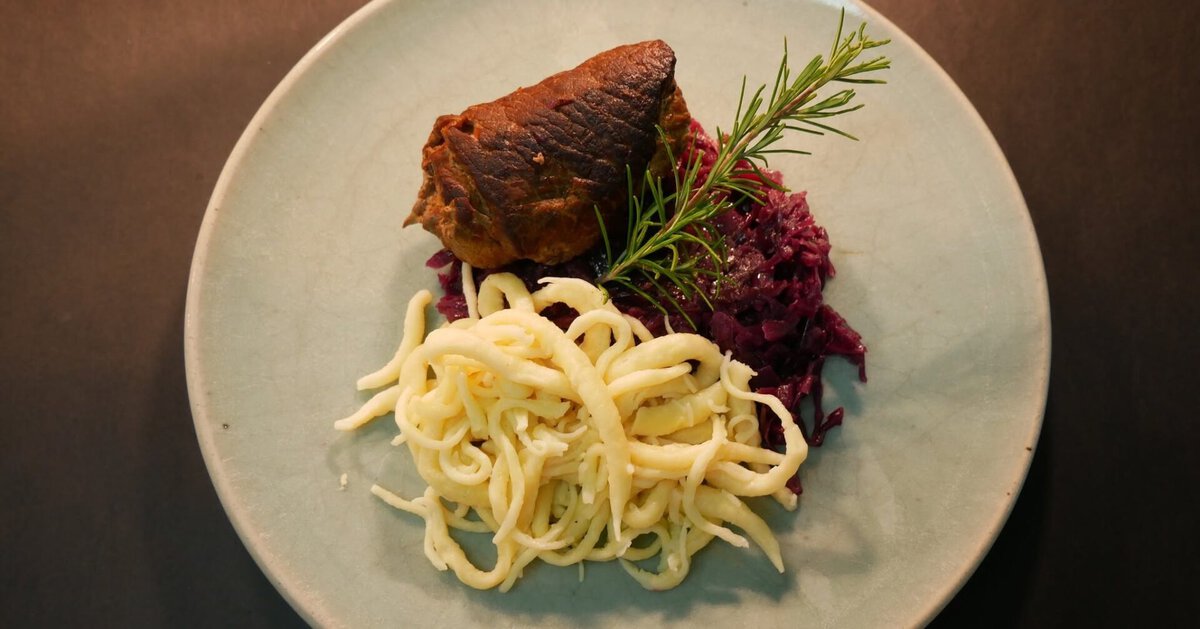
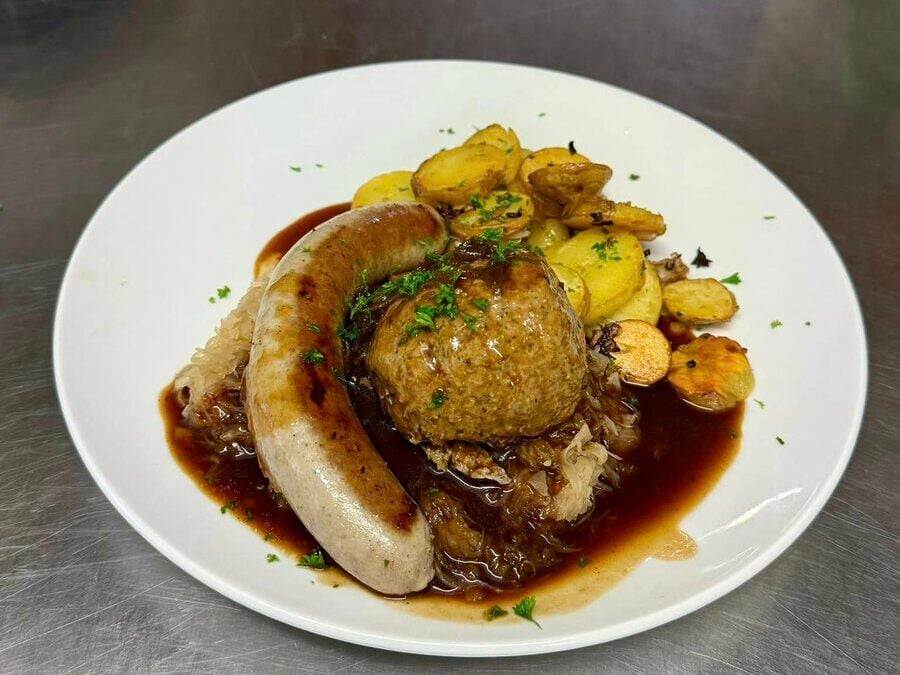
Hunsrück Gefüllte Klees (stuffed dumplings filled with minced meat, liver sausage, mushrooms, and bacon-cream sauce) represents typical comfort cuisine, while Saumagen (Palatinate stuffed pig stomach with potatoes, meat, and spices, famously favored by former Chancellor Helmut Kohl) demonstrates how traditional “poor man’s food” evolved into celebrated regional cuisine now served in modern and Michelin-starred interpretations. Döppekooche (Eifel potato pot pie) appears on menus throughout eastern regions. Wine remains the cultural centerpiece; Riesling dominates vineyard coverage, but Silvaner, Müller-Thurgau, Dornfelder, and increasingly, Burgundy varieties demonstrate regional diversity.

Seasonal Timing & Festival Calendar
Mid-August through October represents peak festival season throughout Rheinland-Pfalz, with dozens of wine festivals, harvest celebrations, and food-focused events. Events include the Kallstadt Wine Festival (late August), Bad Dürkheim Wurstmarkt (two weekends in September, billed as the largest wine festival in the world), Neustadt Wine Harvest Festival (late September into October), and Deidesheim Wine Festival (mid-August, featuring wineries’ open courtyards and live musical programming).
Spring opens with the almond blossom along the German Wine Route, usually from mid-March into April, when villages such as Gimmeldingen hold their almond blossom festivals. In April and May the Brühl Wine & Asparagus Market and family-oriented events follow. On the Moselle the wine festival season usually starts in May with tasting weekends and open-cellar days, and most Moselle wine festivals follow between August and October. In summer the Pfälzer Foodrock Festival fills a former quarry in the Palatinate Forest for a weekend of dishes by star and TV chefs, barbecue champions and bakers, with classic rock at night and camping on site. It takes about 500 guests and the date changes from year to year, so check the festival website before you plan around it.
Why Rheinland-Pfalz Represents Authentic Sustainable Travel
Rheinland-Pfalz succeeds as a sustainable destination not through greenwashing rhetoric but through documented infrastructure investment: certified solar power installations at accommodations, legally protected wilderness areas with formal non-intervention management policies, ADFC-rated cycling routes prioritizing separated infrastructure and safety, and integrated public transportation removing the need for private vehicle use throughout multi-day itineraries. The region’s wine culture, cultural heritage, outdoor recreation opportunities, and regional cuisine remain accessible without compromising environmental integrity.
When planning a journey to Rheinland-Pfalz, travelers can arrange arrival through different cities, which connect major international hubs with Frankfurt, Cologne, and regional gateways, followed by seamless transfer via regional rail into the car-free tourism network. The “feel-good” quality emerges not from superficial comfort but from authentic immersion in landscapes, communities, and food cultures that have evolved over centuries, experienced directly rather than filtered through mass tourism infrastructure. You can also combine the region with a trip to Bavaria.
Rheinland-Pfalz invites travelers to experience genuine German culture: cycling beneath cliff-hanging vineyards alongside the Moselle, hiking through Europe’s largest contiguous forest, exploring 2,000-year-old Roman architecture, staying in solar-powered hotels, and dining on regionally-sourced cuisine, all without private vehicle dependence or environmental compromise. This represents sustainable travel not as an aspirational concept but as practical, accessible reality.