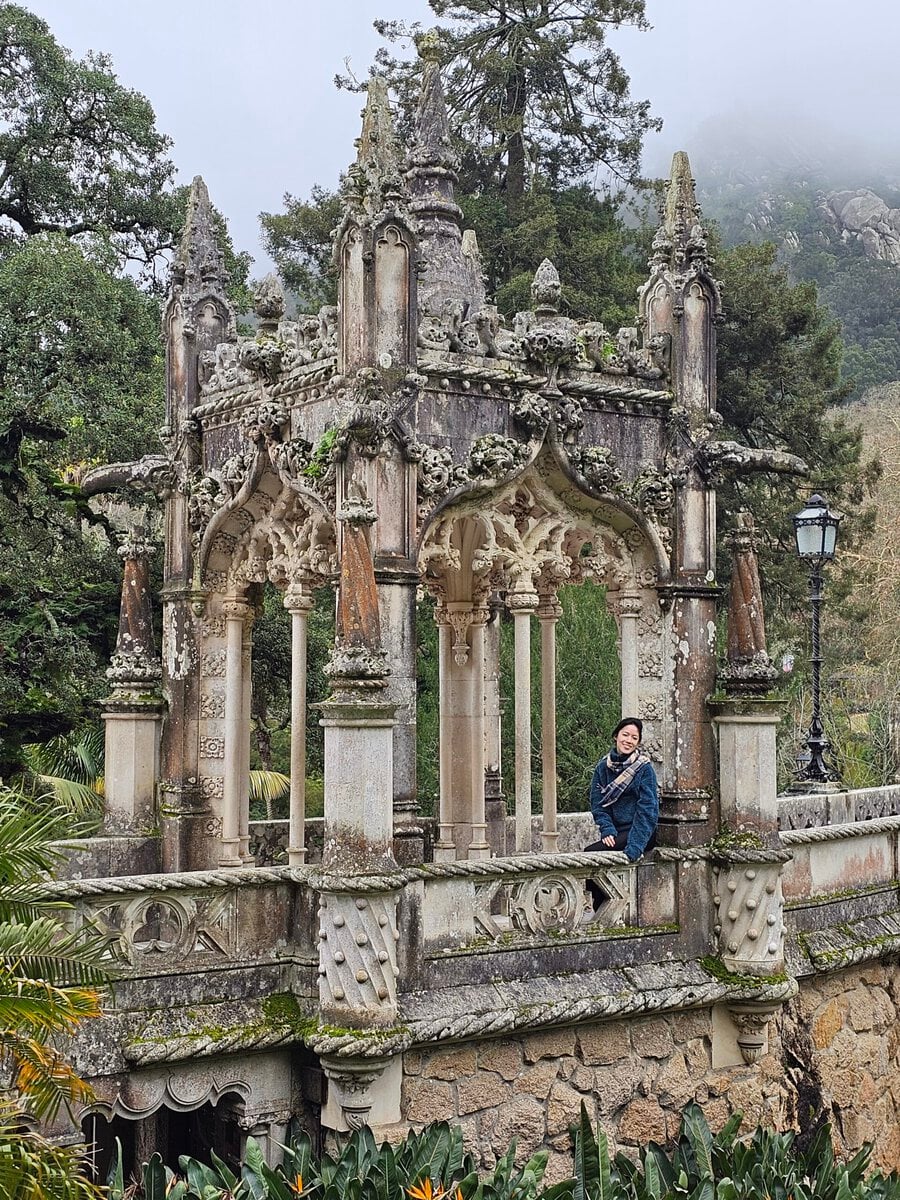
Most people who visit Sintra spend the morning at Pena Palace, take the photo of the yellow and red towers, and leave believing they’ve seen the place. They haven’t. In my years guiding visitors through these hills, the moment that changes the day usually comes later, on a forest road with almost no one else around, when someone stops mid-sentence and says they had no idea Sintra looked like this.
This is a guide to that other side of Sintra. It covers the village streets, the old estates, and the Colares vineyards, then follows the road down to where the mountains give way to the Atlantic. Done at an easy pace, a Sintra and Cascais day trip leaves enough time to enjoy each place properly.
In this guide
- The Village Most Visitors Never Really See
- Beyond the Palace Circuit
- The Quiet Side of the Moorish Castle
- Monserrate Palace and the Old Estates
- Forest Roads and Viewpoints
- What the Village Tastes Like
- Colares Wine and the Man Behind It
- When the Mountain Changes the Weather
- Where the Hills Meet the Atlantic
- Practical Information
- Getting There
- Best Time to Visit
- What to Bring
- Costs
- Frequently Asked Questions
- What is there to see in Sintra beyond Pena Palace?
- Is Monserrate Palace worth visiting even though it needs a separate ticket?
- What makes Colares wine different from other Portuguese wines?
- When is the best time to visit Sintra to avoid crowds?
- Can you realistically combine Sintra with Cascais in one day?
- Why does the weather in Sintra change so quickly?
A Private Sintra and Cascais Day With Heart & Soul Tours
Heart & Soul Tours runs this day as a private tour from Lisbon, with a local driver-guide and hotel pickup. The suggested route covers Pena Palace before the crowds, Quinta da Regaleira, lunch in Sintra village, Cabo da Roca and the coast road into Cascais. If you prefer Monserrate over Regaleira, or a long lunch by the sea, the day is rebuilt around you.
Good to know
About 7 hours, with pickup at 8:00 AM in Lisbon
Private for 2 to 6 people
€300 for two people and €570 for six, per group, checked October 2026
Air-conditioned vehicle, fuel, tolls, parking, water and Wi-Fi are included
Palace tickets are not listed as included, so budget for them separately
Check dates and prices for the Sintra and Cascais day →
This section contains partner links. If you book through them, we may earn a commission at no extra cost to you. We only feature partners whose services we believe add genuine value for travelers.
The Village Most Visitors Never Really See
Walk slowly here, and the town starts to talk back. You notice the damp stone, the ivy climbing the walls, and the green mountains pressed right up against the rooftops.
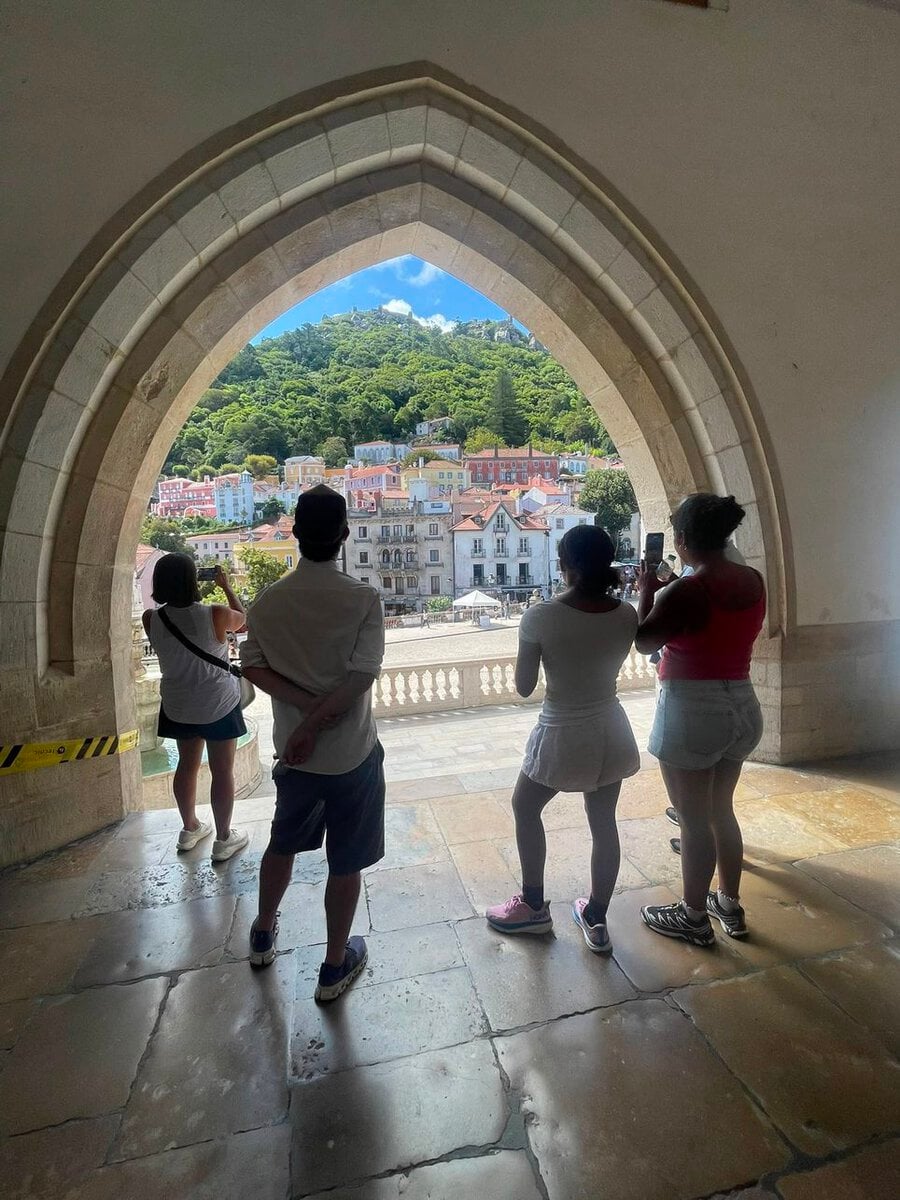
Sintra’s historic center sits directly below the palaces, but most day-trip crowds move straight through it toward the ticket lines. That’s a mistake. Its narrow streets, small cafés, and old stone buildings are cooler and quieter than anywhere else nearby.
There’s a reason poets and kings built retreats in these hills instead of down in Lisbon. The air feels different up here, thick with moss and eucalyptus, and even on a hot day the shade under the trees carries a chill.
Related read: A Guide to Hiking in Sintra, Portugal
Beyond the Palace Circuit
Pena Palace is one chapter of Sintra. The rest of the book is spread across the hills around it.
The Quiet Side of the Moorish Castle
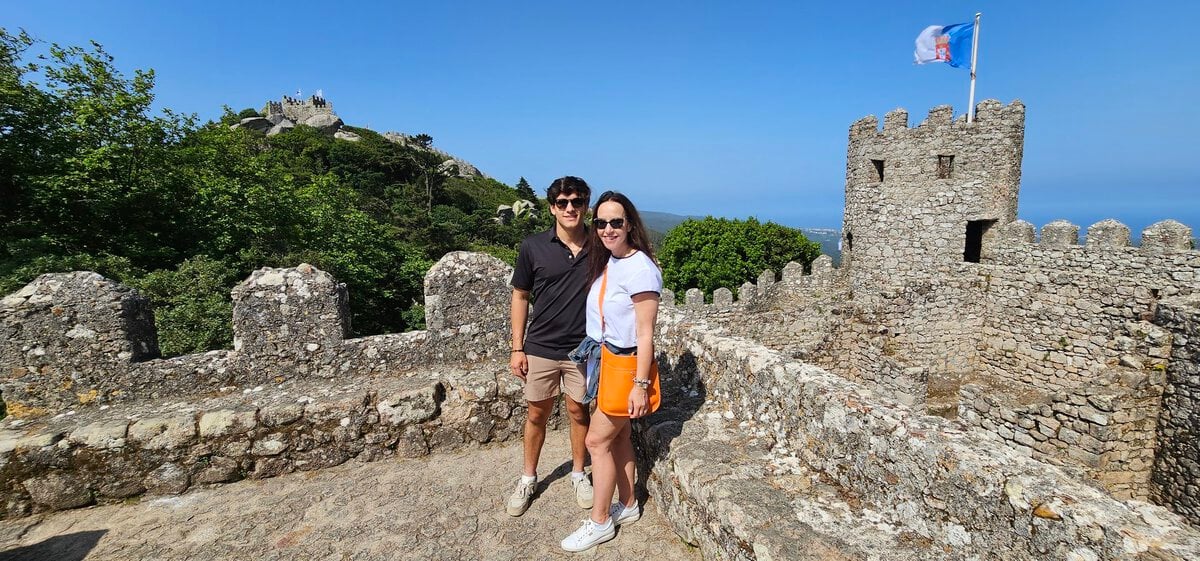
Up on the western ramparts, the crowd noise drops away. You hear wind moving through the trees below, and the views run out over the forest instead of over other visitors’ heads.
Nearly everyone who visits the Moorish Castle photographs the same stretch of wall, the one facing Pena Palace across the valley, and they tend to do it at the same time. Far fewer walk the western side. The stonework is centuries old either way, but standing on it feels like a different place.
Monserrate Palace and the Old Estates
Monserrate Palace sits a short distance from the main circuit and needs its own ticket, so a large share of day-trippers skip it. That’s why it stays calm.
Along with the smaller estates scattered through the hills, Monserrate is what I mean when I call Sintra a landscape. These properties were built by people who wanted privacy and views, and they chose their spots far from anything resembling a parking lot. You can still feel that intention when you walk the grounds.
Forest Roads and Viewpoints
I’ve watched guests go from checking their phones to staring silently at a gap in the trees, where the hills roll down toward something they didn’t expect to see yet.
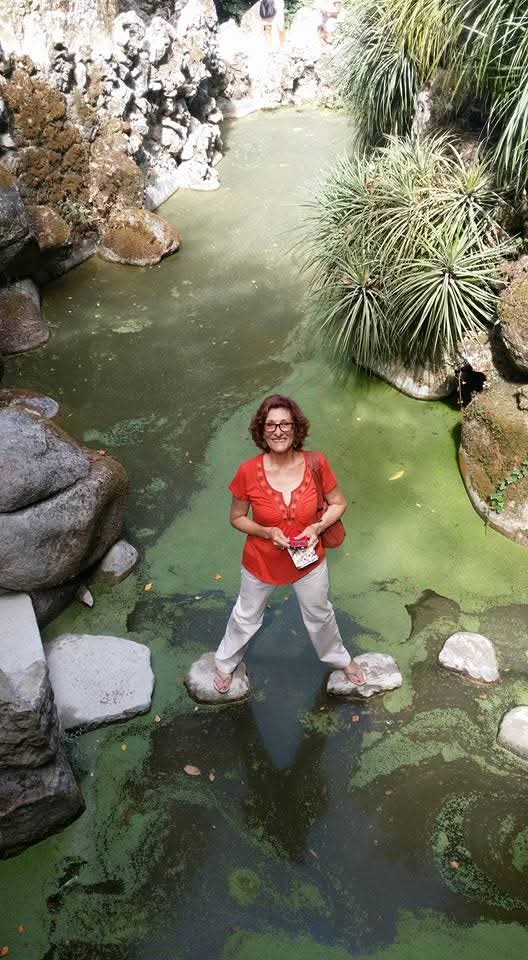
The forest roads between the estates are where the mood of Sintra settles in. There are no ticket booths and no lines here. The old trees and moss-covered stone walls line the road, and viewpoints open up without warning as it bends.
What the Village Tastes Like
Locals will argue with real conviction about which of Sintra’s two pastries is better.
The travesseiro is a pillow-shaped pastry filled with almond and egg cream, sold warm in the small cafés around the historic center. The queijada de Sintra is smaller and denser, dusted with cinnamon and made with a cheese and sugar mixture that has been part of Sintra’s identity for generations. Neither takes long to eat. With a coffee, either one makes a good break in a day spent mostly on foot.
Colares Wine and the Man Behind It
Fewer visitors know that Sintra has its own wine region, and it’s one of the more unusual ones in Portugal.
Colares sits close to the Atlantic, and its vines grow in sandy soil down near the dunes. In the nineteenth century, the phylloxera pest wiped out vineyards across Europe, but it couldn’t survive in that sand, so many Colares vines came through the crisis. One local producer I know still works this land with methods passed down through generations. Talking with him, and tasting what comes out of that soil, tells you more about Sintra’s relationship with the Atlantic than any plaque on a palace wall.

When the Mountain Changes the Weather
Some mornings start clear and end with the whole forest wrapped in fog. The light goes soft and gray, and every sound is muffled except for birds moving somewhere close but out of sight.
Sintra runs on its own weather system. The hills sit close enough to the Atlantic, and rise high enough above it, that mist can roll in within minutes while Lisbon, thirty minutes away, stays completely sunny.
Guests are often unsettled by it at first. Then it clicks, and the mountain starts to feel like the main character, with the palaces playing supporting roles. Locals put it simply: Sintra é um lugar mágico, “Sintra is a magical place.” After a few hours in that mist, the phrase reads as a plain description.
Where the Hills Meet the Atlantic
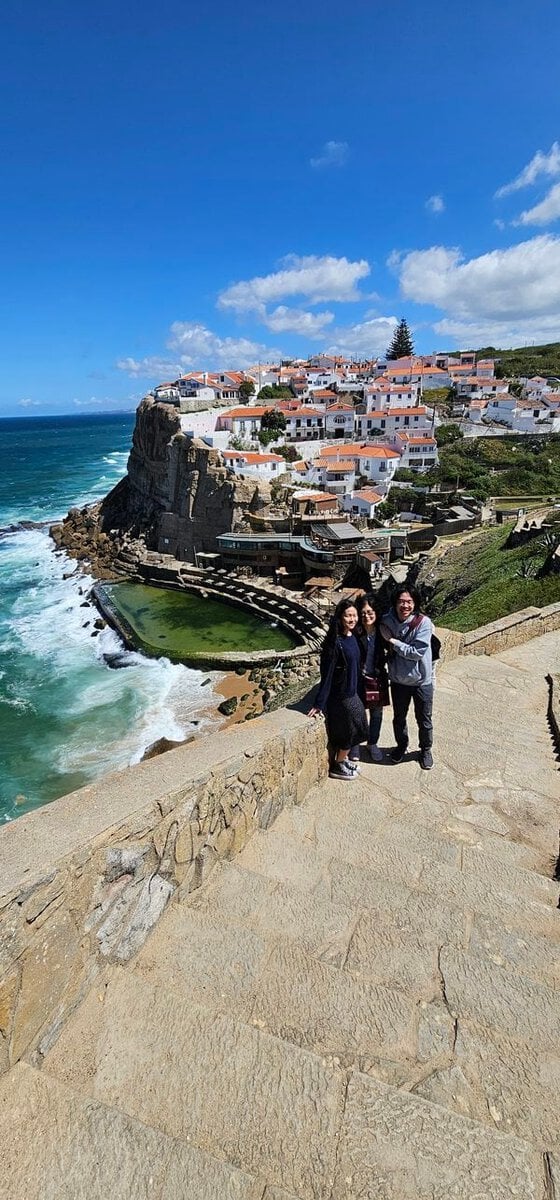
Eventually the forest thins, the road tilts downward, and the ocean shows up almost by surprise.
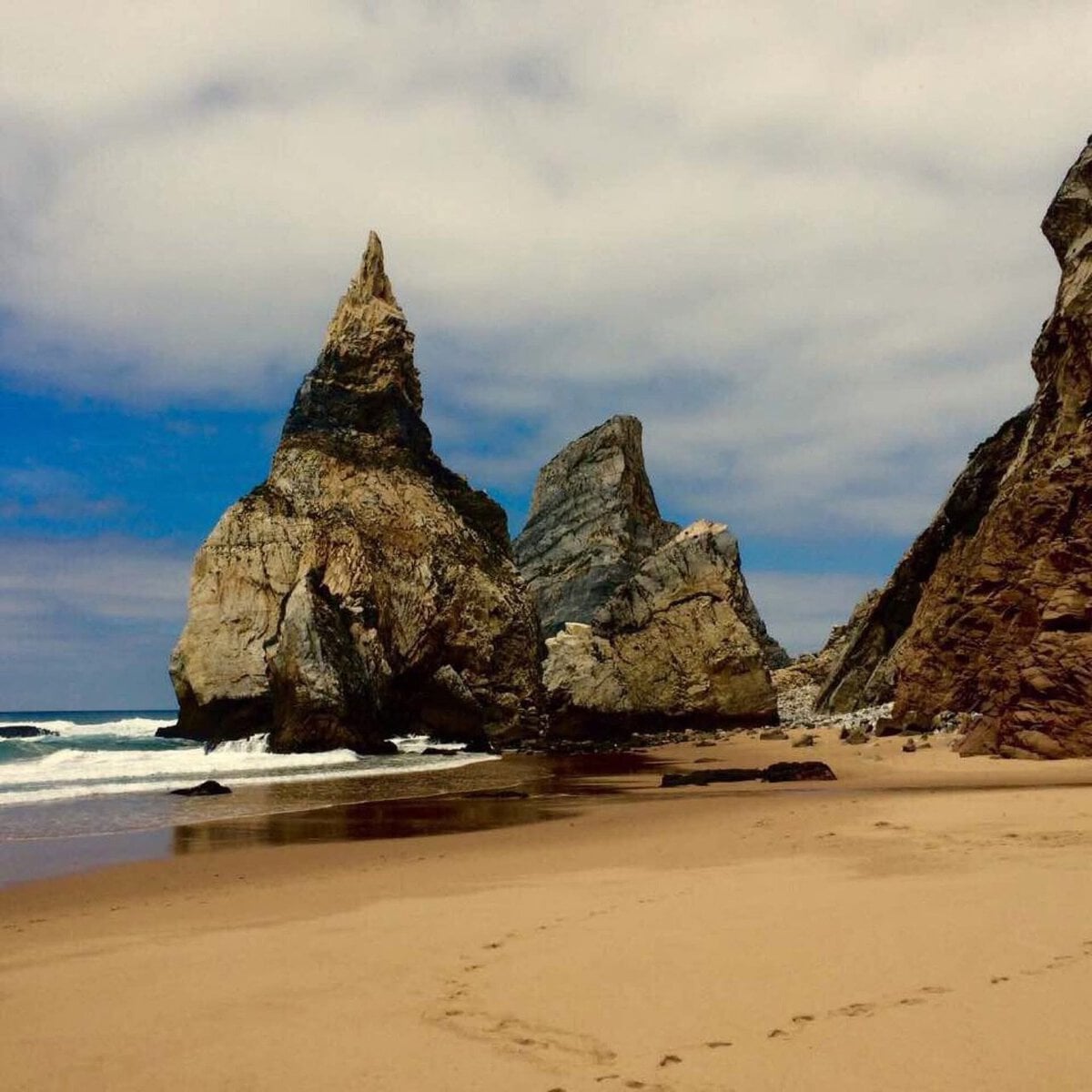
This is the pivot point of the day, where the mountains of Sintra give way to the coastline around Cascais. The light changes. The air loses its damp forest smell and picks up salt, and the day shifts from wooded and enclosed to open and coastal.
It’s also where a lot of travelers run into the problem of an itinerary that looks great on a map and falls apart in real life. Sintra, Cascais, Óbidos, and Nazaré are all within reach of Lisbon, and plenty of itineraries try to string several of them together in a single day. On paper the distances look small. In practice, Sintra alone deserves more time than most people give it, and a rushed stop far in the other direction usually means missing what makes each place worth visiting. Sintra pairs well with the coast around Cascais because the geography supports it. A fourth or fifth town on the same day usually doesn’t fit.
Related read: The Best Beaches Near Lisbon, Portugal
Practical Information
Getting There
Sintra is about a 40-minute train ride from Lisbon’s Rossio station, and the historic center is walkable from the station, though the palaces and forest roads spread out over the hills and are easier to reach by car, tuk-tuk, or local bus. If your day includes the coast toward Cascais, a private vehicle makes the most sense, since public transport connections between Sintra and the coastline are not direct. Heart & Soul Tours runs a private Sintra and Cascais day with hotel pickup in Lisbon.
Related read: How to Get Around Lisbon
Best Time to Visit
Sintra works year-round, which is part of what makes it different from the palaces alone. The mountain microclimate means it’s often cooler and more humid than Lisbon regardless of season, so mornings can be misty even in summer. Visiting outside the main midday hours, and outside the peak of summer if you can, gives you the best chance of having the quieter corners genuinely to yourself.
What to Bring
Bring a layer, even in warm months. The forest shade and the hilltop mist mean the temperature swings more than you’d expect for a short drive from Lisbon. Comfortable walking shoes matter more here than in most day-trip destinations, since a lot of what makes Sintra worthwhile happens on foot, on uneven stone paths and forest roads rather than paved sidewalks.
Costs
Monserrate Palace, like several of Sintra’s other sites, requires its own separate ticket rather than being included in a general pass, which is one reason it stays quieter than Pena Palace. Budget for that separately if it’s on your list. Pastries in the village cafés are inexpensive and worth the small spend; a Colares wine tasting, where available, runs as a modest add-on to a day rather than a major expense.
Frequently Asked Questions
What is there to see in Sintra beyond Pena Palace?
There’s a lot. The historic village, the western ramparts of the Moorish Castle, Monserrate Palace and the smaller estates, the forest roads and viewpoints between them, and the Colares wine region toward the coast all sit within easy reach of the main palace circuit, and most receive a fraction of the visitors.
Is Monserrate Palace worth visiting even though it needs a separate ticket?
Yes, and the separate ticket is exactly why it stays calm compared to Pena Palace. It rewards visitors who want to slow down rather than move through Sintra’s sites on a fixed schedule.
What makes Colares wine different from other Portuguese wines?
Colares grapes grow in sandy soil close to the Atlantic dunes, a condition that historically protected the vines from the phylloxera pest that devastated European vineyards in the nineteenth century. The wine reflects that unusual coastal terroir and is still produced by a small number of traditional growers.
When is the best time to visit Sintra to avoid crowds?
Sintra is worth visiting in any season because the mountain climate stays cooler and more humid than Lisbon year-round. Arriving early or visiting outside the busiest midday window gives you the best shot at the forest roads and viewpoints feeling quiet.
Can you realistically combine Sintra with Cascais in one day?
Yes, and the two pair naturally since the Sintra hills descend directly toward that stretch of Atlantic coastline. Trying to also fit in Óbidos or Nazaré on the same day is where itineraries that look fine on a map start to fall apart in practice.
Why does the weather in Sintra change so quickly?
Sintra’s hills sit close to the Atlantic and rise high enough to trap moisture, which is why mist can appear within minutes even when nearby Lisbon is sunny. It’s a well-known local feature of the mountain, not an unusual weather event, and it’s part of what gives the forest its atmosphere.