- Eight days is enough time to move through the two cities that contain more ancient monuments per square kilometer than anywhere else on earth. Luxor holds the greatest concentration of pharaonic temples and tombs. Aswan, three hours south by Nile cruise, has a different character — quieter, more Nubian, with Abu Simbel waiting another 280 kilometers beyond it.
- This guide covers both cities in sequence: what to prioritize, what each site entails, how a Nile cruise works in practice, and what you need to know before you go.
Here’s an overview:
- Multi-Day Luxor and Aswan Trip Starts in Luxor
- Check-In at the Nile Cruise Boat
- Cruise Orientation
- Day 2 – The West Bank of Luxor
- Day 3 – Edfu and Kom Ombo Temples
- Day 4 – The Temples of Abu Simbel
- Day 5 – Philae Temple, High Dam, and the Unfinished Obelisk
- Day 6 – Return to Luxor & Luxor Temple
- Day 7 – Karnak Temple and Dendera
- Day 8 – Medinet Habu and Deir el-Medina
- Tour Spotlight: Elite Trip — Multi-Day Trip Luxor & Aswan (8 Days)
- Trip highlights
- What’s included
- Accommodation
- Good to know
Multi-Day Luxor and Aswan Trip Starts in Luxor
Upon your arrival at Luxor Airport, a representative from Elite Trip will be waiting to welcome you with a personalized arrival sign. From assisting with passport control to collecting your luggage, everything is handled with care and efficiency. You’ll be guided through all arrival formalities before being escorted to your accommodation for check-in.
Check-In at the Nile Cruise Boat
After airport transfer and check-in procedures, guests board a five-star Nile cruise boat in Luxor. The first evening is an orientation meeting with the guide, who walks through the full eleven-day program, answers logistical questions, and explains how the daily schedule operates. The boat is the base for the first four nights.
A practical note: the cruise is full-board, meaning all meals are included while on the boat. Pack light enough that moving between the boat and hotels mid-trip is manageable — you will switch accommodation partway through when the group returns to Luxor.
Cruise Orientation
After check-in, your guide will meet you onboard and provide a detailed briefing on the eight-day itinerary. As Elite Trip takes full responsibility for your safety and comfort throughout your journey, we kindly ask that you follow the guidance provided during this orientation. Afterward, you can unwind with a drink at the bar or simply enjoy the view from the deck.
Day 2 – The West Bank of Luxor
After breakfast, begin your exploration of Luxor’s West Bank, home to the Valley of the Kings—a place where time stands still and pharaohs rest for eternity. Hidden beneath the cliffs of Thebes, this vast necropolis holds more than 60 royal tombs, each telling tales of divine kingship and the eternal afterlife.
Walk through the sacred corridors of tombs belonging to Tutankhamun, Ramses II, and Seti I, their colorful walls alive with hieroglyphs and painted deities guiding them through eternity. Each step takes you deeper into Egypt’s spiritual core—a journey between life and immortality.
Continue to the Temple of Hatshepsut, the stunning tribute to Egypt’s most iconic female pharaoh. Carved into the cliffs at Deir el-Bahari, the temple rises in perfect symmetry, a testament to Hatshepsut’s reign of power and grace. The terraces and reliefs reflect her divine lineage, successful trade expeditions, and enduring influence over the ancient world.
After returning to the boat, enjoy lunch and relax as you sail toward Esna Lock, admiring the shifting colors of the Nile landscape.
Related read: The Ultimate Luxor Travel Guide

Day 3 – Edfu and Kom Ombo Temples
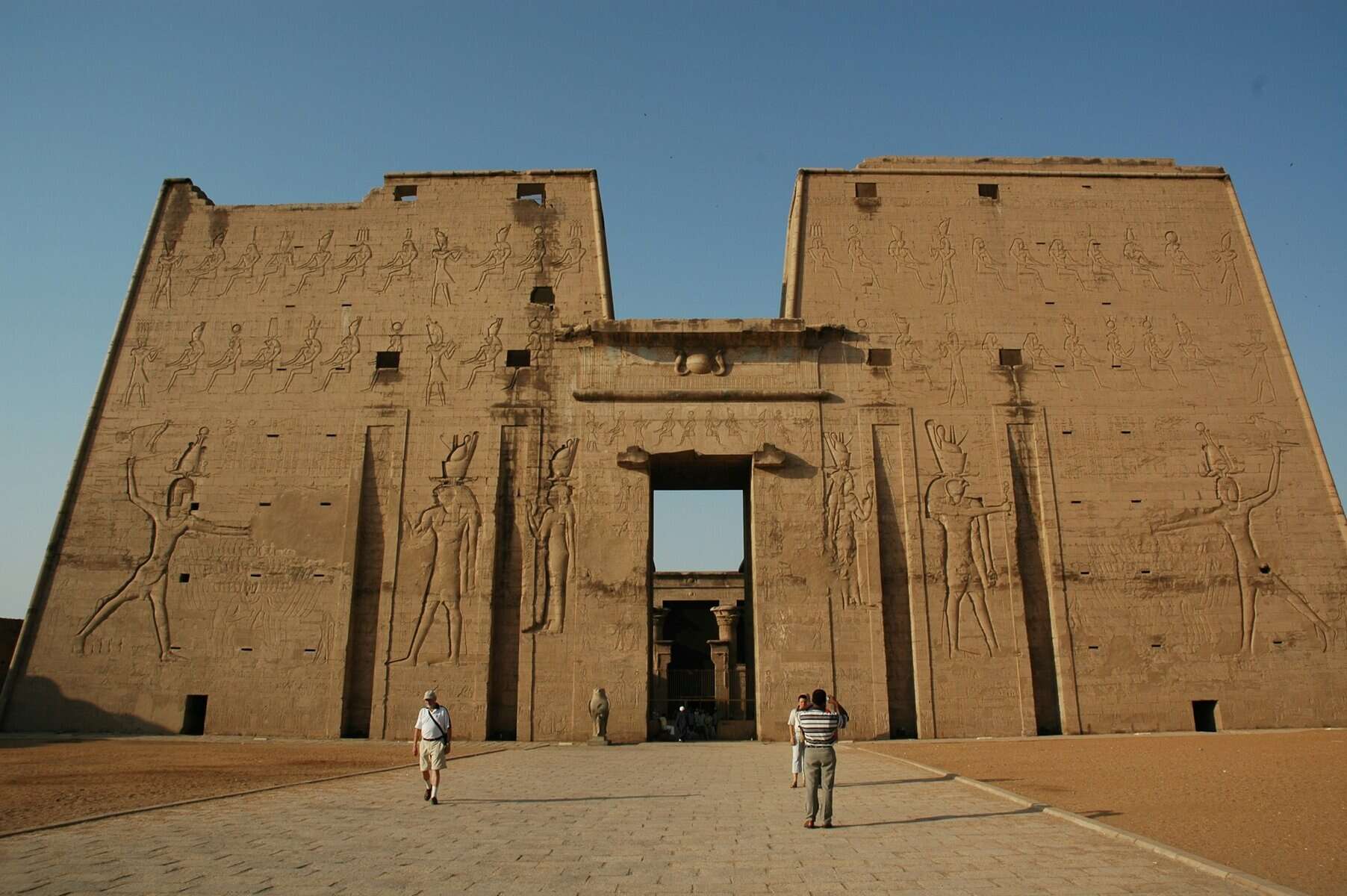
In the morning, visit the Temple of Edfu, dedicated to Horus, the falcon-headed god. This incredibly preserved monument is a masterpiece of Ptolemaic architecture. Its towering pylons, intricate carvings, and vast courtyards depict stories of divine battles and the triumph of light over darkness.
After lunch onboard, the cruise continues to Kom Ombo, where you’ll explore a temple unlike any other. Dedicated to both Sobek, the crocodile god, and Horus the Elder, the dual design of the temple symbolizes balance between chaos and harmony. Standing on the Nile’s edge, the twin sanctuaries and symmetrical architecture reflect Egypt’s belief in universal duality—life and death, power and protection.
Day 4 – The Temples of Abu Simbel
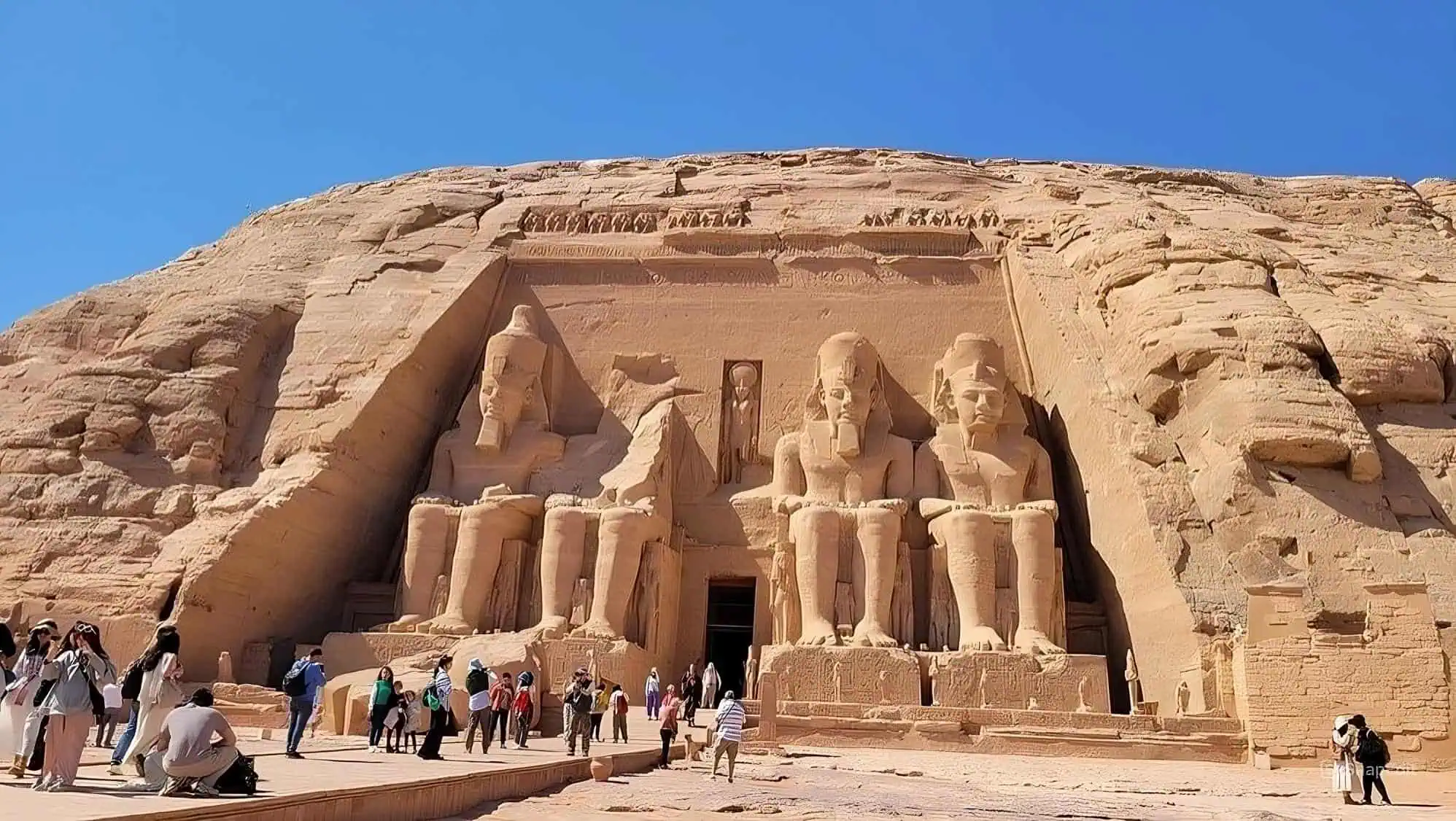
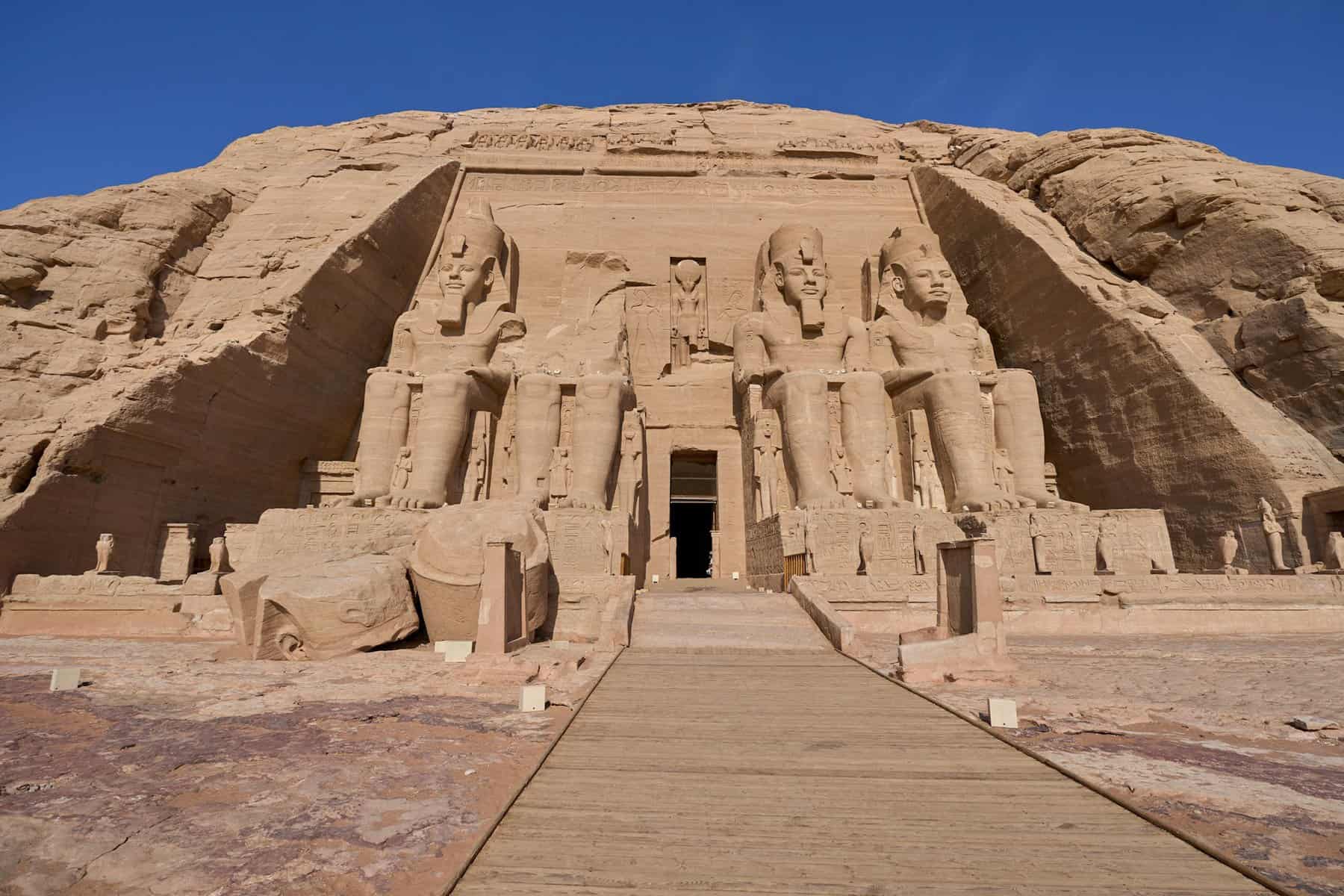
At dawn, set out by air-conditioned vehicle for a journey to the monumental Temples of Abu Simbel, approximately 280 km south of Aswan. Carved into the sandstone cliffs by Ramses II, the temple is both a political statement and a divine monument.
Four colossal statues of Ramses II guard the entrance, their faces bathed in golden sunlight. Inside, elaborate reliefs depict his victories in battle and his eternal bond with the gods. Deep within, the sanctuary holds statues of Ra-Horakhty, Amun, and Ptah—lit by the sun’s rays only twice a year, in a phenomenon that continues to amaze visitors millennia later.
Abu Simbel is more than an architectural wonder—it’s a timeless declaration of Egypt’s might and artistry.
Day 5 – Philae Temple, High Dam, and the Unfinished Obelisk
After breakfast, embark on a tranquil felucca sail across the Nile to the enchanting Temple of Philae, dedicated to Isis, goddess of love and magic. Rising from its island setting, this temple glows in the morning light, surrounded by serene waters and lush vegetation. The walls tell stories of devotion, rebirth, and divine protection.
Next, visit Aswan’s High Dam, an engineering marvel that transformed modern Egypt by controlling the Nile’s floods and generating hydroelectric power. Continue to the Unfinished Obelisk, still embedded in its granite quarry—a fascinating glimpse into the craftsmanship and precision of ancient stonemasons.
Day 6 – Return to Luxor & Luxor Temple
After lunch, return to Luxor by train and check into a luxurious five-star hotel overlooking the Nile. Later, visit the majestic Temple of Luxor, once the ceremonial heart of Thebes. Its massive pylons and statues of Ramses II radiate divine authority, while its walls narrate centuries of Egyptian history.
At night, experience the Sound and Light Show at Karnak Temple, where narration, light, and music bring the ancient complex to life in a mesmerizing spectacle.
Day 7 – Karnak Temple and Dendera
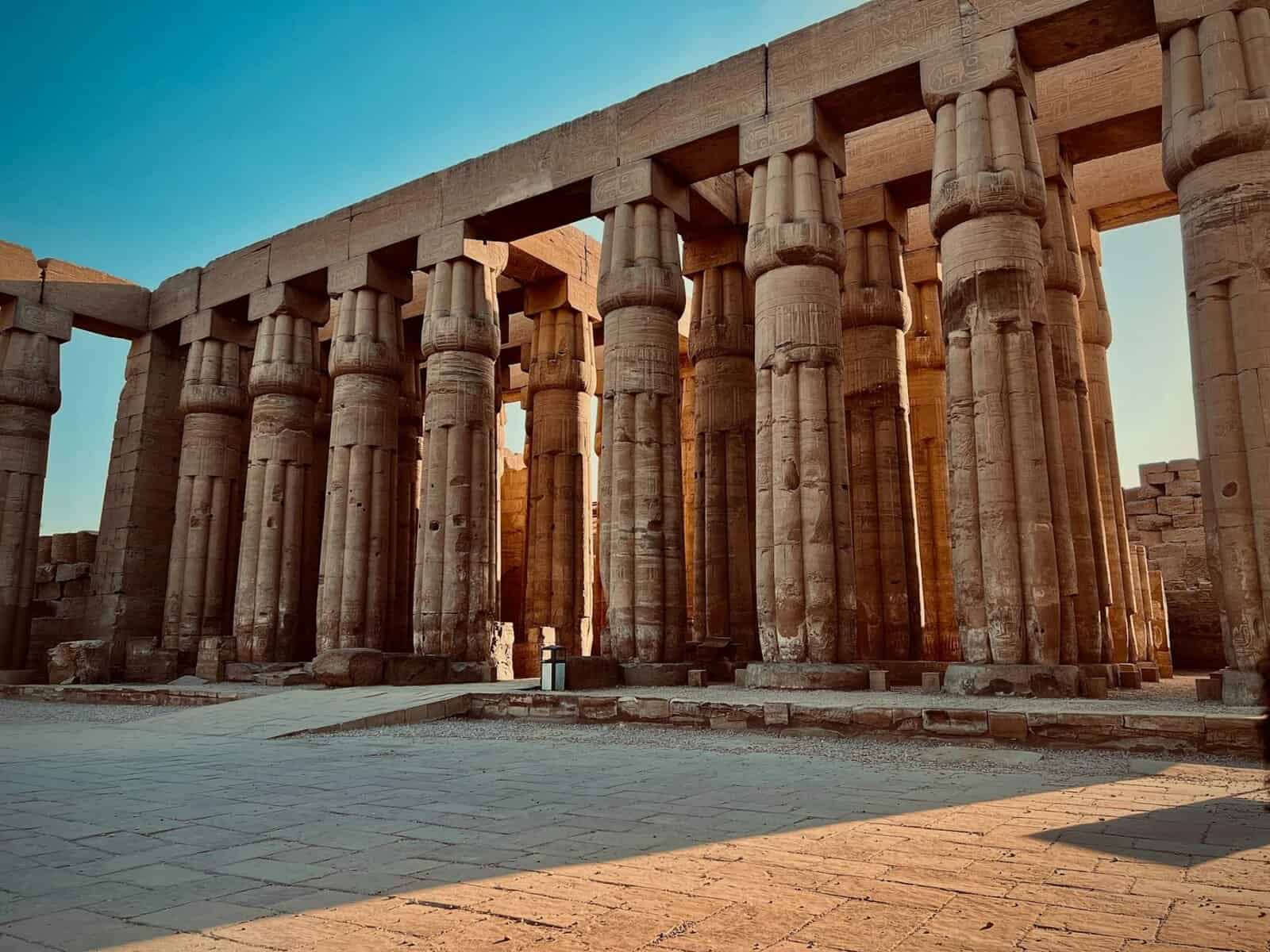
Begin the day at the awe-inspiring Karnak Temple Complex, a vast sacred city dedicated to Amun-Ra. Walk among its forest of columns, explore the Great Hypostyle Hall, and marvel at obelisks that pierce the sky—symbols of the link between gods and kings.
Then, journey to the Temple of Hathor at Dendera, one of Egypt’s best-preserved temples. Dedicated to the goddess of love, joy, and motherhood, Hathor’s face adorns the capitals of towering columns, and the ceiling’s astronomical carvings illustrate the universe as ancient Egyptians saw it.
In the evening, stroll through Luxor’s Old Market, where vibrant colors, the scent of spices, and handcrafted souvenirs reflect the soul of local life.
Day 8 – Medinet Habu and Deir el-Medina
After breakfast, set off for the Temple of Medinet Habu, the mortuary temple of Ramses III. The walls depict dramatic scenes of his battles and triumphs, while towering pylons guard a space that once echoed with ritual and worship.
Continue to Deir el-Medina, the village of artisans who built the royal tombs. This site offers an intimate view of daily life in ancient Egypt—the homes, workshops, and personal tombs of the craftsmen who shaped history. Their artistry, devotion, and humanity are preserved in colorful murals and inscriptions that bring their world vividly to life.
After a farewell lunch, transfer to Luxor Airport for your flight home, marking the end of your remarkable multi-day Luxor & Aswan trip—a journey through time, history, and the living spirit of Egypt.
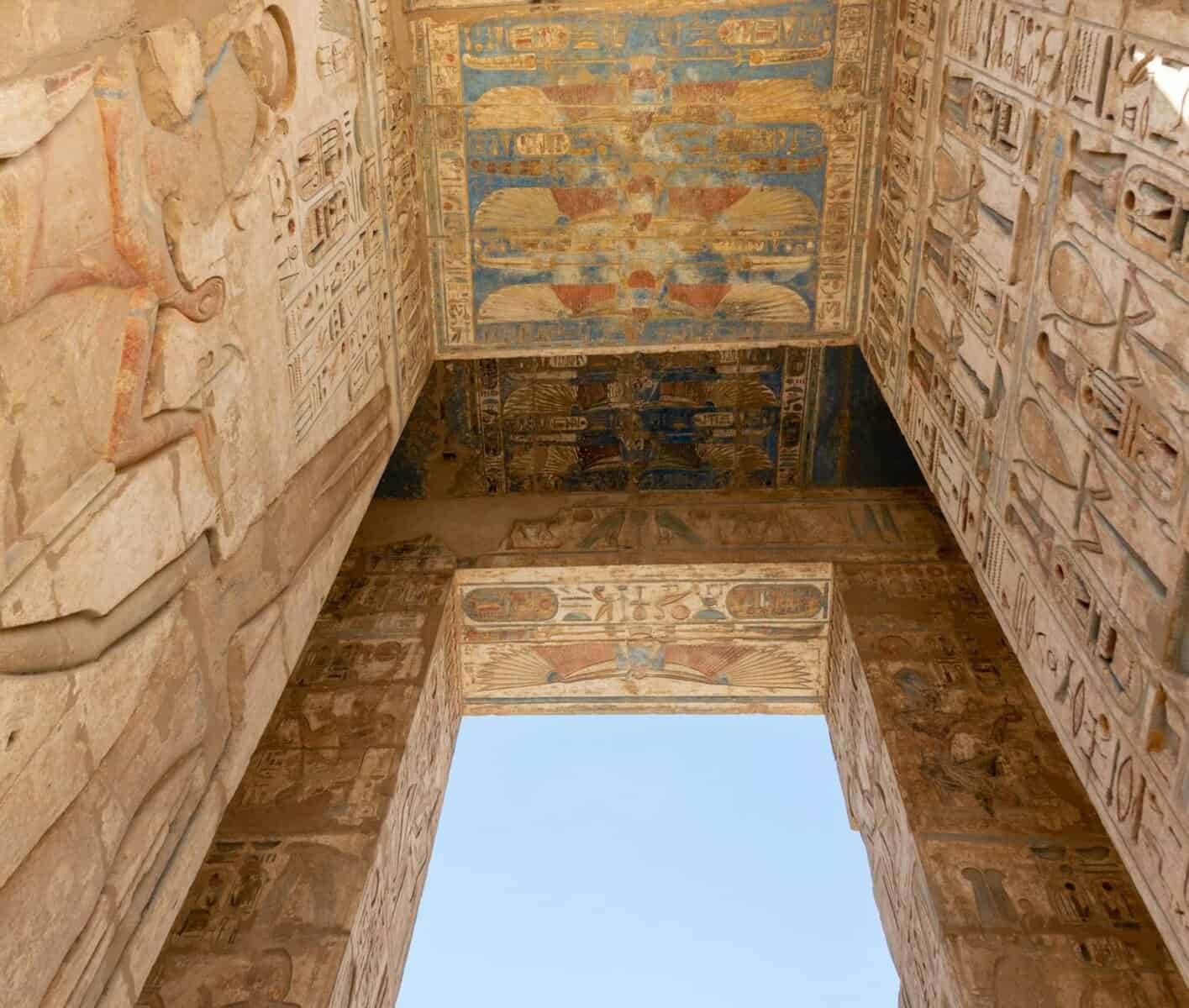
Tour Spotlight: Elite Trip — Multi-Day Trip Luxor & Aswan (8 Days)
Duration: 8 days
From: $1230
Step into a world where time stands still and the ancient whispers of Egypt call to you. Curated by Elite Trip experts, this multi-day Luxor & Aswan trip pairs a luxurious Nile cruise with days of temple exploration—Karnak, the Valley of the Kings, Philae, and the colossal Abu Simbel.
Expect seamless logistics, attentive guiding, and moments that feel truly timeless: sunset over the Nile, quiet chambers painted with stars, and wide desert horizons that linger long after you return home.
Trip highlights
- Luxurious Nile cruise from Luxor to Aswan
- Grand sites: Karnak, Luxor Temple, Valley of the Kings, Hatshepsut, Edfu, Kom Ombo, Philae, Abu Simbel
- Smooth, fully hosted experience from arrival to departure
- Story-rich guiding with certified Egyptology guides
What’s included
- All entry/admission fees to listed sites
- All transfers related to the itinerary
- Egyptology tour guide (English)
- Other languages (French, Italian, Spanish, etc.) available for an added charge
Accommodation
- 4 nights / 5 days full board on a 5-star Nile cruise
- 3 nights / 3 days in a 5-star deluxe hotel, bed & breakfast
- Meals: full board during cruise; breakfast at the hotel
Good to know
Taxes: departure/entry taxes are covered per airline/airport policy
- Food & drinks: included as specified above (full board on cruise, breakfast at hotel)
- Pace: designed as an Easy itinerary with comfortable daily touring and sailing
Price: $1230 per person (based on the inclusions above)
Reserve your spot with Elite Trip and let the Nile set the rhythm for your days. Luxor’s temples, Aswan’s calm waters, and Abu Simbel’s grandeur are waiting.
Practical Information
When to Go
October to April is the most comfortable window. Summer temperatures in Luxor and Aswan regularly reach 40°C or above. January and February are peak tourist season; expect larger crowds at major sites. March to May and September to November offer a reasonable balance of manageable temperatures and fewer visitors.
Getting There
Luxor is served by direct international flights from several European cities during the winter season; connections via Cairo are available year-round. EgyptAir operates domestic flights from Cairo to both Luxor and Aswan. The overnight train from Cairo to Luxor (about ten hours) is an option for travelers with more time.
Visas
Most nationalities can obtain a visa on arrival at Egyptian international airports, or via the Egypt e-visa portal online before departure. Fees and eligibility change; verify current requirements with the Egyptian embassy or consulate for your country before booking.
Currency and Payments
The Egyptian pound is the local currency. ATMs are available in Luxor and Aswan. Credit cards are accepted at larger hotels and some restaurants but not widely at smaller sites, market vendors, or for transport. Cash is necessary for site entry tickets, tips, and most day-to-day purchases.
Health
Standard travel health precautions apply. Drink bottled or purified water. Sun protection is essential — the UV index in Upper Egypt is extreme, particularly in summer. Check current vaccination recommendations with a travel health clinic before departure.
Site Entry Costs
Entry costs vary by site. The Valley of the Kings standard ticket covers three tombs; additional tombs (Tutankhamun, Seti I, Nefertari) each require separate tickets. Abu Simbel and Philae are priced separately. Costs are subject to change; the most current information is available from the Egyptian Ministry of Antiquities or through your tour operator at time of booking.
Photography
Photography is permitted at most open-air sites. Inside tombs and many temples, photography is permitted without flash; some specific tombs and museums charge an additional camera fee or prohibit photography entirely. These rules change; confirm locally.
Frequently Asked Questions
How physically demanding is this eleven-day program?
The itinerary involves sustained walking on uneven stone surfaces, often in full sun. Abu Simbel requires an early-morning start with a long vehicle transfer. The Red Sea day is the lowest-effort day. There are no demanding hikes or significant elevation gain.
Most participants with standard mobility complete the program without difficulty, but visitors with limited walking ability should confirm accessibility at specific sites with the operator in advance, as some areas (notably certain tomb interiors) involve steps and low passages.
What is the best time of year to visit Luxor and Aswan?
October through April gives the most comfortable conditions, with daytime temperatures between roughly 20°C and 30°C. December to February is peak season and the most crowded. May to September is very hot, with Luxor and Aswan regularly reaching 40°C or above. If you visit in summer, every outdoor activity needs to be finished before midday.
Is Abu Simbel worth the additional cost and travel time from Aswan?
For most visitors, yes. The temples cannot be seen in photographs the way they exist in person — the scale of the facade and the quality of the interior decoration place it in a category by itself. The early-morning convoy departure from Aswan is genuinely tiring, but the site is typically reached before the main heat of the day and before larger tour groups arrive.
Budget travelers sometimes skip it based on cost; it is the most expensive single-site ticket in the program.
How does the Nile cruise portion of the trip work in practice?
The cruise segment runs from Luxor to Aswan over four nights and five days, stopping to visit Edfu and Kom Ombo on the way south. The boat is fully air-conditioned and meals are included on board. Days are structured around shore excursions; the boat moves while guests are at dinner or sleeping. Most five-star cruise boats on this route carry between 50 and 70 passengers and have a pool and lounge deck.
Related read: What to Expect on a Nile River Cruise
Can I visit the Valley of the Kings and Karnak on the same day?
On a guided group program, these are usually visited on separate days because each deserves significant time. If combining them independently, it is possible: the west bank sites (Valley of the Kings, Hatshepsut, Colossi) make a logical morning, and Karnak works in the afternoon or evening. Budget at least two hours for Karnak alone.
Is it possible to visit the Dendera and Abydos temples without a private tour?
Both sites require a vehicle to reach — they are not accessible by local public transport from Luxor. Shared taxi services from Luxor do cover both routes, and some budget travelers combine Abydos and Dendera in a single day by taxi. Guided day trips from Luxor to each site are also widely available at the city’s main hotels and tour operators. Abydos is the longer drive (about two hours each way), so an early departure is essential if combining both in one day.
Quick Reference: Key Sites
Valley of the Kings | West Bank, Luxor | Opens daily at 6:00 AM | Standard ticket covers 3 tombs; additional tombs priced separately
Karnak Temple Complex | East Bank, Luxor | Opens 6:00 AM | Sound & Light Show evenings (separate ticket)
Luxor Temple | East Bank, central Luxor | Opens 6:00 AM, lit at night | Avenue of Sphinxes walkable from temple entrance
Abu Simbel | 280 km south of Aswan | Convoy departure approx. 4:00 AM from Aswan | Separate entry ticket required
Temple of Philae | Agilkia Island, Aswan | Accessible by motorboat from Shellal Embarkation | Separate entry ticket required
Temple of Seti I, Abydos | 170 km north of Luxor | Allow full day from Luxor with early departure | Often combined with Dendera
Temple of Hathor, Dendera | 60 km north of Luxor | Roof accessible; good view of surrounding landscape