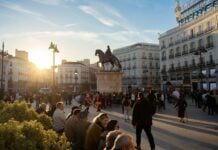
London gets dark early in December. By about four in the afternoon the sky over the Thames turns deep blue, the chalet lights along the South Bank come on, and the smell of mulled wine reaches you before the stalls do. That early dusk is the reason the city’s Christmas markets work so well.
This guide covers the markets that come back every winter: where they are, how each one runs, what it costs to get in, and when to go if you want room to move. Opening dates shift by a few days each year, so we describe the usual pattern and tell you where to confirm the current season before you travel.

How London’s Christmas Season Unfolds
The West End switches on first, before most people have finished with Bonfire Night. Leicester Square and Piccadilly usually light up around the first of November, and Oxford Street and Regent Street follow within the first week. Covent Garden and Knightsbridge join in by mid-November.
The markets open in waves. Southbank Centre and Leicester Square are normally trading by early November. Hyde Park Winter Wonderland and Covent Garden arrive in mid-November, along with the riverside market at London Bridge. Smaller neighborhood markets fill the gaps through December.
Most of the big markets run into the first days of January. Almost all of them close on Christmas Day.
Hyde Park Winter Wonderland
You hear the roller coasters long before you see the Giant Wheel turning above the bare trees of Hyde Park.
Winter Wonderland is the largest and best-known of London’s Christmas events, and it’s closer to a funfair with a market attached than a traditional Christmas market. It usually opens in mid-to-late November and runs for about six weeks. It closes somewhere between the 1st and 5th of January. It’s open daily except Christmas Day, generally from 10am to 10pm, with some later weekday starts.
Tickets and timing
Every visitor needs a timed entry ticket, even for the slots that cost nothing. You arrive within your one-hour window and can then stay as long as you like. In recent seasons, off-peak slots have been free or about £1, standard slots around £5 to £5.50, and peak slots (weekend afternoons and evenings, plus weekday evenings close to Christmas) around £7.50 to £8.50. Booking in advance is cheaper than paying on the gate, and December weekends sell out early.
Rides and shows are paid separately. Recent prices have run at roughly £8 to £11 for the Giant Wheel, £11.50 to £17.50 for the ice rink, and £12.50 to £18 for the circus. The Magical Ice Kingdom, a hall of ice sculptures with a new theme each year, sits in a similar range. Ride credit is loaded in advance and scanned by QR code.
Londonist puts attendance at around 2.5 million visitors a season. Weekday mornings are the quietest time to go; Saturday evenings are the busiest. Phone signal inside the grounds is patchy, so agree on a meeting point outside the gates before you split up.
The closest Tube stations are Hyde Park Corner and Knightsbridge (both Piccadilly line) and Marble Arch (Central line). They get crowded in the evening. Bond Street, Victoria and Paddington are all about a 20-minute walk away and much calmer.
Southbank Centre Winter Market
The first market of the season sits right on the river. Mulled cider steams in paper cups, festoon lights swing above the Queen’s Walk, and the London Eye turns slowly behind you.
Southbank Centre’s Winter Market is normally the earliest to open, in the first days of November, and it runs until late December or the first days of January. Expect around 20 alpine-style wooden chalets, a handful of pop-up bars and plenty of street food. Entry is free.
Hours in recent seasons have been 11am to 10pm Sunday to Thursday and until 11pm on Friday and Saturday. It closes on Christmas Day and has also closed on New Year’s Eve. The market is completely cash-free, so bring a card or phone.
Waterloo is the nearest station. From Embankment, walk across the Golden Jubilee Bridges for the best approach, with the whole South Bank lit up in front of you.
This market pairs well with Winter by the River (below). The Queen’s Walk runs along the water between them, and the walk from the Southbank Centre to London Bridge is about 2km, an easy half hour past Tate Modern and Shakespeare’s Globe.
Leicester Square Christmas Market
Leicester Square is pure West End: theater crowds, cinema premieres and, from early November, a ring of Bavarian-style huts selling mulled wine, bratwurst and gifts.
The market usually opens around the first of November and stays for about nine weeks, into early January. It’s free to enter and generally open from 10am to 10pm. Leicester Square station (Northern and Piccadilly lines) is right there.
The entertainment inside the market changes. Some years it has been a Spiegeltent with cabaret; more recently, an ice rink has circled the Shakespeare statue at the center of the square, with adult tickets around £14.50 to £18.50 depending on the time. Check what’s on before you go if the show or the skating is the reason for your visit.
Come before noon if you want to browse the stalls. By early evening the square fills with people heading to shows.
Winter by the River at London Bridge City
Between London Bridge and Tower Bridge, the river opens up. From the chalets you look straight across at the Tower of London, with HMS Belfast moored just downstream.
This riverside market used to be called Christmas by the River and is now branded Winter by the River. It usually opens in mid-November and runs to early January. Recent hours have been 11am to 10pm daily, with shorter hours on Christmas Eve and New Year’s Eve, and it closes on Christmas Day. Entry is free.
Winter by the River leans toward food and drink. There are chalet bars, street food stalls and gift stalls run by social enterprises. Paid curling lanes take up to eight players for a 50-minute session, which works well for a group of friends on a cold night. It’s noticeably calmer than the West End markets.
London Bridge station (Northern and Jubilee lines) is a few minutes’ walk away.
Covent Garden
Covent Garden does Christmas on a grand scale. A British-grown tree of around 55 feet stands in the West Piazza, and the decorations spread out from the Market Building through Seven Dials and Neal’s Yard.
The lights and the seasonal market usually start in mid-November and run until early January. In recent years the market has been open from 10am to 8pm Monday to Saturday, with shorter hours on Sunday. It’s free. The giant baubles and installations inside the Market Building change every year, and they draw crowds of people taking photos in the evenings.
Covent Garden station (Piccadilly line) gets crowded and sometimes runs exit-only at busy times. Leicester Square station is about five minutes’ walk away and usually easier.
Greenwich Market
Greenwich starts its season with lanterns. On a weekday evening in mid-to-late November, a free lantern parade walks from the grounds of the Old Royal Naval College to Greenwich Market, and the Christmas lights are switched on when it arrives.
Greenwich Market is a covered historic market with crafts, street food and mulled wine, open from about 10am to 6pm, with carol singers on weekends. It’s a good choice when the weather turns, since you’re under a roof.
The Old Royal Naval College holds ticketed carol concerts in its Chapel during December. Nearby, the Queen’s House at Royal Museums Greenwich has run a seasonal ice rink and a free festive trail. Take the DLR to Cutty Sark, or come by riverboat and arrive on the water.
Smaller Markets Worth a Detour
Borough Market. London’s best-known food market adds guest Christmas stalls in December, with puddings, cheese and mulled wine. It’s free and keeps its usual hours (roughly 10am to 5pm on weekdays, from 9am on Saturdays, shorter on Sundays). It shuts for a few days after Christmas, so check before you go between Christmas and New Year.
Trafalgar Square. A small market sets up under the Norway Christmas tree, usually from early November to early January, open from about 10am to 10pm.
King’s Cross. A Christmas market has run under the West Handyside Canopy near Coal Drops Yard from late November until just before Christmas, with shorter hours early in the week.
Battersea Power Station. Free to visit, with a tree in Malaysia Square, lights throughout the building and projections on the chimneys in the run-up to Christmas. There’s a paid skating trail and a Christmas market on selected weekends. Battersea Power Station has its own Northern line station.
Ice Rinks and Light Trails
Skating under the 18th-century facades of Somerset House has been a London winter tradition since 2000. The rink, about 900 square meters, usually opens in mid-November and stays until around 10 January, a week after most markets close. Tickets go on sale in September and the best evening slots sell out. Recent adult prices have ranged from about £13 to £28.50 depending on the day and time. The courtyard itself is free to walk into. Temple and Embankment are the nearest stations.
Christmas at Kew is a light trail through Kew Gardens that has run since 2013. The route is about 3km long, so wear shoes you can walk in. It opens on selected evenings from mid-November to early January, from late afternoon, with timed entry that must be booked in advance. Adult tickets have recently started at around £25 to £28, with lower prices for children. Take the District line or Overground to Kew Gardens station.
The Lights and the Norway Tree
Stand at the bottom of Regent Street on a December evening and look up the long curve of lights toward Oxford Circus. It’s the view that ends up on half the city’s Christmas cards.
The biggest light displays are on Oxford Street, Regent Street, Carnaby Street, Covent Garden and Bond Street, and all of them are free. You can walk the main West End stretch, from Oxford Circus down Regent Street to Piccadilly Circus, in about 15 minutes, though most people take longer.
The tree in Trafalgar Square is a gift from the city of Oslo. Norway has sent one every year since 1947 to thank Britain for its support during the Second World War. The tree is a Norwegian spruce chosen from the forests around Oslo, and it’s lit at a free ceremony in early December, usually on the first Thursday of the month. Choirs sing carols at its base through December. The tree comes down just before Twelfth Night and is chipped and composted.
Practical Information
When to go
For the markets alone, November weekdays are the sweet spot: everything is open and the crowds are thinner. Arrive around 3pm and you’ll see the stalls in daylight and then watch the lights come on. December weekends are the busiest time everywhere.
The days between Christmas and New Year are a good compromise. Most of the big markets stay open until early January, and many Londoners are away.
Getting around over Christmas
On Christmas Day, London’s public transport stops almost entirely. There’s no Tube, bus, DLR, Overground, Elizabeth line or National Rail service, and the airport express trains don’t run either. Santander Cycles and taxis are available, and the Congestion Charge is suspended.
On Boxing Day the Tube runs a reduced service and some lines, including the Elizabeth line in recent years, stay closed. On Christmas Eve services finish early. On New Year’s Eve the Tube runs through the night, with closures around the river for the fireworks.
Weather, daylight and what to wear
December in London averages a daytime high of about 9°C (48°F) and a low of about 2°C (36°F), with rain on about 11 days of the month. Snow is unusual. The earliest sunset falls in mid-December at around 3:50pm, and sunrise doesn’t come until about 8am at the end of the month. Pack a waterproof layer, gloves and comfortable shoes for standing on cold pavement for hours.
Money
Contactless payment works almost everywhere, and some markets, including the Southbank Centre, don’t take cash at all. Prices at the large markets are central London prices, so budget accordingly for mulled wine and street food.
Frequently Asked Questions
Which London Christmas market is best for young children?
Winter Wonderland has the most for kids, including a Santa area and family rides, but it’s also the most expensive and the most crowded. Greenwich is gentler: Royal Museums Greenwich has run a Santa’s Grotto from mid-November until Christmas Eve, and the Queen’s House trail is free. Battersea Power Station is a good free option with space to move around.
Are London’s Christmas markets open on Boxing Day?
Most of the large ones are. Winter Wonderland, Southbank Centre and Winter by the River have all reopened on 26 December after closing for Christmas Day. Borough Market is the main exception and stays shut for a few days. Plan your route around the reduced transport.
How many days do you need to see London’s Christmas markets?
Two evenings covers the best of it. Spend one walking the river from the Southbank Centre to London Bridge, and the other in the West End, where Leicester Square, Trafalgar Square and Covent Garden are all within about ten minutes of each other on foot. Give Hyde Park Winter Wonderland a separate half-day.
Are there Christmas markets in London in January?
Only for the first few days. Most of the big markets close between the 1st and 5th of January, while Somerset House keeps skating until around 10 January. Canary Wharf’s Winter Lights festival runs in January, but it’s a light art festival with no market stalls.
Where can you ice skate in London at Christmas?
Somerset House is the classic choice. Winter Wonderland, the Queen’s House in Greenwich and Battersea Power Station have also had rinks or skating trails in recent seasons, and Leicester Square has run one inside its market. Book ahead for evening slots everywhere, since sessions are timed.
Related articles: