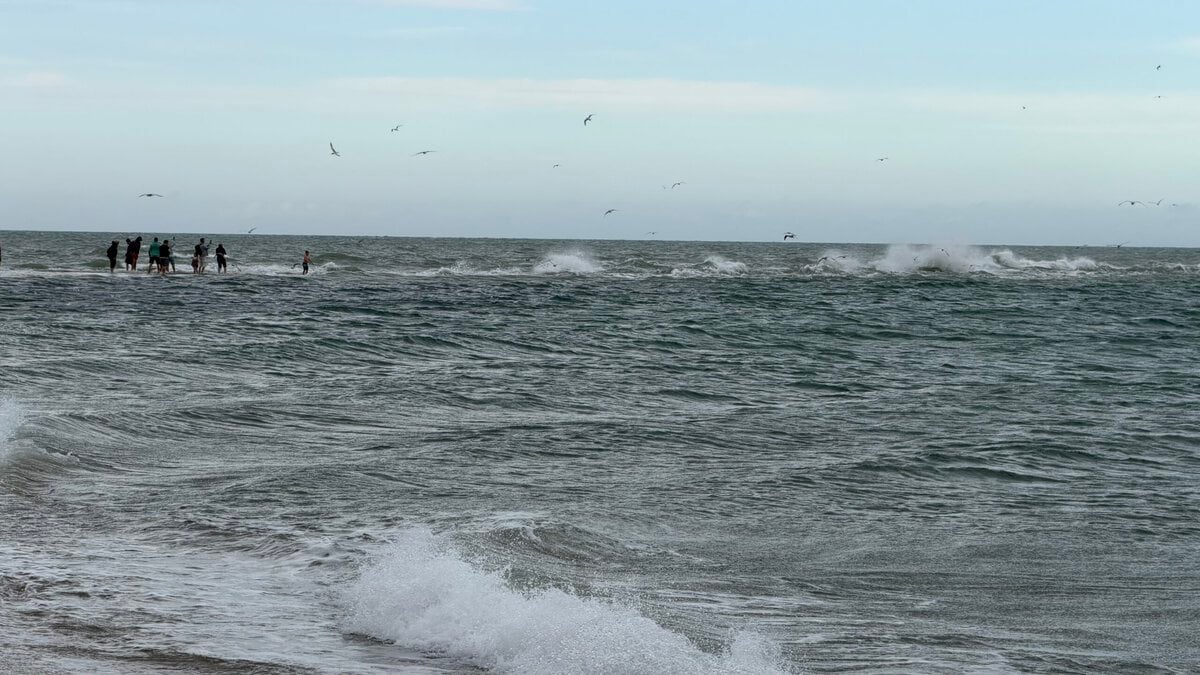
North of Aalborg, Denmark thins into a long finger of sand and then simply stops, at a point where two seas run at each other from opposite directions and the waves visibly refuse to mix.
Getting to that point is easy. Getting around the region that leads up to it is not, because the villages, dunes, harbors and beaches worth your time sit far apart with very little between them except road.
We based ourselves in Tversted, a small holiday village on the North Sea coast, and drove out in a different direction most days for two weeks.
This is that North Jutland road trip route: what to see, what the walks actually take, when the crowds arrive, and why the car is the part of this trip to sort out first.
Overview:
- Why This Corner of Denmark Needs a Car
- Getting There From Copenhagen
- The land route through Odense and Vejle
- The ferry shortcut across the Kattegat
- Sorting out the car before anything else
- Tversted as a Base
- The North Sea Coast: Rubjerg Knude, Mårup Kirke and Løkken
- Hirtshals: Fish, Bunkers and a Very Large Aquarium
- The Kattegat Side: Bangsbo Fort, Sæby and Frederikshavn
- Råbjerg Mile: Walking Across a Dune That Moves
- Uggerby: Paddling the River
- Skagen and Grenen
- Two Detours Worth the Drive
- Practical Information
- When to go
- Driving and parking
- What things cost
- What to bring
- Frequently Asked Questions
Why This Corner of Denmark Needs a Car
The best days we had here were the ones that changed shape halfway through. A beach walk that turned into a drive to the next harbor because the wind picked up. An afternoon at the dunes that ran long, so dinner became fish at a harbor kiosk instead of the plan.
North Jutland supports that kind of day badly by public transport and beautifully by car (which is why we chose to do a North Jutland road trip). Trains do reach the region: Nordjyske Jernbaner runs lines up to Skagen, Hirtshals and Frederikshavn, and you can get to Hjørring on the national network. What the trains do not reach is most of the reason to come. Tversted has no station. Neither does Rubjerg Knude, the Råbjerg Mile parking area, Uggerby, Skiveren or the shelters behind the dunes. Buses connect the larger towns on timetables built around school runs, not around beach light at eight in the evening.
If you would rather not drive the full length of the country, the workable compromise is to take the train to Aalborg or Frederikshavn and pick up a car there. You will still want one for the last stretch and for every day after.
Getting There From Copenhagen
Most people arrive in Denmark through Copenhagen and give the city two or three days before heading north, which is the right order. Copenhagen is walkable and well served by metro. Everything after it is not.
The drive from Copenhagen to the top of Jutland runs roughly 450 to 510 kilometers depending on your exact route and endpoint, and takes about five hours of driving before stops. There are two sensible ways to do it.
Related read: A Weekend in Copenhagen in the Winter
The land route through Odense and Vejle
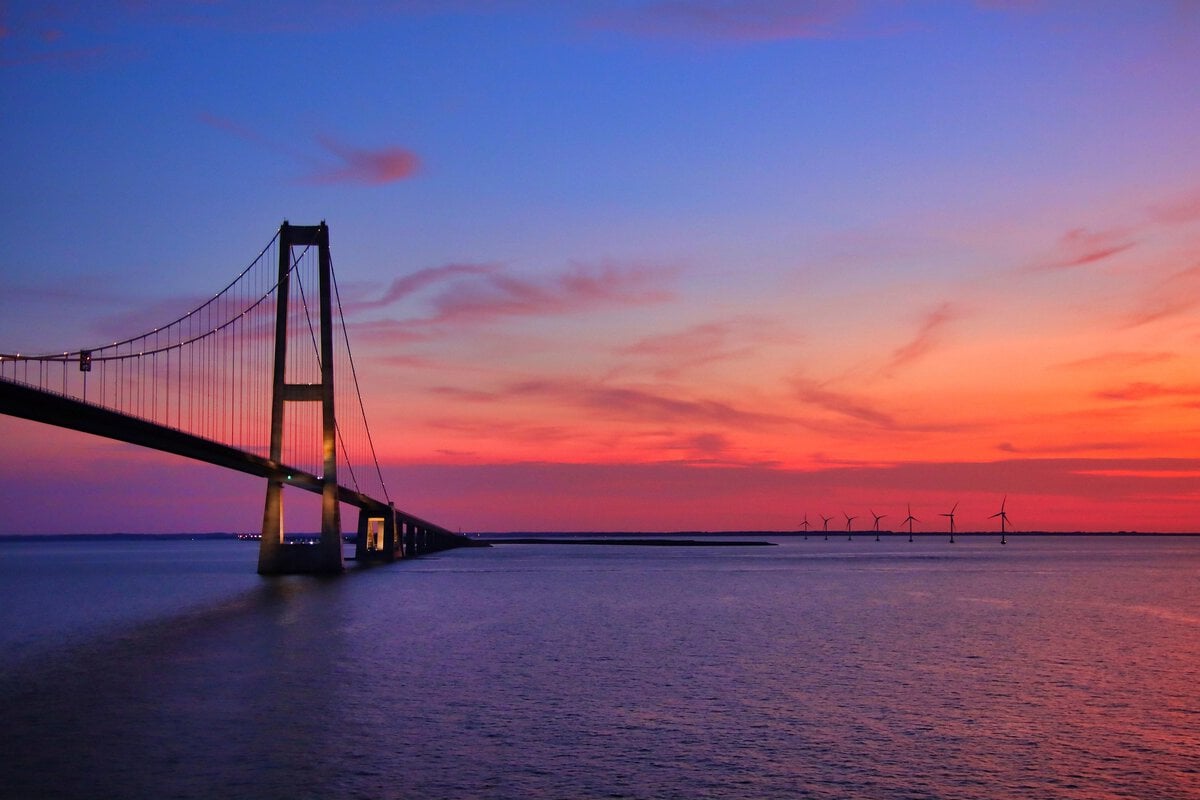
The classic version crosses the Great Belt Bridge onto Funen, then the Little Belt Bridge into Jutland, and joins the E45 north through Vejle, Aarhus and Aalborg toward Frederikshavn. The Great Belt Bridge is tolled, so budget for that (DKK235 / USD37 for cars and DKK645 / USD100 for motorhomes). This route is longer but gives you the option of breaking the drive in Odense or Vejle, and it puts Aalborg on your path anyway.
Related read: Things to do in Odense, Denmark
The ferry shortcut across the Kattegat
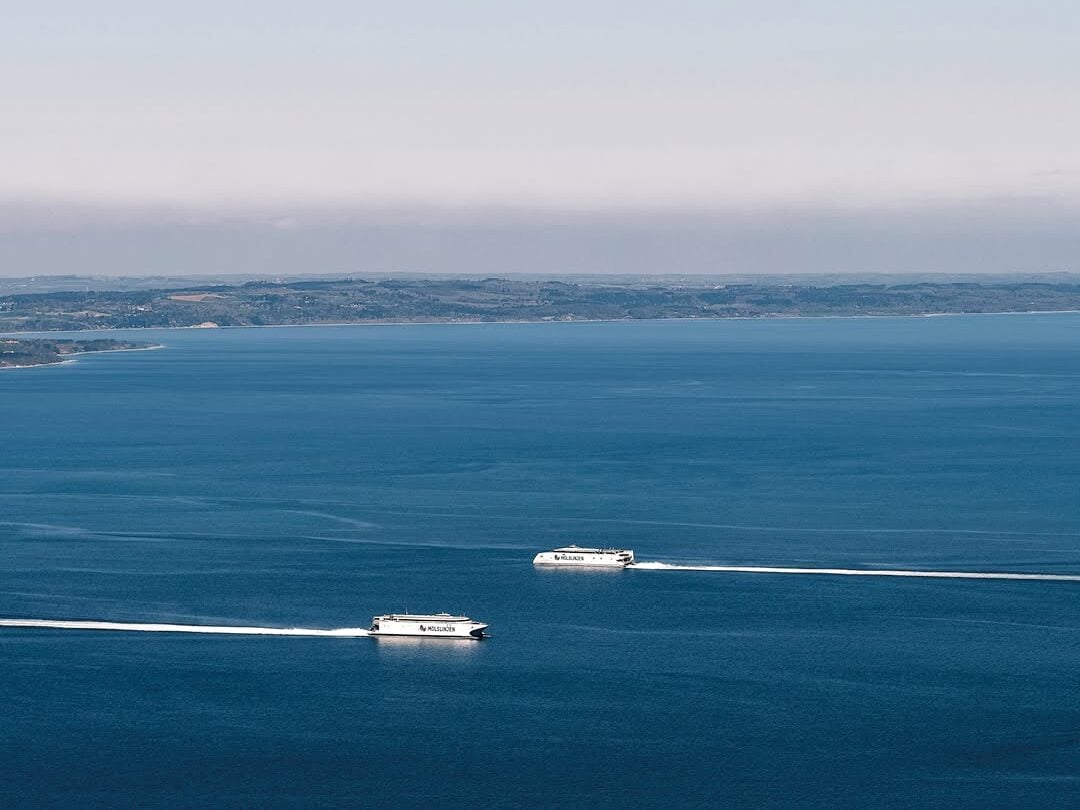
Molslinjen’s fast ferries run between Sjællands Odde on Zealand and Aarhus in about 90 minutes (DKK 250 – 600 / USD 39 – 93), with departures roughly hourly through the season. Taking the boat cuts around 200 kilometers of driving and drops you onto the E45 well north of the bridges. In July and August, book the crossing in advance with your car registration; the popular sailings sell out.
Sorting out the car before anything else
Rental supply at Copenhagen Airport thins out fast in July and August, and long-hire and one-way rates move a great deal depending on when you look. Booking the car early is the single decision that shapes the rest of this trip.
DiscoverCars.com is a sensible place to start. It is a broker rather than a rental company, so what you are comparing is the local suppliers operating at a given airport or city desk, gathered into one list with the mandatory fees and taxes already inside the quoted price rather than surfacing at the counter. It holds a 4.6 rating on Trustpilot across more than 279,000 reviews, which is a large enough sample to carry weight. Because it is a broker, the car and the desk experience come from whichever local supplier you pick, so read the supplier rating on the listing rather than sorting on price alone. For a trip like this one, filter for a car you would genuinely want to spend two weeks in: gravel tracks, sand-blown coastal roads and dune parking areas are the normal surface here, not the exception.
A note on Full Coverage. DiscoverCars offers an optional protection plan called Full Coverage, and it is worth understanding how it actually works before you decide. It is a reimbursement service provided by DiscoverCars rather than insurance sold at the rental desk, and it does not waive the supplier’s security deposit. That has three practical consequences.
You will still leave a standard deposit on a credit card in the main driver’s name at pick-up. Expect it back within roughly 21 business days, so about a month, with the exact timing down to the supplier and your bank.
If something happens, you pay the rental company first and keep every receipt, damage report and invoice. You then have 90 days to submit a reimbursement claim to DiscoverCars, and eligible costs come back to you up to the coverage limit.
What it covers is broader than the standard collision waiver most desks sell: windows, mirrors, tires and wheels, roof and undercarriage damage, towing, lost keys and lockouts, misfuelling, administrative fees. It does not cover third-party liability or personal accident insurance. Third-party liability is built into the base rental price to meet local law. Personal accident cover is a separate product if you want it.
On this particular route that matters more than it sounds. The realistic risk on a North Jutland road trip is not a crash. It is a stone chip in the windshield on the E45, a scuffed rim on a gravel track to a shelter, or sand and salt working on a car you parked twenty meters from the North Sea for a fortnight. Knowing the deductible comes back to you changes how you drive the small roads, which is the entire point of coming here.
Tversted as a Base
The beach at Tversted runs wide and flat, and the wind almost never stops. That sounds like a complaint. It is not, because the dune line behind the sand is high enough that you can walk twenty meters from the shore, drop into a hollow, and sit in complete stillness while the marram grass above you flattens sideways. We did that most afternoons.
Tversted sits in Hjørring Municipality on the North Sea coast, a holiday village rather than a town, which is exactly what you want as a base. It is within an hour’s drive of nearly everything in this guide. Self-catering houses are the standard accommodation, and the practical rhythm of a stay here is a supermarket run, long beach days, and sunsets that in June and July do not finish until close to eleven.
Three things gave the village more shape than we expected. Tversted Skole hosts live concerts through the summer season on Wednesday evenings with a dinner buffet, which is where you meet the Danish families who have been coming back to the same houses for twenty years. Isager Yarn and Uldens Hus are both serious wool and yarn shops, and worth a stop even if you have never knitted anything, because the Isager operation is a genuinely well-known Danish design name working out of a village of a few hundred people. Café Fisk handles the evenings you do not want to cook.
Tversted Søerne, the lakes just inland, add a short walking loop through pine and heath with good access through to the beach at the far end. It is the low-effort option on a day when the wind is doing too much.


The North Sea Coast: Rubjerg Knude, Mårup Kirke and Løkken
The lighthouse appears above the dune line before the sea does, and for the last stretch of the walk it is the only vertical thing in sight.
Rubjerg Knude Lighthouse was first lit on 27 December 1900, standing about 200 meters inland on a cliff 60 meters above the sea. Drifting sand beat it. By the 1950s the dune had grown so high it blocked the beam, and the light was switched off for good on 1 August 1968. Then the coast itself started to go, eroding one to two meters a year until the cliff edge was within a few meters of the foundation. On 22 October 2019, a local mason from Lønstrup put the entire tower on rails and rolled it roughly 70 meters inland over about ten hours, while more than twenty thousand people stood in the dunes and watched. It bought the building somewhere between thirty and forty more years.
The site is free and open around the clock. From the main parking area it is a fifteen-minute walk over sand to reach it. We came at it the longer way instead, parking at Kongestenen ved Mårup Kirke and walking the clifftop path south past the church ruins, which takes 25 to 30 minutes each way and gives you the erosion story in the landscape rather than on a sign. Wear closed shoes and bring something for your eyes. On a windy day the sand moves horizontally.
Løkken, twenty minutes south, is a former fishing village of around 1,700 residents that became a beach town. Its distinguishing feature is that cars are still allowed onto the beach itself, which is a strange sight the first time and a genuinely useful thing with small children and a lot of gear.


Hirtshals: Fish, Bunkers and a Very Large Aquarium
You smell Hirtshals harbor before you see it, and that is the correct introduction to the place. This is a working North Sea fishing and ferry port, with sailings out to Norway, and the tourism sits on top of the industry rather than replacing it.
Nordsøen Oceanarium is the reason most families come. It is the largest aquarium in Northern Europe, built around a main tank holding about 4.5 million liters of seawater behind a single sweeping window, with roughly seventy tanks in total. Divers enter the big tank several times a day to feed the fish and narrate what you are watching, and there is a sealarium, a touch pool and a large outdoor play area. Budget three hours minimum. With children it will be four.
Hirtshals Fyr, the lighthouse on the headland, and the German coastal battery at Stützpunktgruppe Hirtshals sit within a short drive of each other. The bunkers here are part of the Atlantic Wall, and this stretch of Jutland has more surviving concrete than almost anywhere in Denmark. Some of it is unfenced and half-buried in the dunes, which makes it more affecting than a museum does.
Eat at the harbor. Hirtshals Fiskehus sells the fish that came off the boats you can see from the door.


The Kattegat Side: Bangsbo Fort, Sæby and Frederikshavn
The east coast has a different temperature to it. The water is calmer, the light is softer, and the wind that defines the North Sea side drops away almost completely. It makes for a good contrast day.
Pikkerbakken, the hill above Frederikshavn, holds Bangsbo Fort, a coastal fortress built by the German occupation and then expanded by the Danish Navy through the Cold War. Around eighty concrete structures survive on the site, roughly twenty of them open to walk into, with free guided tours run in several languages. From the top you look out over Frederikshavn and the Kattegat, and on a clear day across to Læsø.
Sæby was granted market rights in 1524 and has about 9,000 residents now. Walk Vestergade for the shops, then Algade toward the harbor, which is where the art and craft workshops are. The beach of town is good for mussels; the kids collected a bucket.
Frederikshavn itself is a port town, and the port is the interest: Stena Line runs to Gothenburg in about three and a quarter hours, several times a day, year-round. If you want to add two nights in Sweden to a Denmark trip, this is where it happens.
For a break with children, Palmestranden north of the town center is set up for it. There is an ice cream and snack kiosk at Palmestrandens Ishus, the Junglestien playground next to it, and several beach volleyball courts on the sand. Twenty minutes further north, Strandby is a small working fishing harbor with none of that, and is the better stop if you want quiet.


Råbjerg Mile: Walking Across a Dune That Moves
There is a moment on the western slope where the vegetation ends completely and the horizon is nothing but sand, and it stops feeling like Denmark.
Råbjerg Mile is the largest migrating dune in Northern Europe, roughly a kilometer on each side, about 40 meters at its highest point, holding somewhere around four million cubic meters of sand. Westerly winds push it northeast at 15 to 18 meters a year. It formed more than three hundred years ago on the west coast and is still moving, and current projections have it crossing the main road to Skagen in a century or two. About 250,000 people visit annually, though almost all of them stay within sight of the parking area.
Reaching the crest takes about ten minutes from the car park. That is where most visitors turn around.
Keep going South-West over the back of the dune and down to the beach, then turn south along the coast toward Skiveren Strand, and you have the best walk in this guide with almost nobody on it. We started a bit North of the dune and ours ran 17.6 kilometers to Østerklit Stokmølle and took just over four hours of walking, at a steady 4.3 km/h. Total ascent across the whole route was 50 meters, so the distance is the entire “difficulty”.
Østerklit Stokmølle is an old post windmill, and there are three open shelters beside it where you can sleep, which is what we did. Check the current booking rules for the shelters before you plan a night there. Take water. There is none on the route. They provide bbq/fire spots and even some firewood. All for free, which makes those shelters a popular outdoor experience.


Uggerby: Paddling the River
Uggerby Kanofart rents canoes and kayaks for trips down the Uggerby Å. The standard run finishes at the river mouth near the beach, where they collect you and the boat.
We were looking forward to that version and did not get it. The wind at the coast was strong enough that day that pickup at the beach was not possible, so they redirected us inland instead, upriver through farmland and low woods with other kayaks on the water coming towards us, coming one way from Bindslev. It was very similar to the coastal run and, in hindsight, just as good. We did the beach ending one on a visit years before. Build the flexibility into your plan. On this coast the wind decides.
Uggerby Strand, the beach at the river mouth, is worth a separate visit regardless. It is wide, it is usually close to empty, and it is a fifteen-minute drive from Tversted.


Skagen and Grenen
Skagen has a specific light. That is not a tourism-board line, it is why the place exists as anything other than a fishing village: in the 1870s a group of painters including Michael and Anna Ancher and P.S. Krøyer settled here because of the way the low northern sun comes off the sand and water from two directions at once. Brøndums Hotel was the only guesthouse in town and became their gathering place. It still runs as a restaurant, and it is where we would send you for smørrebrød, the Danish open sandwich, if you only eat it once on this trip. The town around it is yellow houses with red-tiled roofs, galleries and a good harbor to eat at. Jollehuset was our pick for lunch.
Grenen is a six-minute drive north of town, about three kilometers from the center. From the car park on Fyrvej it is a fifteen to thirty minute walk out along the spit, past Holger Drachmann’s grave in the dunes and a line of wartime bunkers, to the tip. If walking on soft sand is hard, the Sandormen, a tractor-drawn wagon that has been running this route since the 1940s, operates from around Easter to late October. Expect roughly 40 DKK (USD 6) for an adult return and half that for children, and bring cash for the wagons.
At the point itself, the Skagerrak and the Kattegat arrive from opposite directions and collide in a visible line of standing water. You can put a foot in each. You cannot swim: the currents there are strong and unpredictable, and swimming is prohibited, which people ignore at genuine risk. Go early. The car park fills from mid-morning in July and August, and the tip empties out for a while every time the Sandormen heads back, so waiting fifteen minutes after a wagon departs will usually give you the point almost to yourself.


Two Detours Worth the Drive
Aalborg, about ninety minutes south of Tversted, is the city day if someone in the group needs one. Lindholm Høje is the reason to go: a Viking and Iron Age burial site of several hundred stone ship settings on a hillside above the fjord, with a museum built into the slope. Add the Utzon Center on the waterfront, the pedestrian streets of Bispensgade and Algade, and Jomfru Ane Gade if the evening runs long.
FLUGT, the Refugee Museum of Denmark, is nowhere near the rest of this route. It sits at Oksbøl on the west coast, which puts it about three hours south of Tversted, and it works as a stop on the drive home rather than a day trip. It opened in 2022, in a building by Bjarke Ingels Group that connects two surviving hospital blocks from what was Denmark’s largest refugee camp. Around 35,000 German refugees lived here between 1945 and 1949, which made it at the time the fifth-largest settlement in the country. The permanent exhibition pairs that history with individual accounts of migration to Denmark across the last century, delivered through an audio guide that follows you room to room. Allow two hours, and walk out to the refugee cemetery afterward.


Practical Information
When to go
June through August gives you the long evenings and the warm sea, and it is also when the Wednesday concerts, the Sandormen and the seasonal kiosks run. It is the busiest window, though “busy” here means a full car park at Grenen and Rubjerg Knude between roughly 10am and 4pm, not queues. May and September are quieter and colder, with a real chance of good weather and a real chance of horizontal rain. The wind is a constant in every month.
Driving and parking
Roads are excellent and quiet. Speed limits are 50 km/h in towns, 80 on rural roads and 110 to 130 on motorways, and they are enforced by camera. Headlights are mandatory day and night. Parking is free at most of the nature sites in this guide, including Rubjerg Knude and Råbjerg Mile; Grenen and the town centers charge, usually by app or card rather than coins. Fuel is expensive by European standards, and many stations along the coast are unstaffed and card-only.
What things cost
Denmark uses the Danish krone and is not on the euro, though cards work everywhere and cash is genuinely rare. The main paid attractions on this route are Nordsøen Oceanarium (Adult: 220 DKK, Child (3-11 years): 125 DKK), FLUGT (from 135 DKK) and the Sandormen(Adult: 40 DKK, Child (3-11 years): 20 DKK); the coast, the dunes, the lighthouse and the bunkers at Bangsbo are free. Self-catering is what keeps a two-week stay affordable here, and the supermarkets are good.
What to bring
Windproof outer layers regardless of the forecast, closed shoes for sand, and eye protection for the dune walks. A cooler bag, because half the good stops have no food. Swimming things for Tversted and Uggerby, not for Grenen.
Frequently Asked Questions
How many days do you need in North Jutland?
A week covers the headline sights without rushing. Two weeks is what turns it into a holiday rather than a tour, because it gives you the slack to abandon a plan when the wind changes and go somewhere else. If you are combining it with Copenhagen, three days in the city and ten in the north is a good split.
Can you visit North Jutland without a car?
You can reach Skagen, Hirtshals, Frederikshavn and Hjørring by train, and you can see Skagen and Grenen perfectly well on foot and by bike from Skagen station. Everything in this guide that is not in a town is effectively car-only. If you want to try the hybrid, take the train to Aalborg or Frederikshavn and rent from there.
Is the ferry or the road route better from Copenhagen?
The ferry from Sjællands Odde to Aarhus saves roughly 200 kilometers and about two hours, and breaks the journey up, which matters with children. The road route through Odense and Vejle costs you the Great Belt toll but gives you flexibility on departure time and somewhere to stop. On a first trip, take the ferry north and drive back south, so you see both.
Can you swim where the two seas meet at Grenen?
No. Swimming at the tip is prohibited because the converging currents are strong and unpredictable. Wading at the very edge is normal and fine. For actual swimming, the beaches at Skagen Sønderstrand, Tversted and Uggerby are all safe and within easy reach.
Is this a good trip with young children?
Yes, with the caveat that the driving days need to be short. Nordsøen Oceanarium, Palmestranden with its playground and ice cream kiosk, the beach at Tversted and the dunes at Råbjerg Mile all work well for younger children. Bangsbo Fort’s bunkers and the FLUGT museum suit older ones.
What is the weather actually like in summer?
Warm rather than hot, with July averages in the high teens to low twenties Celsius, and the North Sea rarely climbing above about 18°C. The thing to plan around is wind rather than rain: a still day here is unusual, and the difference between the exposed North Sea beaches and the sheltered Kattegat side on a windy afternoon is the difference between a good day and a bad one.
Related reading on Travel Dudes:
- Denmark: Cycling the Baltic Sea Route
- What is Travel Insurance? And Why You Need It
- Where the Road to Europe Actually Begins